MinuteRead
30 min
Book summary
Premium summary · Opens in the app · 30 min read
Management is one of the most misunderstood roles in the working world. Most people who become managers do so because they were good at their previous job. A talented salesperson gets promoted to sales manager. A skilled engineer becomes engineering director. A capable teacher becomes head of department. The assumption is that the skills that made someone excellent at doing the work will naturally translate into excellence at managing others who do that work.
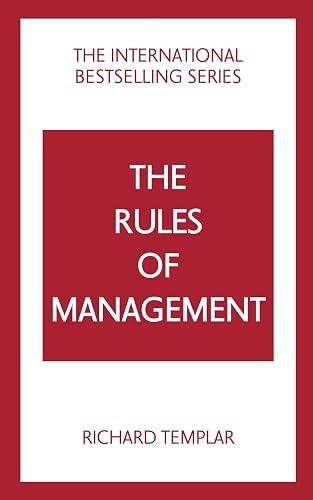
**Author:** Richard Templar
**Estimated Reading Time:** 45 minutes
**What You'll Learn:**
- Why managing people is the wrong approach and what to do instead - How to build a team that runs itself while you focus on strategy - The art of setting boundaries without becoming a tyrant - How to develop people who are better than you without feeling threatened - The daily habits that separate great managers from merely adequate ones
**Who This Book Is For:**
This book is for anyone who manages people, whether you are a first-time team leader or a seasoned executive. It is for managers who feel overwhelmed by the daily demands of supervising others and suspect there must be a better way. It is for leaders who want to build teams that thrive without constant oversight. If you have ever wondered why some managers inspire loyalty while others merely extract compliance, this book will show you the difference.
Management is one of the most misunderstood roles in the working world. Most people who become managers do so because they were good at their previous job. A talented salesperson gets promoted to sales manager. A skilled engineer becomes engineering director. A capable teacher becomes head of department. The assumption is that the skills that made someone excellent at doing the work will naturally translate into excellence at managing others who do that work. This assumption is wrong. The transition from individual contributor to manager is one of the most difficult professional shifts a person can make. It requires abandoning many of the habits that previously drove success. It demands a completely different relationship with work, with time, with responsibility, and with other people. Many new managers struggle because they continue doing what they have always done, only now they have a team to look after as well. They work longer hours, take on more tasks, and eventually burn out while their team members feel underused and undervalued. Richard Templar has spent decades observing what separates genuinely effective managers from those who merely occupy management positions. His conclusion is both simple and profound: the best managers do not manage people at all. They manage processes, systems, and strategies. They create environments where people can manage themselves. They set clear expectations, provide the necessary resources, and then get out of the way. This insight runs counter to how most organizations think about management. The traditional view casts the manager as supervisor, overseer, and controller. The manager watches over employees, checks their work, corrects their mistakes, and ensures they stay on task. This approach treats adults as if they were children who cannot be trusted to do their jobs without constant monitoring. Templar argues that this traditional…
Continue reading in the MinuteRead app
Get the complete 30-minute summary of Rules of Management
Get the complete summary in the appManage processes, not people. Create systems that enable people to manage themselves.
Make people care about their work. Help them see why it matters and how it makes a difference.
Set realistic targets that are challenging but achievable. Push back on impossible demands.
Run meetings with clear objectives. Start on time, end on time, and keep the discussion focused.
Develop people who are better than you. Trust them, train them, and celebrate their success.
Lead by example. Your team will follow your behavior, not your words.
"Rules of Management" is a strong fit if you want practical ideas around business, management, leadership, especially themes like manage processes, not people. create systems that enable people to manage themselves; make people care about their work. help them see why it matters and how it makes a difference. The MinuteRead summary distills these concepts into a focused read, whether you're deciding whether to buy the book or applying its lessons at work.
Motivated to help readers with the mistake a lot of managers make is to think they are managing people, Richard Templar wrote “Rules of Management” to package those ideas for a fast, focused read. In “Rules of Management”, Richard Templar focuses on the mistake a lot of managers make is to think they are managing people. Through “Rules of Management”, Richard Templar distills the core ideas on business into lessons readers can absorb in a single short sitting. Readers turn to this work when they…
View all summaries by Richard TemplarContinue Reading
Access the complete 30-minute summary and thousands more nonfiction books in the MinuteRead app.

Continue reading the complete summary in the MinuteRead app.