MinuteRead
30 min
Book summary
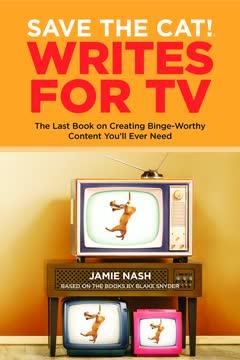
by Jamie Nash
Premium summary · Opens in the app · 30 min read
Television has changed more in the last two decades than in the previous fifty years combined. The rise of streaming platforms, the explosion of prestige dramas, the global reach of content. None of it has changed one fundamental truth: television lives and dies on character.
**Author:** Jamie Nash
**Estimated Reading Time:** 45 minutes
**What You'll Learn:** - Why character is the single most important element in television writing - How to build a show concept that can sustain hundreds of episodes - The exact structure professional TV writers use to break pilot episodes - How to balance multiple storylines in ensemble shows - The secrets of act breaks, teasers, and other TV-specific storytelling tools - A complete system for moving from idea to finished pilot script
**Who This Book Is For:** Aspiring television writers who want to understand how the industry actually works. Screenwriters transitioning from film to TV. Show creators developing their first pilot. Anyone who has ever watched a great series and wondered how the writers made it so compelling week after week.
Television has changed more in the last two decades than in the previous fifty years combined. The rise of streaming platforms, the explosion of prestige dramas, the global reach of content. None of it has changed one fundamental truth: television lives and dies on character. A film can succeed on spectacle. A novel can succeed on language. A television show succeeds only when audiences fall in love with people they want to spend time with, week after week, year after year. You can have the most brilliant premise in the world. If viewers do not care about your characters, they will not come back for episode two. This is the problem Jamie Nash addresses in Save the Cat! Writes for TV. The book exists because most aspiring television writers start in the wrong place. They start with a clever concept. A high-concept hook. A world they want to explore. Then they wonder why their pilot falls flat, why their characters feel thin, why their story runs out of steam by page twenty. The television industry has its own language, its own rhythms, its own structural demands. A pilot is not a short film. A season arc is not a three-act movie stretched to ten hours. The writers' room operates on principles that most outsiders never see. Nash pulls back the curtain and shows exactly how professional television writers think, plan, and execute. What makes this approach different is its relentless focus on practical application. This is not a book of abstract theory about the nature of storytelling. It is a working manual built on the Save the Cat! methodology, adapted specifically for the unique demands of television. Every concept comes with concrete tools: beat sheets, story boards, logline formulas, franchise types. Every chapter ends with actions you can take immediately. The book also understands something crucial about television that film-focused writing guides often miss: television is a marathon, not a…
Continue reading in the MinuteRead app
Get the complete 30-minute summary of Save the Cat! Writes for TV
Get the complete summary in the app**Character first.** Develop the broken compass, transformation map, and rooting resume before anything else.
**Know your franchise type.** It determines how you generate episodes and what kind of stories you can tell.
**Write your logline.** After (CATALYST), (HERO) must overcome (OBSTACLE) to achieve (GOAL) or else (STAKES).
**Use the beat sheet.** The fifteen beats reflect the underlying psychology of storytelling.
**Build a story board.** Make the structure visible before you write the script.
**Write an outline.** Bridge the gap between planning and scripting.
"Save the Cat! Writes for TV" is a strong fit if you want practical ideas around writing, research, crafts, especially themes like **character first.** develop the broken compass, transformation map, and rooting resume before anything else; **know your franchise type.** it determines how you generate episodes and what kind of stories you can tell. The MinuteRead summary distills these concepts into a focused read, whether you're deciding whether to buy the book or applying its lessons at work.
Jamie Nash is an accomplished author and screenwriter known for his work in various genres. He specializes in writing fun and adventurous Middle Grade novels, as well as screenplays for both family-friendly and horror films. Nash's credits include children's movies like "Santa Hunters" and "Tiny Christmas," as well as adult-oriented horror films such as "Exists" and "Altered." His versatility as a writer allows him to create engaging content for different age groups and genres. Nash's expertise …
View all summaries by Jamie NashContinue Reading
Access the complete 30-minute summary and thousands more nonfiction books in the MinuteRead app.

Continue reading the complete summary in the MinuteRead app.