 MinuteRead
30 min
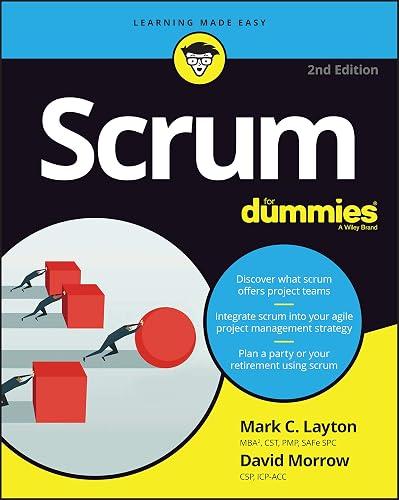
Book summary
by Mark C. Layton
Premium summary · Opens in the app · 30 min read
Most projects fail. Not because people are lazy or incompetent, but because the way we plan work is fundamentally broken. We gather requirements, create detailed plans, assign tasks, and then spend months executing against a document that was outdated the moment it was written. By the time the work is finished, the world has changed. Customers want something different. Technology has advanced. Priorities have shifted. And the team has spent enormous energy building something nobody needs anymore
**Author:** Mark C. Layton
**Estimated Reading Time:** 45 minutes
**What You'll Learn:**
- The core principles that make Scrum work - How to structure teams, roles, and responsibilities - How to plan, execute, and improve work in short cycles - How to apply Scrum beyond software development - Practical ways to start using Scrum immediately
**Who This Book Is For:**
- Project managers and team leaders seeking a better way to work - Professionals new to Scrum or agile methodologies - Anyone frustrated with rigid, slow-moving project plans - Individuals looking to apply Scrum to personal projects - Teams that need to deliver value faster and adapt to change
Most projects fail. Not because people are lazy or incompetent, but because the way we plan work is fundamentally broken. We gather requirements, create detailed plans, assign tasks, and then spend months executing against a document that was outdated the moment it was written. By the time the work is finished, the world has changed. Customers want something different. Technology has advanced. Priorities have shifted. And the team has spent enormous energy building something nobody needs anymore. This is the problem Scrum was created to solve. Scrum emerged from the software industry, where the gap between plan and reality is especially brutal. Software projects are complex. Requirements change constantly. Problems appear that nobody could have predicted. Traditional project management treats this complexity as an inconvenience to be suppressed. Scrum treats it as the fundamental reality to be embraced. The word "Scrum" comes from rugby. In rugby, a scrum is the formation where players from both teams pack together and work as a unit to move the ball forward. It is not a rigid formation dictated by a distant coach. It is a dynamic, collaborative effort where the team adjusts in real time based on what is happening on the field. That image captures the essence of Scrum as a project management framework: a small team working together, adapting constantly, and moving toward a shared goal. Mark C. Layton wrote Scrum for Dummies to make this framework accessible to everyone. He recognized that Scrum had developed a reputation as something complicated, technical, and only relevant to software developers. But the core ideas are simple. They apply to any complex project. They can transform how teams work in manufacturing, marketing, education, healthcare, and even at home. The central insight of Scrum is that you cannot predict the future. No matter how detailed your plan, reality will surprise you. So instead of trying to eliminate uncertainty, Scrum gives you a structure for learning from it. You work in short cycles. You deliver something real. You inspect what you created. You adapt based on what…
Continue reading in the MinuteRead app
Get the complete 30-minute summary of Scrum for Dummies
Get the complete summary in the appScrum is an empirical framework: learn from experience and adapt based on what you learn.
The three pillars are transparency, inspection, and adaptation.
The three roles are Product Owner, Scrum Master, and Development Team. They are peers, not a hierarchy.
The Product Backlog is the master list of all potential work, owned and prioritized by the Product Owner.
A Sprint is a fixed time period of one to four weeks that produces a potentially shippable increment.
The Daily Scrum is a fifteen-minute coordination meeting where the team answers three questions.
"Scrum for Dummies" is a strong fit if you want practical ideas around business, management, reference, especially themes like scrum is an empirical framework: learn from experience and adapt based on what you learn; the three pillars are transparency, inspection, and adaptation. The MinuteRead summary distills these concepts into a focused read, whether you're deciding whether to buy the book or applying its lessons at work.
Motivated to help readers with scrum is an empirical exposure model, Mark C. Layton wrote “Scrum for Dummies” to package those ideas for a fast, focused read. In “Scrum for Dummies”, Mark C. Layton focuses on scrum is an empirical exposure model. Through “Scrum for Dummies”, Mark C. Layton distills the core ideas on business into lessons readers can absorb in a single short sitting. Readers turn to this work when they want Mark C. Layton's perspective on the subject without working through the e…
Continue Reading
Access the complete 30-minute summary and thousands more nonfiction books in the MinuteRead app.

Continue reading the complete summary in the MinuteRead app.






