 MinuteRead
30 min
Book summary
by Dennis Sherwood
Premium summary · Opens in the app · 30 min read
Picture a manager facing a familiar problem. Sales are declining. The obvious response is to cut prices. The logic seems unassailable: lower prices attract more customers, more customers buy more products, and revenue recovers. The manager acts decisively, confident in the straightforward cause-and-effect reasoning.
**Author:** Dennis Sherwood
**Estimated Reading Time:** 90 minutes
**What You'll Learn:**
- Why most business decisions fail to account for the true complexity of real-world systems - How to map cause-and-effect relationships using causal loop diagrams - The difference between reinforcing and balancing feedback loops, and why this distinction matters enormously - How to identify high-leverage intervention points that create lasting change - Why your mental models shape everything you see, and how to make them explicit - How to build a "laboratory of the future" using system dynamics - Practical tools for applying systems thinking to business strategy, public policy, and everyday decisions
**Who This Book Is For:**
This book is for managers, executives, policymakers, and anyone who has ever made a decision that seemed sensible at the time but produced unexpected and unwelcome consequences. If you have ever wondered why obvious solutions sometimes make problems worse, or why short-term fixes often create long-term headaches, this book will give you a new way of seeing. It requires no mathematical background or prior knowledge of systems theory. All it requires is curiosity and a willingness to question the way you currently think about problems.
Picture a manager facing a familiar problem. Sales are declining. The obvious response is to cut prices. The logic seems unassailable: lower prices attract more customers, more customers buy more products, and revenue recovers. The manager acts decisively, confident in the straightforward cause-and-effect reasoning. Six months later, the situation has deteriorated. Competitors matched the price cut, so no market share was gained. Margins collapsed, leaving less money for product development and customer service. Quality slipped. Brand reputation suffered. Sales declined further. The manager, bewildered, concludes that the market is simply difficult and that nothing could have been done differently. What went wrong? The manager was not stupid. The reasoning was not illogical. The problem is that the reasoning was incomplete. The manager saw a simple chain of cause and effect: price cut leads to increased sales. But the real world does not operate in simple chains. It operates in webs of interconnected relationships where every action triggers multiple reactions, some immediate, some delayed, some obvious, some hidden. The price cut did not just influence customers. It influenced competitors, who influenced the market, which influenced the company's margins, which influenced its ability to invest, which influenced product quality, which influenced customer satisfaction, which influenced sales. The manager was playing chess while thinking it was checkers. This is the central problem that Dennis Sherwood addresses in *Seeing the Forest for the Trees*. We live in a world of systems: interconnected networks of causes and effects that extend across space and time. Yet most of us were never taught…
Continue reading in the MinuteRead app
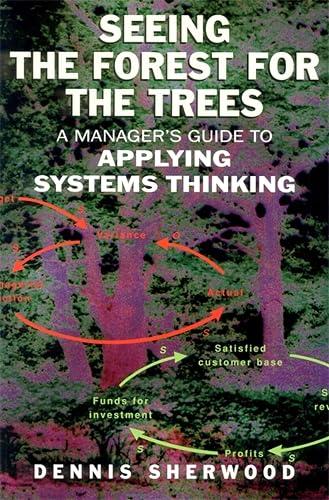
Get the complete 30-minute summary of Seeing the Forest for the Trees
Get the complete summary in the appThe behavior of a system is determined by its structure. To change behavior, change structure.
A system is defined by connectedness. Treating a system as a heap leads to silo thinking and unintended consequences.
Reinforcing loops amplify change, creating virtuous or vicious circles. Balancing loops resist change, driving systems t
Causal loop diagrams make system structure visible. They externalize mental models and enable shared understanding.
Time delays make it difficult to connect actions to consequences. Anticipate delays and resist the urge to overcorrect.
Growth always encounters limits. Anticipate limits and plan for the transition from growth to maturity.
"Seeing the Forest for the Trees" is a strong fit if you want practical ideas around business, management, leadership, especially themes like the behavior of a system is determined by its structure. to change behavior, change structure; a system is defined by connectedness. treating a system as a heap leads to silo thinking and unintended consequences. The MinuteRead summary distills these concepts into a focused read, whether you're deciding whether to buy the book or applying its lessons at work.
Motivated to help readers with the essence of systems thinking is that the complexity of the real world can best be tamed by seeing things, Dennis Sherwood wrote “Seeing the Forest for the Trees” to package those ideas for a fast, focused read. In “Seeing the Forest for the Trees”, Dennis Sherwood focuses on the essence of systems thinking is that the complexity of the real world can best be tamed by seeing things. Through “Seeing the Forest for the Trees”, Dennis Sherwood distills the core idea…
Continue Reading
Access the complete 30-minute summary and thousands more nonfiction books in the MinuteRead app.

Continue reading the complete summary in the MinuteRead app.






