 MinuteRead
Loading…
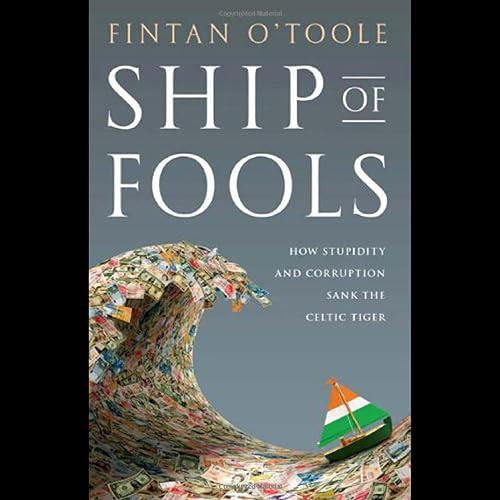
Book summary
by Fintan O'Toole
Premium summary · Opens in the app · 30 min read
In the late 1980s, Ireland was a country that had spent decades exporting its most valuable resource: its people. Young Irish men and women boarded ferries and planes for London, New York, Boston, and Sydney because their homeland offered them nothing but unemployment, stagnation, and the quiet desperation of a failed economy. The country was, by any measure, one of the poorest in Western Europe. Its national debt was enormous. Its infrastructure was crumbling. Its confidence was shattered.
**Author:** Fintan O'Toole **Estimated Reading Time:** 45 minutes
**What You'll Learn:** How Ireland transformed from one of Europe's poorest countries into a celebrated economic miracle, why that miracle was built on foundations of sand, and what happens when a nation's political, financial, and regulatory classes collectively decide to believe their own mythology.
**Who This Book Is For:** Anyone who wants to understand how economic booms become busts, how political systems fail their citizens, and how the stories nations tell themselves can become dangerous delusions. This book is essential reading for those interested in Ireland, financial crises, political accountability, and the psychology of collective self-deception.
In the late 1980s, Ireland was a country that had spent decades exporting its most valuable resource: its people. Young Irish men and women boarded ferries and planes for London, New York, Boston, and Sydney because their homeland offered them nothing but unemployment, stagnation, and the quiet desperation of a failed economy. The country was, by any measure, one of the poorest in Western Europe. Its national debt was enormous. Its infrastructure was crumbling. Its confidence was shattered. Then something remarkable happened. Within a decade, Ireland transformed itself into the "Celtic Tiger," a term coined by economists who marveled at the country's sudden and spectacular economic growth. Foreign companies flooded in. Jobs appeared everywhere. Irish emigrants began returning home. The country that had once begged its young people to leave was now importing workers from Poland, Latvia, and the Philippines. Ireland became the poster child for globalization, the proof that a small, peripheral nation could reinvent itself as a dynamic hub of the new economy. The statistics were staggering. Ireland's GDP grew at rates that exceeded even the Asian tiger economies. Unemployment fell to historic lows. The government ran budget surpluses. The national debt was paid down. Irish politicians traveled the world lecturing others on how to replicate the miracle. The Irish people, understandably, began to believe that they had cracked some secret code of economic development. But the miracle was a mirage. Beneath the surface of Ireland's prosperity lay a toxic combination of property speculation, reckless banking, political corruption, regulatory failure, and a collective refusal to ask difficult questions. The Celtic Tiger was not a sustainable economic transformation. It was a property bubble inflated by cheap credit, fueled by tax incentives, and protected by a political establishment that had become deeply entangled with the very developers and bankers who were driving the speculation. Fintan O'Toole watched this transformation from his position as one of Ireland's most prominent journalists and commentators. He saw the warning signs that others ignored. He documented the cozy relationships between politicians and developers. He questioned the wisdom of an economy built…
Continue reading in the MinuteRead app
Get the complete 30-minute summary of Ship of Fools
Get the complete summary in the appThe Celtic Tiger was a property bubble, not a sustainable economic transformation.
Ireland's banks concentrated their lending on property developers, creating a system that was vulnerable to a property m
The Irish political establishment was deeply entangled with the developers and bankers who were driving the boom.
Ireland's financial regulators had the power to restrain reckless lending but chose not to use it.
The benefits of the boom were not shared equally. The rich got richer while poverty remained stubbornly high.
The Irish people were not merely victims of the boom. They were participants in it.
"Ship of Fools" is a strong fit if you want practical ideas around ireland, economics, politics, especially themes like the celtic tiger was a property bubble, not a sustainable economic transformation; ireland's banks concentrated their lending on property developers, creating a system that was vulnerable to a property m. The MinuteRead summary distills these concepts into a focused read, whether you're deciding whether to buy the book or applying its lessons at work.
Motivated to help readers with "The reality that Ahern's governments made damn sure that the wealth of the guys in the tent was not, Fintan O'Toole wrote “Ship of Fools” to package those ideas for a fast, focused read. In “Ship of Fools”, Fintan O'Toole focuses on "The reality that Ahern's governments made damn sure that the wealth of the guys in the tent was not. Through “Ship of Fools”, Fintan O'Toole distills the core ideas on ireland into lessons readers can absorb in a single short sitting.…
Continue Reading
Access the complete 30-minute summary and thousands more nonfiction books in the MinuteRead app.

Continue reading the complete summary in the MinuteRead app.