 MinuteRead
30 min
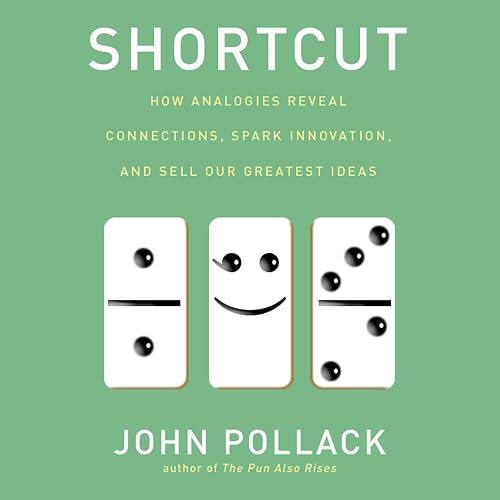
Book summary
by John Pollack
Premium summary · Opens in the app · 30 min read
Every day, without noticing, you make thousands of comparisons. You say a friend is "sharp as a tack." You describe a difficult project as "an uphill battle." You tell a colleague that a new software interface works "just like a filing cabinet." You decide whether to trust a politician because he reminds you of someone you once knew. You choose a restaurant because its menu feels "like the one from that trip to Italy."
**Author:** John Pollack
**Estimated Reading Time:** 42 minutes
**What You'll Learn:**
* Why analogies are the hidden engine of human thought * How a single comparison can launch a product, win an election, or start a war * The five criteria that separate powerful analogies from disastrous ones * How to spot when someone is using an analogy to manipulate you * How to harness analogical thinking to innovate, persuade, and decide more wisely
**Who This Book Is For:**
Anyone who wants to understand why some ideas catch on while others fall flat. If you communicate for a living, lead teams, make decisions under pressure, or simply want to think more clearly about the messages you encounter every day, this book will change how you listen, speak, and reason.
Every day, without noticing, you make thousands of comparisons. You say a friend is "sharp as a tack." You describe a difficult project as "an uphill battle." You tell a colleague that a new software interface works "just like a filing cabinet." You decide whether to trust a politician because he reminds you of someone you once knew. You choose a restaurant because its menu feels "like the one from that trip to Italy." None of this feels remarkable. It feels like ordinary thinking. But John Pollack argues that this constant comparing is not a quirk of language. It is the core operating system of the human mind. Pollack spent years as a speechwriter for President Bill Clinton, crafting phrases designed to move millions of people. He learned firsthand that the right comparison could settle a debate, reframe a controversy, or make a complicated policy feel inevitable. The wrong comparison could sink a career. What he discovered is that analogies are not decorative flourishes. They are the machinery of persuasion, innovation, and decision-making. The problem is that most people treat analogies as if they were optional accessories. We learn in school that a simile says one thing is like another, that a metaphor calls one thing another. We memorize examples from poetry and move on. But Pollack insists this view is dangerously incomplete. Analogies are not just for poets and speechwriters. They are how every human brain sorts the flood of incoming data, places it within the context of experience, and decides what to do next. Consider what happens when you encounter something entirely new. You cannot understand it from scratch. You have no category for it. So your brain searches for something familiar that shares some features with the new thing. That comparison becomes your bridge to understanding. The first automobiles were called "horseless carriages" because that was the closest familiar concept. Early computers borrowed the "desktop," the "folder," and…
Continue reading in the MinuteRead app
Get the complete 30-minute summary of Shortcut
Get the complete summary in the appAnalogy is the core operating system of the human mind.
The best analogy often wins the argument, regardless of the facts.
Innovation comes from connecting unrelated domains through analogy.
Good analogies are familiar, relevant, emotionally resonant, simple, and accurate.
Faulty analogies can lead to disaster.
Most analogies hide in plain sight.
"Shortcut" is a strong fit if you want practical ideas around business, psychology, self help, especially themes like analogy is the core operating system of the human mind; the best analogy often wins the argument, regardless of the facts. The MinuteRead summary distills these concepts into a focused read, whether you're deciding whether to buy the book or applying its lessons at work.
Motivated to help readers with all day every day, John Pollack wrote “Shortcut” to package those ideas for a fast, focused read. In “Shortcut”, John Pollack focuses on all day every day. Through “Shortcut”, John Pollack distills the core ideas on business into lessons readers can absorb in a single short sitting. Readers turn to this work when they want John Pollack's perspective on the subject without working through the entire original volume. John Pollack wrote “Shortcut” to make the book's c…
Continue Reading
Access the complete 30-minute summary and thousands more nonfiction books in the MinuteRead app.

Continue reading the complete summary in the MinuteRead app.






