 MinuteRead
30 min
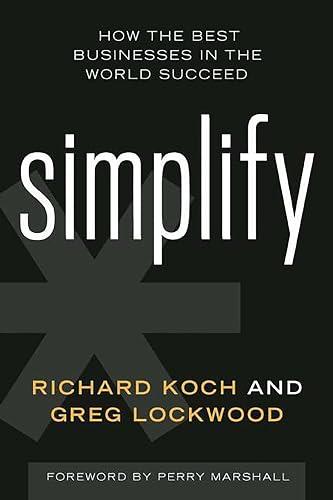
Book summary
by Richard Koch
Premium summary · Opens in the app · 30 min read
In 1908, the automobile was a luxury toy for the wealthy. Most cars were handcrafted, expensive, and unreliable. A typical model cost around two thousand dollars, far beyond the reach of ordinary workers. Then Henry Ford introduced the Model T at a price of eight hundred and fifty dollars. Within a few years, he had driven the price below three hundred dollars. By the early 1920s, half of all cars on American roads were Model Ts.
**Author:** Richard Koch
**Estimated Reading Time:** 45 minutes
**What You'll Learn**
Why the greatest business breakthroughs of the modern era share a single hidden pattern. How simplification creates enormous wealth. Why most companies resist the very changes that could save them. And how to apply the two great simplifying strategies in your own work and life.
**Who This Book Is For**
Entrepreneurs looking for the next big opportunity. Managers trapped inside organizations that resist change. Investors seeking to identify companies with extraordinary growth potential. And anyone who wants to understand the hidden logic behind the most successful products and services of the past century.
In 1908, the automobile was a luxury toy for the wealthy. Most cars were handcrafted, expensive, and unreliable. A typical model cost around two thousand dollars, far beyond the reach of ordinary workers. Then Henry Ford introduced the Model T at a price of eight hundred and fifty dollars. Within a few years, he had driven the price below three hundred dollars. By the early 1920s, half of all cars on American roads were Model Ts. Ford did not achieve this through incremental improvement. He achieved it by reimagining what a car could be and how it could be made. He stripped away everything unnecessary. He standardized parts. He redesigned the manufacturing process from the ground up. He made one product, in one color, at a price that created an entirely new market. This pattern repeats throughout business history. The McDonald brothers transformed restaurants by reducing the menu to a handful of items and applying assembly-line principles to food preparation. IKEA transformed furniture retailing by making customers part of the production process. Apple transformed personal technology by removing buttons, features, and complexity. Uber transformed transportation by making ordering a ride as simple as tapping a screen. Each of these companies pursued a different path. Some competed on price. Others competed on experience. But all of them shared a common insight: the world is too complex, and the companies that remove complexity create extraordinary value. This book is about that insight. It is about the two great simplifying strategies that have created more wealth than any other business approach in modern history. It is about why simplification works, why it is so difficult for established companies to embrace, and how you can apply its lessons. The central argument is simple. Simplification is not just a design principle or a cost-cutting exercise. It is a complete business strategy. It is a way of seeing markets, products, and customers that leads to radically different decisions. And when executed well, it produces results that seem almost miraculous. But simplification is also misunderstood. Most people think of it as making small…
Continue reading in the MinuteRead app
Get the complete 30-minute summary of Simplify
Get the complete summary in the appSimplification is the most powerful business strategy available. It has created more wealth than any other approach in m
There are two paths to simplification: price-simplifying and proposition-simplifying. Choose one and pursue it relentles
Price-simplifying means reducing costs by fifty percent or more to create a mass market. It requires redesigning the ent
Proposition-simplifying means making a product a joy to use, even at a premium price. It requires removing features, imp
The two strategies are incompatible. Trying to pursue both simultaneously leads to mediocrity.
Market leaders resist simplification because of five traps: overhead, cannibalization, customer, complexity, and skills.
"Simplify" is a strong fit if you want practical ideas around business, entrepreneurship, management, especially themes like simplification is the most powerful business strategy available. it has created more wealth than any other approach in m; there are two paths to simplification: price-simplifying and proposition-simplifying. choose one and pursue it relentles. The MinuteRead summary distills these concepts into a focused read, whether you're deciding whether to buy the book or applying its lessons at work.
Motivated to help readers with the less complex an article, Richard Koch wrote “Simplify” to package those ideas for a fast, focused read. In “Simplify”, Richard Koch focuses on the less complex an article. Through “Simplify”, Richard Koch distills the core ideas on business into lessons readers can absorb in a single short sitting. Readers turn to this work when they want Richard Koch's perspective on the subject without working through the entire original volume. Richard John Koch (born 28 Jul…
View all summaries by Richard KochContinue Reading
Access the complete 30-minute summary and thousands more nonfiction books in the MinuteRead app.

Continue reading the complete summary in the MinuteRead app.






