 MinuteRead
30 min
Book summary
Premium summary · Opens in the app · 30 min read
In 1994, a young American named Porter Erisman arrived in China with little more than curiosity and a willingness to learn. He could not have known that over the next fourteen years he would witness, from the inside, one of the most remarkable business transformations in modern history. As a vice president at Alibaba, he watched a small startup founded in a Hangzhou apartment grow into a company that would eventually facilitate more commerce than Amazon and eBay combined.
**Author:** Porter Erisman
**Estimated Reading Time:** 45 minutes
**What You'll Learn:** Why e-commerce has exploded in emerging markets while remaining relatively static in the West, how China leapfrogged Silicon Valley to become the world's most innovative digital marketplace, and what the next wave of global commerce will look like as billions of new consumers come online.
**Who This Book Is For:** Entrepreneurs exploring international markets, investors seeking to understand global e-commerce trends, business leaders planning expansion into developing economies, and anyone curious about how technology is reshaping commerce beyond the familiar landscapes of North America and Europe.
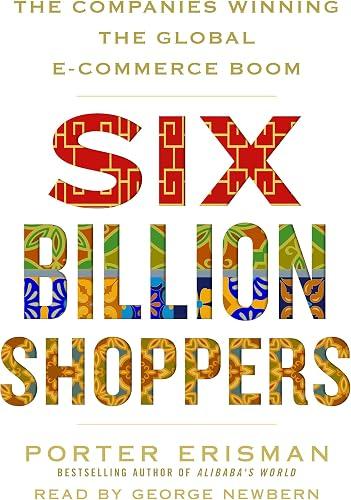
In 1994, a young American named Porter Erisman arrived in China with little more than curiosity and a willingness to learn. He could not have known that over the next fourteen years he would witness, from the inside, one of the most remarkable business transformations in modern history. As a vice president at Alibaba, he watched a small startup founded in a Hangzhou apartment grow into a company that would eventually facilitate more commerce than Amazon and eBay combined. The conventional wisdom of the late 1990s held that e-commerce would develop first and most successfully in countries with strong infrastructure, reliable postal systems, widespread credit card adoption, and high levels of consumer trust. The United States and Western Europe seemed perfectly positioned. Emerging markets, with their potholed roads, cash-based economies, and skeptical consumers, appeared decades away from meaningful online commerce. That prediction turned out to be spectacularly wrong. China, a country where credit cards were rare, where the postal system was unreliable, and where trust between strangers was nearly nonexistent, became the world's largest e-commerce market. India, despite its chaotic streets and fragmented markets, began building digital marketplaces that would have seemed impossible just a decade earlier. Southeast Asia, Latin America, and Africa all started developing their own unique forms of online commerce, often leapfrogging Western models entirely. Erisman's central insight, developed through years of firsthand experience and subsequent research across dozens of countries, is counterintuitive but profound: e-commerce does not thrive despite weak infrastructure. It thrives because of weak infrastructure. When traditional retail, banking, and logistics systems fail to serve ordinary people, digital platforms rush in to fill the void. The result is not a pale imitation of Western e-commerce but something entirely new, shaped by local cultures, constraints, and opportunities. This book tells that story. It begins in China, where Erisman had a front-row seat to the creation of Alibaba and the birth of a new kind of commerce. From there it travels across the globe, visiting the crowded markets of India, the island nations of Southeast Asia, the emerging economies of Latin America, and the vast potential of Africa. Along…
Continue reading in the MinuteRead app
Get the complete 30-minute summary of Six Billion Shoppers
Get the complete summary in the appE-commerce thrives where traditional commerce fails. The weaker the existing systems, the greater the opportunity.
China became the world's largest e-commerce market by building solutions tailored to Chinese conditions, not by copying
Trust is the fundamental barrier to e-commerce in emerging markets. Escrow payments, reputation systems, and direct comm
Marketplaces beat retailers in emerging markets because they empower entrepreneurs and create network effects.
Mobile is the gateway to the next six billion consumers. Design for mobile-first users, not desktop users.
Social commerce is not a marketing channel. It is a fundamental shift in how commerce works, built on relationships and
"Six Billion Shoppers" is a strong fit if you want practical ideas around business, economics, technology, especially themes like e-commerce thrives where traditional commerce fails. the weaker the existing systems, the greater the opportunity; china became the world's largest e-commerce market by building solutions tailored to chinese conditions, not by copying. The MinuteRead summary distills these concepts into a focused read, whether you're deciding whether to buy the book or applying its lessons at work.
Motivated to help readers with from Bogotá to Shanghai, Porter Erisman wrote “Six Billion Shoppers” to package those ideas for a fast, focused read. In “Six Billion Shoppers”, Porter Erisman focuses on from Bogotá to Shanghai. Through “Six Billion Shoppers”, Porter Erisman distills the core ideas on business into lessons readers can absorb in a single short sitting. Readers turn to this work when they want Porter Erisman's perspective on the subject without working through the entire original vo…
View all summaries by Porter ErismanContinue Reading
Access the complete 30-minute summary and thousands more nonfiction books in the MinuteRead app.

Continue reading the complete summary in the MinuteRead app.






