 MinuteRead
30 min
Book summary
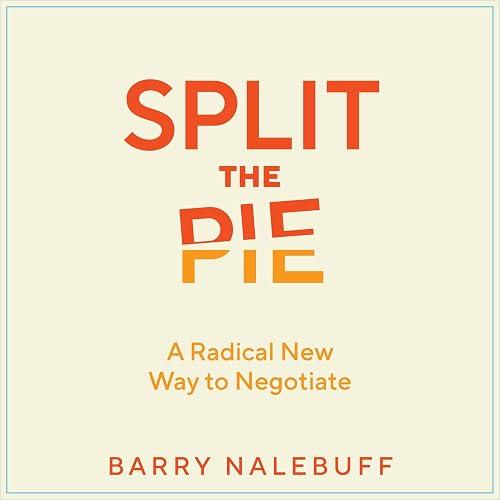
by Barry Nalebuff
Premium summary · Opens in the app · 30 min read
Negotiation is one of the most fundamental human activities. We negotiate salaries, business deals, rental agreements, and even bedtime with our children. Yet despite its ubiquity, most people approach negotiation with a mix of anxiety, confusion, and half-remembered advice from books that emphasize power, leverage, and psychological tricks.
**Author:** Barry Nalebuff **Estimated Reading Time:** 45 minutes
- Why most negotiations leave value on the table - How to calculate the true value created by any agreement - Why equal power exists in every two-party negotiation - How to use information strategically without exposing weakness - Why contingent deals solve the problem of uncertainty - How to negotiate from a position of principle rather than power
This book is for anyone who negotiates, which means everyone. Whether you are negotiating a salary, a business partnership, a real estate transaction, or a family decision, the principles in this book apply. It is especially valuable for people who feel they lack leverage, who find themselves in negotiations with larger or more powerful counterparts, or who want a principled framework that produces fair outcomes without sacrificing their interests.
Negotiation is one of the most fundamental human activities. We negotiate salaries, business deals, rental agreements, and even bedtime with our children. Yet despite its ubiquity, most people approach negotiation with a mix of anxiety, confusion, and half-remembered advice from books that emphasize power, leverage, and psychological tricks. The standard advice is familiar. Anchor high. Never reveal your bottom line. Hide your weaknesses. Project confidence. Make the first offer. Don't make the first offer. The problem is that this advice often contradicts itself and rarely addresses the fundamental question: what is a fair outcome, and how can you achieve it without damaging relationships or leaving value on the table? Barry Nalebuff brings an unusual combination of credentials to this problem. He is a professor at Yale School of Management, where he has taught negotiation and game theory for over three decades. He is also a serial entrepreneur who co-founded Honest Tea and negotiated its eventual sale to Coca-Cola. He has sat on both sides of the table, as an academic who studies negotiation and as a practitioner who has negotiated deals worth hundreds of millions of dollars. This dual perspective shapes the book's approach. Nalebuff is not interested in negotiation tricks or psychological manipulation. He is interested in the underlying logic of negotiation, the mathematical structure that determines what is fair and what is possible. The central insight of the book is deceptively simple. In any negotiation, the relevant question is not how to divide the total value on the table. The relevant question is how to divide the additional value created by reaching an agreement. Nalebuff calls this additional value "the pie." Once you understand the pie, everything else follows. The pie determines what is fair. The pie determines what is possible. The pie explains why a small startup negotiating with a giant corporation has equal power. The pie provides a principled basis…
Continue reading in the MinuteRead app
Get the complete 30-minute summary of Split the Pie
Get the complete summary in the appThe pie is the additional value created by reaching an agreement, not the total amount being negotiated.
Calculate the pie by subtracting the sum of both parties' BATNAs from the total value of the agreement.
Both parties are equally necessary to create the pie, so both have equal claim to it.
A fair division gives each party their BATNA plus half the pie.
Your BATNA is what you will do if you cannot reach an agreement. Know it and improve it.
Equal power exists in every two-party negotiation, regardless of apparent differences in size or resources.
"Split the Pie" is a strong fit if you want practical ideas around business, psychology, self help, especially themes like the pie is the additional value created by reaching an agreement, not the total amount being negotiated; calculate the pie by subtracting the sum of both parties' batnas from the total value of the agreement. The MinuteRead summary distills these concepts into a focused read, whether you're deciding whether to buy the book or applying its lessons at work.
Motivated to help readers with the pie is the additional value created through an agreement to work together, Barry Nalebuff wrote “Split the Pie” to package those ideas for a fast, focused read. In “Split the Pie”, Barry Nalebuff focuses on the pie is the additional value created through an agreement to work together. Through “Split the Pie”, Barry Nalebuff distills the core ideas on business into lessons readers can absorb in a single short sitting. Readers turn to this work when they want Bar…
Continue Reading
Access the complete 30-minute summary and thousands more nonfiction books in the MinuteRead app.

Continue reading the complete summary in the MinuteRead app.






