MinuteRead
30 min
Book summary
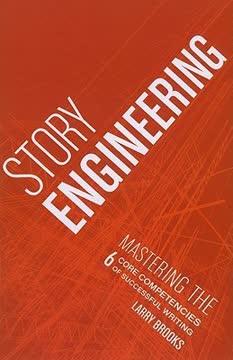
by Larry Brooks
Premium summary · Opens in the app · 30 min read
Every year, hundreds of thousands of people sit down to write a novel. Most of them never finish. Of those who finish, most produce manuscripts that will never be published. The publishing industry rejects the vast majority of submissions not because the writing is bad, but because the story does not work. And here is the uncomfortable truth that Larry Brooks wants every aspiring writer to understand: most failed stories fail for reasons that are entirely predictable and entirely preventable.
**Author:** Larry Brooks
**Estimated Reading Time:** 48 minutes
**What You'll Learn:**
* Why structure is not the enemy of creativity but its essential foundation * The Six Core Competencies that separate publishable stories from failed manuscripts * How to build a concept that carries an entire novel * The precise mechanics of the four-part story model * How to write scenes that earn their place in your narrative * Why writing voice matters less than you think, and more than you know
**Who This Book Is For:**
Writers who have started novels and abandoned them halfway through. Writers who have finished manuscripts that never found a publisher. Writers who sense something is wrong with their story but cannot identify what. And writers who have been told that great storytelling is a mystical gift that cannot be taught. Larry Brooks wrote this book to prove that last statement wrong.
Every year, hundreds of thousands of people sit down to write a novel. Most of them never finish. Of those who finish, most produce manuscripts that will never be published. The publishing industry rejects the vast majority of submissions not because the writing is bad, but because the story does not work. And here is the uncomfortable truth that Larry Brooks wants every aspiring writer to understand: most failed stories fail for reasons that are entirely predictable and entirely preventable. The problem is not lack of talent. The problem is not lack of imagination. The problem is that most writers do not understand the underlying engineering that makes stories function. They believe that great storytelling is an art form that cannot be analyzed, that structure is a formula that kills creativity, and that if they just write from the heart, the story will somehow find its way. Brooks disagrees with all of this. And he has the credentials to back up his position. He has written bestselling thrillers, worked as a writing instructor for decades, and analyzed thousands of manuscripts. What he has discovered is that successful stories, regardless of genre or style, share common structural elements. These elements are not arbitrary rules imposed by the publishing industry. They are the natural architecture of narrative itself, the same architecture that has governed storytelling since humans first gathered around fires to share tales. The central metaphor of this book is embedded in its title. Story Engineering suggests that writing a novel is not fundamentally different from building a bridge or designing an airplane. An engineer does not simply pour concrete and hope for the best. An engineer understands the principles of physics, the properties of materials, and the mathematics of load distribution. An engineer uses this knowledge to create something that works. A…
Continue reading in the MinuteRead app
Get the complete 30-minute summary of Story Engineering
Get the complete summary in the appStories have architecture. Structure is not a formula. It is the engineering that makes narrative flight possible.
Master the Six Core Competencies: Concept, Character, Theme, Structure, Scene Execution, and Writing Voice.
Develop your concept before you start writing. A weak concept cannot be saved by brilliant execution.
Create characters across three dimensions: surface traits, backstory and inner demons, and true character revealed throu
Let theme emerge organically. Never state it explicitly.
Follow the four-part structure: Setup, Response, Attack, Resolution.
"Story Engineering" is a strong fit if you want practical ideas around writing, reference, crafts, especially themes like stories have architecture. structure is not a formula. it is the engineering that makes narrative flight possible; master the six core competencies: concept, character, theme, structure, scene execution, and writing voice. The MinuteRead summary distills these concepts into a focused read, whether you're deciding whether to buy the book or applying its lessons at work.
Larry Brooks is an author and writing instructor known for his expertise in story structure and planning. He emphasizes the importance of understanding and implementing core storytelling competencies to create successful, publishable novels. Brooks advocates for a structured approach to writing, often criticizing the "pantser" method of writing without a plan. His teaching style is described as direct and sometimes confrontational, with a focus on commercial viability in fiction writing. Brooks …
View all summaries by Larry BrooksContinue Reading
Access the complete 30-minute summary and thousands more nonfiction books in the MinuteRead app.

Continue reading the complete summary in the MinuteRead app.