MinuteRead
30 min
There is a moment every communicator knows well. You have assembled the data. You have built the logical argument. You have anticipated every objection and prepared a response. You present your case with clarity and precision. And then, nothing happens. The audience nods politely, returns to their desks, and continues doing exactly what they were doing before you walked into the room.
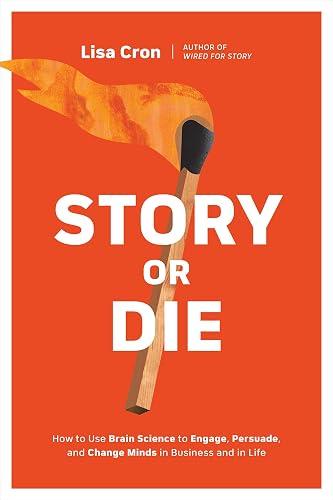
**How to Use Brain Science to Engage, Persuade, and Change Minds in Business and in Life**
By Lisa Cron
**Estimated Reading Time:** 48 minutes
**What You'll Learn**
Why facts alone never change minds, how the brain is biologically wired to process story, and how to harness the power of narrative to persuade, inspire, and drive action. You will learn to identify the hidden resistance your audience feels, construct stories that create genuine emotional connection, and use story as a practical tool in every area of your life.
**Who This Book Is For**
Anyone who has ever tried to convince someone of something and failed. Leaders who need their teams to embrace change. Marketers who want their messages to stick. Parents, teachers, advocates, and professionals who have watched their carefully assembled facts bounce off an unreceptive audience. If you have ever wondered why logic alone does not move people, this book will show you what actually does.
There is a moment every communicator knows well. You have assembled the data. You have built the logical argument. You have anticipated every objection and prepared a response. You present your case with clarity and precision. And then, nothing happens. The audience nods politely, returns to their desks, and continues doing exactly what they were doing before you walked into the room. You conclude that they were stubborn. Or irrational. Or perhaps you simply did not have enough evidence. So you gather more data, build a stronger case, and try again. And again, nothing changes. Lisa Cron wants you to understand something fundamental: the problem is not your audience. The problem is not your facts. The problem is that you are speaking a language the brain does not naturally process. The human brain is not a computer that weighs evidence and reaches objective conclusions. It is a story-processing machine, evolved over millions of years to filter, interpret, and act on information based on one overriding question: how will this affect me? When you present facts without story, you are asking the brain to work against its own design. When you wrap those same facts in narrative, you are speaking the brain's native language. This is not a metaphor. Neuroscience has demonstrated that story is not a luxury or an entertainment add-on. It is the fundamental mechanism through which humans understand the world, make decisions, and connect with one another. Story is how we survived as a species. Story is how we navigate the social world. Story is how we decide what matters and what does not. The problem is that most of us have been taught to communicate in exactly the wrong way. We have been trained to lead with facts, to strip away…
Continue reading in the MinuteRead app
Get the complete 30-minute summary of Story or Die
Get the complete summary in the appStory is the brain's native language. Facts without story are filtered out as irrelevant noise.
Emotion drives every decision. Without feeling, we cannot choose, act, or remember.
Facts do not persuade because meaning is subjective. The same fact means different things to different people.
Understand your audience's story before you try to change it. Their beliefs, fears, and desires determine how they inter
Resistance is usually about identity, not facts. Find the misbelief that is driving the resistance.
The internal conflict is the story. Show the protagonist's struggle, not just the external events.
"Story or Die" is a strong fit if you want practical ideas around writing, business, psychology, especially themes like story is the brain's native language. facts without story are filtered out as irrelevant noise; emotion drives every decision. without feeling, we cannot choose, act, or remember. The MinuteRead summary distills these concepts into a focused read, whether you're deciding whether to buy the book or applying its lessons at work.
Motivated to help readers with not a Metaphor Wired for narrative, Lisa Cron wrote “Story or Die” to package those ideas for a fast, focused read. In “Story or Die”, Lisa Cron focuses on not a Metaphor Wired for narrative. Through “Story or Die”, Lisa Cron distills the core ideas on writing into lessons readers can absorb in a single short sitting. Readers turn to this work when they want Lisa Cron's perspective on the subject without working through the entire original volume. Lisa Cron wrote “…
View all summaries by Lisa CronContinue Reading
Access the complete 30-minute summary and thousands more nonfiction books in the MinuteRead app.

Continue reading the complete summary in the MinuteRead app.