MinuteRead
30 min
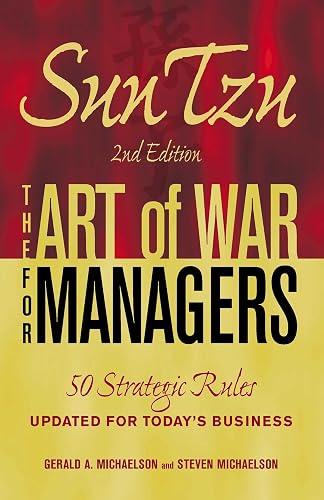
Book summary
by Gerald A. Michaelson
Premium summary · Opens in the app · 30 min read
Twenty-five hundred years ago, a Chinese military strategist wrote a book so profound that it has never gone out of print. Sun Tzu's The Art of War began as a manual for generals commanding armies in ancient China. It has since become one of the most widely read and applied texts on strategy in human history. Business leaders study it. Sports coaches quote it. Negotiators use its principles. Military academies around the world still teach it.
**Author:** Sun Tzu **Commentary and Adaptation by:** Gerald A. Michaelson **Estimated Reading Time:** 45 minutes
**What You'll Learn:**
How to think strategically in any competitive environment. You will learn why self-knowledge and opponent analysis form the foundation of victory, how to win without fighting, when to engage and when to withdraw, and how to build organizations that execute with discipline and unity.
**Who This Book Is For:**
Leaders, entrepreneurs, managers, negotiators, athletes, and anyone who faces competition, conflict, or complex decisions. If you have ever wondered why some people consistently outmaneuver stronger opponents, this book will show you the principles that make it possible.
Twenty-five hundred years ago, a Chinese military strategist wrote a book so profound that it has never gone out of print. Sun Tzu's The Art of War began as a manual for generals commanding armies in ancient China. It has since become one of the most widely read and applied texts on strategy in human history. Business leaders study it. Sports coaches quote it. Negotiators use its principles. Military academies around the world still teach it. The reason for this remarkable longevity is simple. Sun Tzu did not write about weapons, formations, or the technical details of ancient warfare. He wrote about the underlying principles of conflict itself. He wrote about how to think when the stakes are high, when opponents are unpredictable, and when resources are limited. These conditions are not unique to the battlefield. They describe the reality of business competition, political campaigns, legal disputes, and even personal challenges. The core problem Sun Tzu addresses is timeless. Most people approach conflict with brute force. They believe that the biggest army, the largest budget, or the loudest voice will prevail. Sun Tzu saw this as a fundamental error. Victory, he argued, comes not from overwhelming strength but from superior understanding. The general who knows himself, knows his enemy, and knows the terrain will win before the battle begins. The general who relies on force alone will eventually meet a stronger force and be destroyed. This is why The Art of War remains essential reading. It shifts the reader's focus from external power to internal clarity. It teaches that the best victories are won quietly, through preparation, positioning, and psychological advantage. It shows that avoiding unnecessary conflict is not weakness but wisdom. It demonstrates that leadership is not about commanding obedience but about creating conditions where success becomes inevitable. Gerald A. Michaelson's adaptation brings these ancient principles into the modern world. He translates Sun Tzu's poetic, often cryptic aphorisms into practical frameworks that can be applied in boardrooms, sales meetings, and everyday decisions. The goal is not to turn readers into generals but to help them…
Continue reading in the MinuteRead app
Get the complete 30-minute summary of Sun Tzu
Get the complete summary in the appAssess before you act. Most victories and defeats are determined before the engagement begins.
Know yourself and know your opponent. Self-knowledge and opponent analysis are the foundation of strategy.
Win without fighting. The best victory is one that requires no battle.
Use deception strategically. Control what the opponent perceives.
Choose your battleground. Compete where you are strong and the opponent is weak.
Invest in intelligence. Information is the most valuable resource in any competition.
"Sun Tzu" is a strong fit if you want practical ideas around business, management, leadership, especially themes like assess before you act. most victories and defeats are determined before the engagement begins; know yourself and know your opponent. self-knowledge and opponent analysis are the foundation of strategy. The MinuteRead summary distills these concepts into a focused read, whether you're deciding whether to buy the book or applying its lessons at work.
Motivated to help readers with "If you know the enemy and know yourself, Gerald A. Michaelson wrote “Sun Tzu” to package those ideas for a fast, focused read. In “Sun Tzu”, Gerald A. Michaelson focuses on "If you know the enemy and know yourself. Through “Sun Tzu”, Gerald A. Michaelson distills the core ideas on business into lessons readers can absorb in a single short sitting. Readers turn to this work when they want Gerald A. Michaelson's perspective on the subject without working through the…
Continue Reading
Access the complete 30-minute summary and thousands more nonfiction books in the MinuteRead app.

Continue reading the complete summary in the MinuteRead app.