 MinuteRead
30 min
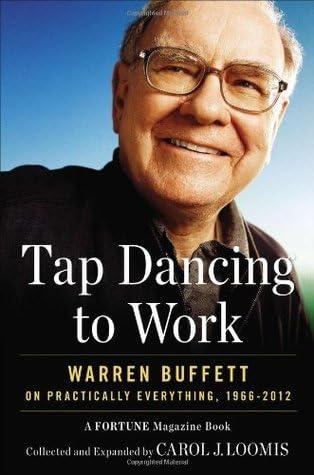
Book summary
by Carol J. Loomis
Premium summary · Opens in the app · 30 min read
In 1966, a young financial journalist named Carol Loomis wrote a story for Fortune magazine about a little-known investor from Omaha, Nebraska. The man was thirty-six years old, ran a small investment partnership, and had produced returns so remarkable that Loomis felt compelled to investigate. She found a person who thought about money differently than almost anyone else on Wall Street. He did not chase trends. He did not rely on complex models. He simply asked one question about every investme
**Warren Buffett on Practically Everything, 1966-2013**
**By Carol J. Loomis**
**Estimated Reading Time:** 45 minutes
**What You'll Learn**
The complete investment philosophy of Warren Buffett as documented across five decades of Fortune magazine coverage. You will learn how he identifies undervalued businesses, why patience matters more than intelligence, how Berkshire Hathaway became one of the most valuable companies in history, and what Buffett's approach reveals about risk, ethics, and the psychology of successful investing.
**Who This Book Is For**
Investors who want to move beyond speculation and build lasting wealth. Business leaders seeking to understand capital allocation and corporate governance. Students of behavioral finance who want to see how rationality operates in real markets. And anyone curious about how a boy from Omaha became the most celebrated investor of the twentieth century by following a handful of simple principles with extraordinary discipline.
In 1966, a young financial journalist named Carol Loomis wrote a story for Fortune magazine about a little-known investor from Omaha, Nebraska. The man was thirty-six years old, ran a small investment partnership, and had produced returns so remarkable that Loomis felt compelled to investigate. She found a person who thought about money differently than almost anyone else on Wall Street. He did not chase trends. He did not rely on complex models. He simply asked one question about every investment: what is this business actually worth? That story began a professional relationship that would span nearly five decades. Loomis went on to write more about Warren Buffett than any other journalist, and Buffett eventually asked her to serve as pro bono editor of his famous annual letters to Berkshire Hathaway shareholders. Tap Dancing to Work collects the most important of Loomis's Fortune articles about Buffett, along with her commentary and context, creating a portrait of an investor whose ideas have reshaped how millions of people think about money, business, and value. The problem this book addresses is straightforward. Most people approach investing as a game of prediction. They try to guess which stocks will go up next week, which sectors will outperform next quarter, which trends will dominate next year. This approach produces anxiety, overtrading, high fees, and mediocre results. Buffett's career demonstrates a completely different path. He treats investing as the practice of buying pieces of real businesses at prices below what those businesses are worth, then holding them while the underlying economics compound. Why does this matter? Because the difference between speculation and value investing is the difference between gambling and ownership. When you buy a stock, you are buying a fractional claim on a real enterprise with real earnings, real assets, real customers, and real management. The market quotes a price for that claim…
Continue reading in the MinuteRead app
Get the complete 30-minute summary of Tap Dancing to Work
Get the complete summary in the app**Invest in businesses, not ticker symbols.** Every stock represents ownership in a real enterprise. Understand the busi
**Intrinsic value is what matters, not market price.** Estimate what a business is worth based on its future cash flows,
**The margin of safety protects you from being wrong.** Demand a discount to intrinsic value so that errors in judgment
**Compounding rewards patience.** The longer you hold quality assets, the more powerful the growth. Time is the most imp
**Stay within your circle of competence.** If you cannot value a business, do not invest in it. The size of the circle m
**Temperament beats intellect.** Emotional discipline matters more than analytical brilliance. Be fearful when others ar
"Tap Dancing to Work" is a strong fit if you want practical ideas around business, finance, biography, especially themes like **invest in businesses, not ticker symbols.** every stock represents ownership in a real enterprise. understand the busi; **intrinsic value is what matters, not market price.** estimate what a business is worth based on its future cash flows,. The MinuteRead summary distills these concepts into a focused read, whether you're deciding whether to buy the book or applying its lessons at work.
Motivated to help readers with "I will not make an investment where I can't figure out the value of the thing." Value-based investing, Carol J. Loomis wrote “Tap Dancing to Work” to package those ideas for a fast, focused read. In “Tap Dancing to Work”, Carol J. Loomis focuses on "I will not make an investment where I can't figure out the value of the thing." Value-based investing. Through “Tap Dancing to Work”, Carol J. Loomis distills the core ideas on business into lessons readers can absorb …
Continue Reading
Access the complete 30-minute summary and thousands more nonfiction books in the MinuteRead app.

Continue reading the complete summary in the MinuteRead app.






