MinuteRead
30 min
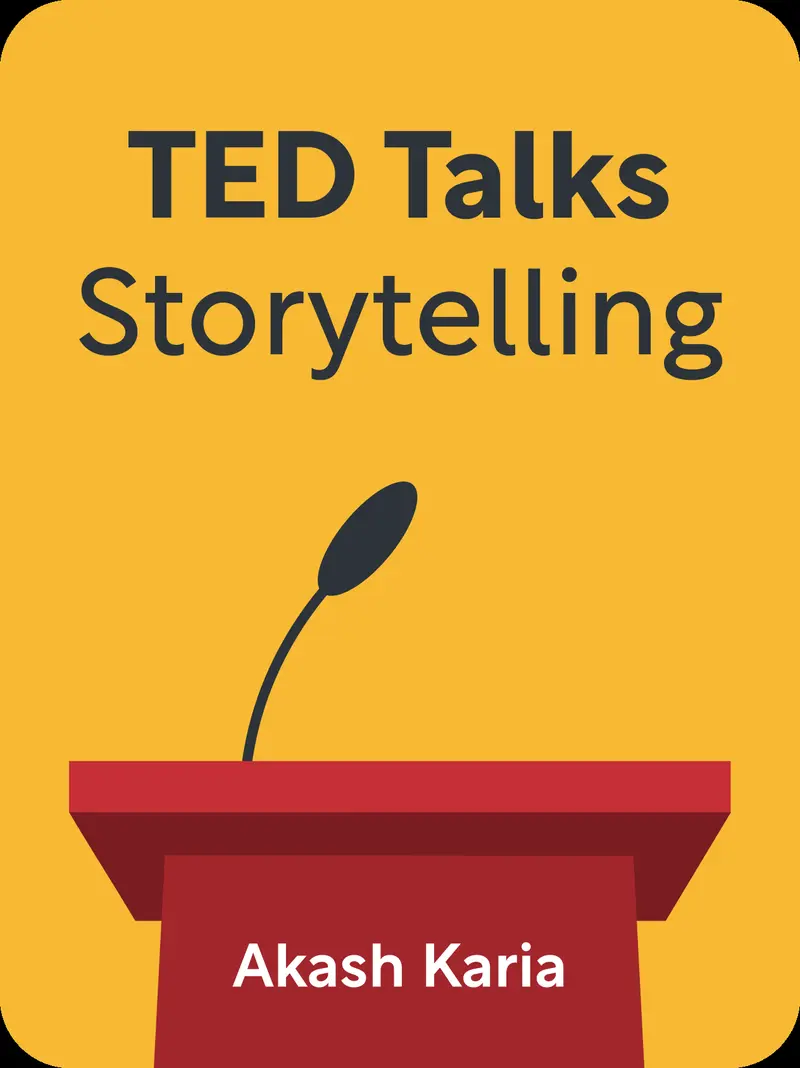
Book summary
by Akash Karia
Premium summary · Opens in the app · 30 min read
Every year, thousands of people stand on stages around the world and deliver presentations. Most of those presentations are forgotten within minutes. A small fraction become legendary. They get shared, discussed, and remembered for years. What separates the two groups?
**Author:** Akash Karia
**Estimated Reading Time:** 42 minutes
**What You'll Learn:**
- Why stories are the single most powerful tool in any presentation - How to open a talk so people cannot look away - The exact structure behind unforgettable stories - How to use sensory language to make your audience see, hear, and feel your message - How to turn any presentation into an experience people remember
**Who This Book Is For:**
This book is for anyone who has ever stood in front of a room and watched eyes glaze over. It is for professionals who need to persuade, teachers who need to engage, entrepreneurs who need to inspire, and speakers who want their ideas to spread. If you have ever felt that your message deserved more attention than it received, this book will show you why stories are the missing piece.
Every year, thousands of people stand on stages around the world and deliver presentations. Most of those presentations are forgotten within minutes. A small fraction become legendary. They get shared, discussed, and remembered for years. What separates the two groups? Akash Karia wanted to answer that question. He studied more than two hundred of the most popular TED talks ever delivered, looking for patterns. He examined talks by Sir Ken Robinson, Susan Cain, Malcolm Gladwell, Jill Bolte Taylor, and dozens of others. He analyzed their openings, their structure, their language, and their delivery. What he found was surprisingly simple. Every single one of the great talks contained stories. Not data points. Not bullet lists. Not clever transitions. Stories. The speakers who moved audiences, changed minds, and built reputations all shared one skill: they knew how to tell a story that made an idea feel real, urgent, and personal. This matters because most people have been taught to present information in exactly the wrong way. We learn to create slides filled with text. We learn to open with our name, our title, and an agenda. We learn to present facts, figures, and logical arguments. We treat audiences as if they were computers waiting to receive data. But human beings are not computers. We are creatures of narrative. We have been telling stories around fires, at dinner tables, and in places of worship for thousands of years. Stories are how we make sense of the world. They are how we remember. They are how we feel. When you tell a story, something remarkable happens in the minds of your listeners. They stop being passive observers. They begin to imagine themselves inside the experience you are describing. They feel the tension. They root for the character. They wonder what happens next. In short, they care. Karia's insight is that this…
Continue reading in the MinuteRead app
Get the complete 30-minute summary of TED Talks Storytelling
Get the complete summary in the appOpen with a story that drops the audience directly into a specific moment.
Every good story contains conflict. Without it, you have a report, not a story.
Describe characters with vivid, specific details so the audience can see them.
Engage all five senses to create immersive, memorable stories.
Use exact numbers, dates, and descriptions to build credibility.
Use dialogue to bring key moments to life.
"TED Talks Storytelling" is a strong fit if you want practical ideas around business, self help, communication, especially themes like open with a story that drops the audience directly into a specific moment; every good story contains conflict. without it, you have a report, not a story. The MinuteRead summary distills these concepts into a focused read, whether you're deciding whether to buy the book or applying its lessons at work.
Akash Karia is a professional speaker and award-winning trainer renowned for his expertise in public speaking and success strategies. He has trained diverse audiences worldwide, from bankers to yoga teachers to executives. Ranked among the Top 10 Speakers in Asia-Pacific, Karia's approach involves distilling extensive scientific research into accessible, practical advice. His books offer proven techniques in a concise, easy-to-implement format, designed to be affordable and immediately applicabl…
View all summaries by Akash KariaContinue Reading
Access the complete 30-minute summary and thousands more nonfiction books in the MinuteRead app.

Continue reading the complete summary in the MinuteRead app.