 MinuteRead
30 min
Book summary
by Steve Dalton
Premium summary · Opens in the app · 30 min read
The job search is broken. Not because you are doing something wrong, but because the rules of the game changed without anyone telling you.
**Author:** Steve Dalton
**Estimated Reading Time:** 45 minutes
**What You'll Learn:**
- Why the traditional job search is fundamentally broken - How to build a targeted list of employers worth pursuing - The exact email formula that gets responses from strangers - How to conduct informational interviews that convert contacts into advocates - A systematic follow-up routine that keeps your search moving forward
**Who This Book Is For:**
Anyone who has ever submitted an application online and heard nothing back. Anyone who dreads networking but knows they need to do it. Anyone who wants a practical, repeatable system for finding meaningful work without spending forty hours a week doing it.
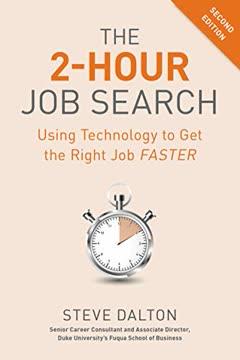
The job search is broken. Not because you are doing something wrong, but because the rules of the game changed without anyone telling you. Consider what happens when you apply for a job online. You find a posting that seems perfect. You spend an hour tailoring your resume. You write a thoughtful cover letter. You click submit. And then nothing happens. No confirmation that a human being ever looked at your materials. No feedback about what you could improve. Just silence. This is not a personal failure. It is a structural reality. Before the internet, applying for a job required effort. You had to print your resume, write a cover letter, address an envelope, and pay for postage. That effort acted as a filter. Only people who genuinely believed they were qualified went through the trouble. Employers could reasonably review every application they received because they received a manageable number. Technology changed everything. Today, applying for a job takes thirty seconds. Click, upload, submit. The result is predictable: every job posting receives hundreds or thousands of applications. Employers cannot possibly review them all. So they do not try. Instead, they rely on internal referrals. The numbers tell the story. For every one position filled through an online application, twelve are filled through internal referrals. Twelve to one. That is not a slight preference. That is a completely different game. Most job seekers do not know this. They spend their time polishing resumes and writing cover letters, optimizing for a channel that accounts for less than eight percent of hires. They are working hard at the wrong thing. Steve Dalton wrote The 2-Hour Job Search to solve this problem. His insight is simple but profound: if internal referrals are the primary way jobs get filled, then your job search should focus on getting internal referrals. Not on applying online. Not on sending resumes into the void. On building relationships with people inside your target companies who can advocate for you. The challenge, of course, is that networking feels uncomfortable. Most people…
Continue reading in the MinuteRead app
Get the complete 30-minute summary of The 2-Hour Job Search
Get the complete summary in the appOnline applications account for less than eight percent of hires. Stop relying on them.
Internal referrals are the primary way jobs get filled. Focus your efforts on getting them.
Create a LAMP list of at least forty target employers and prioritize them by Advocacy, Motivation, and Posting.
Use the six-point email for all outreach: under seventy-five words, ask for advice, state your connection, make your req
Conduct informational interviews using the TIARA framework: Trends, Insights, Advice, Resources, Assignments.
Use the 3B7 routine to manage follow-up: check for responses at three business days and seven business days.
"The 2-Hour Job Search" is a strong fit if you want practical ideas around business, self help, personal development, especially themes like online applications account for less than eight percent of hires. stop relying on them; internal referrals are the primary way jobs get filled. focus your efforts on getting them. The MinuteRead summary distills these concepts into a focused read, whether you're deciding whether to buy the book or applying its lessons at work.
Steve Dalton is the program director for Duke University's Fuqua School of Business full-time MBA program and the founder of Contact2Colleague, a corporate training firm. With a background in strategy consulting and marketing, Dalton holds an MBA from Duke and a chemical engineering degree from Case Western. He's a recognized expert in job search strategies, presenting workshops globally and contributing to major publications. His book, The 2-Hour Job Search, is taught at over 100 universities w…
View all summaries by Steve DaltonContinue Reading
Access the complete 30-minute summary and thousands more nonfiction books in the MinuteRead app.

Continue reading the complete summary in the MinuteRead app.






