 MinuteRead
30 min
Book summary
Premium summary · Opens in the app · 30 min read
Every generation believes it is living through unprecedented change. Most are wrong. But occasionally, a convergence of technologies arrives that genuinely transforms how humans live, work, govern, and relate to one another. We are living through such a moment.
**Author:** Eric Jorgenson **Estimated Reading Time:** 45 minutes
**What You'll Learn:**
- Why technology, not politics, is the primary driver of human progress - How to distinguish between different forms of truth and why this matters - Why building is more powerful than arguing - How to position yourself for the decentralized future - Practical frameworks for startups, investing, and personal growth
**Who This Book Is For:**
This book is for people who sense that the world is changing faster than our institutions can adapt. It is for entrepreneurs, technologists, investors, and curious minds who want to understand the forces reshaping society and who want to participate in building what comes next. If you have ever felt that the mainstream narrative is incomplete or that the future holds possibilities most people cannot yet see, this book will give you the intellectual tools to think clearly and act decisively.
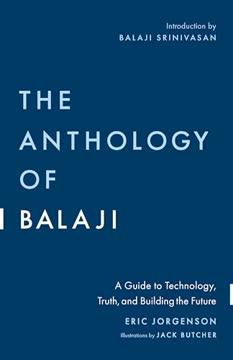
Every generation believes it is living through unprecedented change. Most are wrong. But occasionally, a convergence of technologies arrives that genuinely transforms how humans live, work, govern, and relate to one another. We are living through such a moment. The printing press broke the Catholic Church's monopoly on religious interpretation and triggered the Reformation, the Scientific Revolution, and eventually the Enlightenment. The steam engine reorganized physical labor and gave rise to the Industrial Revolution, which created modern capitalism, urbanization, and the nation-state as we know it. The internet has already reshaped media, commerce, and communication. But according to Balaji Srinivasan, the internet is merely the first wave of a much larger transformation. Balaji Srinivasan is one of the most provocative and original thinkers of the digital age. He has been a Stanford professor, a biotech entrepreneur, a general partner at Andreessen Horowitz, and the chief technology officer of Coinbase. He has founded companies in genomics and blockchain. He has written extensively about network states, decentralized governance, and the future of technology. His ideas have influenced founders, investors, and policymakers around the world. Eric Jorgenson, who previously compiled The Almanack of Naval Ravikant, has assembled Balaji's most important ideas into a coherent intellectual framework. The result is not a biography or a collection of tweets. It is a systematic exploration of how technology shapes truth, power, wealth, and human organization. The central problem this book addresses is simple but profound: most people are using outdated mental models to navigate a world that has already changed. We inherited our ideas about truth, money, governance, and work from an era of centralized institutions and industrial production. But technology has made many of those assumptions obsolete. The people who recognize this first will have enormous advantages. The people who do not will find themselves increasingly confused,…
Continue reading in the MinuteRead app
Get the complete 30-minute summary of The Anthology of Balaji
Get the complete summary in the appTechnology is the primary driver of human history and progress.
Truth comes in multiple forms, each with its own verification mechanism.
Build your own distribution. Do not rely on traditional gatekeepers.
The future is decentralized across media, finance, and governance.
To change the world, discover true facts and acquire sufficient distribution.
Don't argue. Build.
"The Anthology of Balaji" is a strong fit if you want practical ideas around business, philosophy, technology, especially themes like technology is the primary driver of human history and progress; truth comes in multiple forms, each with its own verification mechanism. The MinuteRead summary distills these concepts into a focused read, whether you're deciding whether to buy the book or applying its lessons at work.
Eric Jorgenson is an entrepreneur, writer, and investor known for his work in publishing and technology. As a founding member of Zaarly, he has demonstrated his entrepreneurial skills in the startup world. Jorgenson's writing career has flourished since 2014, with his blog reaching over a million readers. He is recognized for compiling and editing collections of insights from prominent thinkers, including "The Almanack of Naval Ravikant" and "The Anthology of Balaji." Jorgenson's work often focu…
View all summaries by Eric JorgensonContinue Reading
Access the complete 30-minute summary and thousands more nonfiction books in the MinuteRead app.

Continue reading the complete summary in the MinuteRead app.






