MinuteRead
30 min
Every year, millions of people sit down to write something that matters to them. An article explaining an important discovery. A book presenting years of accumulated knowledge. An essay arguing for a position they believe in deeply. And every year, a remarkable number of these people give up before they finish.
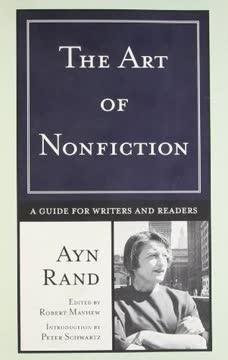
**Author:** Ayn Rand **Estimated Reading Time:** 42 minutes
**What You'll Learn:** How to approach nonfiction writing as a rational craft, master the principles of clarity and structure, harness your subconscious for creative flow, edit with precision, and develop a natural style that communicates ideas with power.
**Who This Book Is For:** Aspiring writers who feel blocked or mystified by the writing process, experienced authors seeking a systematic approach to their craft, and anyone who wants to communicate ideas clearly in articles, essays, or books.
Every year, millions of people sit down to write something that matters to them. An article explaining an important discovery. A book presenting years of accumulated knowledge. An essay arguing for a position they believe in deeply. And every year, a remarkable number of these people give up before they finish. They give up because they believe a myth. The myth says that writing is a mysterious gift, something you either have or you don't. According to this view, real writers are touched by inspiration. Words flow from them effortlessly. They never struggle with structure or clarity. They simply channel something beyond themselves onto the page. This myth is not merely wrong. It is actively destructive. It causes talented people with important ideas to abandon their work. It makes beginners feel that their struggles indicate a fundamental lack of ability rather than a normal part of learning a complex skill. It transforms what should be a rational, learnable craft into something that seems unattainable. Ayn Rand spent her life fighting against this kind of mysticism in every field she touched. As a novelist, philosopher, and nonfiction writer, she produced some of the most influential and widely read books of the twentieth century. Her novels The Fountainhead and Atlas Shrugged have sold tens of millions of copies. Her essays and nonfiction works continue to shape political and philosophical discussions decades after her death. But Rand was not born knowing how to write. She learned. She studied the craft systematically. She analyzed what worked and what didn't. She developed principles and tested them against her own experience. And in The Art of Nonfiction, she shares what she discovered. The book emerged from a series of informal lectures Rand gave in her own living room to a small group of friends and associates who wanted to understand how she approached her craft. The setting was intimate. The tone was direct. Rand spoke not as a distant authority but as a working writer explaining her method to people she cared about. What makes Rand's approach distinctive is her absolute rejection of the idea that writing cannot be understood. She treats writing the way an engineer treats bridge building: as a…
Continue reading in the MinuteRead app
Get the complete 30-minute summary of The Art of Nonfiction
Get the complete summary in the appWriting is a learnable skill, not a mystical gift. Approach it like any other craft: study the principles, practice regu
Always identify your theme before you begin writing. Your theme is what you want to say about your subject, and it serve
Never write without an outline. The outline is your roadmap. It prevents writer's block and ensures that your piece has
Draft from the subconscious. Trust your subconscious to supply the words while your conscious mind provides the directio
Edit with the conscious mind. Editing is a separate phase that requires a different mindset. Approach your draft with fr
Don't force style. Style emerges naturally from clear, honest writing. Focus on saying what you mean, and your unique vo
"The Art of Nonfiction" is a strong fit if you want practical ideas around writing, philosophy, reference, especially themes like writing is a learnable skill, not a mystical gift. approach it like any other craft: study the principles, practice regu; always identify your theme before you begin writing. your theme is what you want to say about your subject, and it serve. The MinuteRead summary distills these concepts into a focused read, whether you're deciding whether to buy the book or applying its lessons at work.
Ayn Rand , born Alisa Rosenbaum, was a Russian-American writer and philosopher known for her polemical novels and development of Objectivism. She gained fame with "The Fountainhead" and "Atlas Shrugged," promoting individual rights, laissez-faire capitalism, and rational self-interest. Rand's work, which sold over 37 million copies, received mixed literary reviews but significantly influenced conservative thought. After her fiction career, she focused on nonfiction to promote her philosophy. Whi…
View all summaries by Ayn RandContinue Reading
Access the complete 30-minute summary and thousands more nonfiction books in the MinuteRead app.

Continue reading the complete summary in the MinuteRead app.