MinuteRead
30 min
Book summary
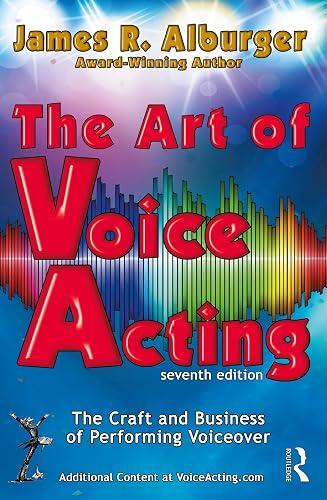
by James R. Alburger
Premium summary · Opens in the app · 30 min read
Every day, you hear voices. They sell you products during commercial breaks. They guide you through documentaries. They bring animated characters to life. They narrate the audiobooks you listen to during your commute. They instruct you in video games and e-learning courses. Most of the time, you barely notice them. The best voice actors make their work feel effortless, invisible, and completely natural.
Every day, you hear voices. They sell you products during commercial breaks. They guide you through documentaries. They bring animated characters to life. They narrate the audiobooks you listen to during your commute. They instruct you in video games and e-learning courses. Most of the time, you barely notice them. The best voice actors make their work feel effortless, invisible, and completely natural. But behind every polished voiceover performance lies a craft that takes years to develop. The voice actor must simultaneously be an actor, a technician, a businessperson, and a storyteller. They must learn to interpret scripts quickly, make bold creative choices, deliver consistent performances, and adapt to the demands of directors and clients. They must understand how to use their voice as an instrument while also understanding how to market themselves as a product. James R. Alburger wrote The Art of Voice Acting to bridge the gap between wanting to work in voiceover and actually knowing how to do it. The book exists because the industry is filled with misconceptions. Many people believe that having a pleasant voice is enough. Others think that voiceover work is simply reading words aloud. Some assume that success comes from luck or connections alone. The reality is far more complex and far more rewarding. Voice acting sits at the intersection of art and commerce. It requires the emotional depth of a stage actor combined with the technical precision of a recording engineer and the entrepreneurial drive of a small business owner. The people who succeed in this field are not necessarily the ones with the most naturally beautiful voices. They are the ones who understand how to connect with listeners, how to tell stories, and how to consistently deliver value to clients. The problem many aspiring voice actors face is that they focus on the wrong things. They obsess over equipment before developing their skills. They rush to create demos before they are ready. They treat voiceover as a mechanical process of speaking into a microphone rather than an artistic process of creating believable moments. They forget that the word "acting" is the most important part of the phrase "voice acting." Alburger's approach is different because he treats voice acting as a holistic discipline. He understands that the voice does not exist in isolation. It is connected to the body, the breath, the emotions, and the imagination. A voice actor cannot simply manipulate their vocal cords to create a desired sound. They must embody a character, understand a situation, and communicate a message with genuine emotional intent. This book also recognizes that the voiceover industry has undergone dramatic changes. The days when voice actors needed to live in major media markets and…
Continue reading in the MinuteRead app
Get the complete 30-minute summary of The Art of Voice Acting
Get the complete summary in the appVoice acting is storytelling, not reading. Every script contains a story waiting to be discovered.
Acting skills matter more than vocal quality. Focus on creating believable characters, not sounding good.
Authenticity beats technique. Connect with the emotional truth of the material.
Your voice is an instrument. Learn proper breathing, resonance, and articulation.
Microphone technique is essential. Learn to work with your equipment, not against it.
The seven core elements of character are audience, back story, character, desires, energy, focus, and gamble.
"The Art of Voice Acting" is a strong fit if you want practical ideas around theatre, business, reference, especially themes like voice acting is storytelling, not reading. every script contains a story waiting to be discovered; acting skills matter more than vocal quality. focus on creating believable characters, not sounding good. The MinuteRead summary distills these concepts into a focused read, whether you're deciding whether to buy the book or applying its lessons at work.
Motivated to help readers with voice acting is about creating real and believable characters in real and believable situations that, James R. Alburger wrote “The Art of Voice Acting” to package those ideas for a fast, focused read. In “The Art of Voice Acting”, James R. Alburger focuses on voice acting is about creating real and believable characters in real and believable situations that. Through “The Art of Voice Acting”, James R. Alburger distills the core ideas on theatre into lessons reader…
Continue Reading
Access the complete 30-minute summary and thousands more nonfiction books in the MinuteRead app.

Continue reading the complete summary in the MinuteRead app.