MinuteRead
30 min
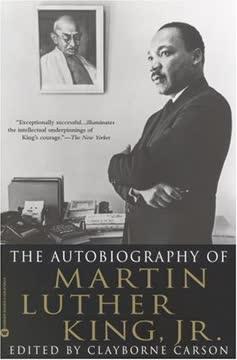
Book summary
Premium summary · Opens in the app · 30 min read
Martin Luther King Jr. never intended to lead a movement. When Rosa Parks refused to give up her seat on a Montgomery bus in December 1955, King was a twenty-six-year-old pastor who had been in town barely a year. He had a newborn daughter, a small congregation, and a quiet life planned around sermons and scholarship. He did not seek the presidency of the Montgomery Improvement Association. When his colleagues nominated him, he accepted because no one else would.
**Author:** Martin Luther King Jr. **Estimated Reading Time:** 45 minutes
**What You'll Learn**
You will learn how a young pastor from Atlanta transformed a nation through the disciplined practice of nonviolent resistance. You will understand the philosophy that turned lunch counter sit-ins into law, that converted jail cells into pulpits, and that faced fire hoses and police dogs with a force more powerful than violence. You will see how the Montgomery bus boycott became a blueprint for mass movements, how the Birmingham campaign forced a president to act, and how the Selma marches secured the vote. Beyond the victories, you will discover the deeper vision that drove King: the creation of the Beloved Community, a society where justice flows like water and righteousness like a mighty stream.
**Who This Book Is For**
This book is for anyone who has ever wondered whether moral force can overcome entrenched power. It is for activists seeking a philosophy that heals rather than destroys. It is for leaders who want to understand how to build movements that endure. It is for citizens who need to remember that progress is possible, that ordinary people can do extraordinary things, and that the arc of the moral universe, while long, does bend toward justice.
Martin Luther King Jr. never intended to lead a movement. When Rosa Parks refused to give up her seat on a Montgomery bus in December 1955, King was a twenty-six-year-old pastor who had been in town barely a year. He had a newborn daughter, a small congregation, and a quiet life planned around sermons and scholarship. He did not seek the presidency of the Montgomery Improvement Association. When his colleagues nominated him, he accepted because no one else would. That moment of reluctant leadership launched a thirteen-year journey that would reshape American democracy. King would travel six million miles, deliver over twenty-five hundred speeches, write five books, receive the Nobel Peace Prize, and lead campaigns that dismantled legal segregation across the American South. He would be arrested nearly thirty times, stabbed once, and have his home bombed. He would face constant death threats, surveillance by the FBI, and criticism from allies who thought him too radical and opponents who thought him too moderate. And on April 4, 1968, standing on the balcony of the Lorraine Motel in Memphis, he would be murdered at the age of thirty-nine. This autobiography, compiled from King's own writings, speeches, and interviews, tells the story from the inside. It is not a biography written by an observer but a self-portrait drawn by the man himself. Through his words, we see the evolution of a thinker who synthesized the teachings of Jesus, the tactics of Gandhi, and the democratic…
Continue reading in the MinuteRead app
Get the complete 30-minute summary of The Autobiography of Martin Luther King, Jr.
Get the complete summary in the appNonviolence is active resistance to evil, not passive acceptance of it. It requires more courage than violence.
The goal of nonviolent resistance is not to defeat opponents but to win their friendship and create the Beloved Communit
Unearned suffering is redemptive. Absorbing violence without retaliation exposes injustice and wins moral authority.
Direct action creates constructive tension that forces negotiation. Waiting for a convenient time perpetuates injustice.
An unjust law is out of harmony with moral law. Citizens have a duty to disobey unjust laws openly and lovingly.
Economic power, exercised through boycotts and selective buying, is a crucial tool for forcing institutional change.
"The Autobiography of Martin Luther King, Jr." is a strong fit if you want practical ideas around biography, history, autobiography, especially themes like nonviolence is active resistance to evil, not passive acceptance of it. it requires more courage than violence; the goal of nonviolent resistance is not to defeat opponents but to win their friendship and create the beloved communit. The MinuteRead summary distills these concepts into a focused read, whether you're deciding whether to buy the book or applying its lessons at work.
Martin Luther King, Jr. was a Baptist minister and pivotal leader of the American civil rights movement. He led the Montgomery Bus Boycott and co-founded the Southern Christian Leadership Conference. King's famous "I Have a Dream" speech at the 1963 March on Washington established him as one of America's greatest orators. In 1964, he became the youngest recipient of the Nobel Peace Prize for his nonviolent efforts to end segregation and racial discrimination. King was assassinated in 1968 in Mem…
View all summaries by Martin Luther King Jr.Continue Reading
Access the complete 30-minute summary and thousands more nonfiction books in the MinuteRead app.

Continue reading the complete summary in the MinuteRead app.