MinuteRead
30 min
Book summary
Premium summary · Opens in the app · 30 min read
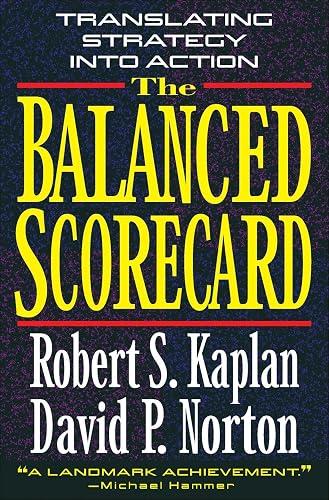
The Balanced Scorecard translates an organization's mission and strategy into a comprehensive set of performance measures that provides the framework for a strategic measurement and management system.
**Author:** Robert S. Kaplan
**Estimated Reading Time:** 45 minutes
**What You'll Learn:**
Why financial measures alone cannot guide modern organizations, how to build a measurement system across four essential perspectives, and how to transform that measurement system into a complete strategic management framework.
**Who This Book Is For:**
Executives and managers responsible for strategy execution, business leaders frustrated by the gap between strategy and daily operations, and anyone seeking a disciplined approach to aligning organizational effort with long-term goals.
Every organization has a strategy. Most organizations fail to execute it. The gap between strategic intent and operational reality remains one of the most persistent problems in management. Executives spend months crafting vision statements, analyzing markets, and setting ambitious goals. Then they return to their quarterly routines, managing the business through financial reports that tell them what happened yesterday but offer little guidance about what will happen tomorrow. This is not a failure of effort. It is a failure of measurement. Consider the typical management meeting. The agenda revolves around financial results: revenue growth, operating margins, return on capital, earnings per share. These numbers describe outcomes. They reveal whether the organization made money. But they do not explain why the organization made money, whether it can continue making money, or what actions would improve future performance. Financial measures are lagging indicators. They report the consequences of past actions. They cannot capture the value being created through customer relationships, innovative products, skilled employees, or efficient processes. They cannot tell you whether your strategy is working until it is too late to change course. Robert Kaplan, working with David Norton, recognized this fundamental limitation. Through extensive research with leading companies, they observed that organizations relying exclusively on financial measures were systematically underinvesting in the capabilities that would determine their future success. They were managing their businesses as if the industrial era had never ended, as if tangible assets remained the primary source of value creation. But the economy had changed. Intangible assets now dominate. Customer loyalty, employee knowledge, proprietary processes, information systems, brand reputation: these are the assets that create competitive advantage in a knowledge economy. Yet traditional accounting systems, developed centuries ago for an era of arm's-length transactions between independent entities, remain blind to them. The Balanced Scorecard emerged from a simple insight: what gets measured gets managed. If organizations measure only financial outcomes, they will manage only financial outcomes. If they want to execute strategy, they must measure the drivers of strategy. The solution is not to abandon financial measures. Profitability and shareholder value remain essential. The solution is to balance financial measures with measures from three additional perspectives: customer, internal business processes, and learning and growth. Together, these four perspectives…
Continue reading in the MinuteRead app
Get the complete 30-minute summary of Balanced Scorecard
Get the complete summary in the appFinancial measures alone cannot guide modern organizations. They are lagging indicators that cannot capture the value cr
The Balanced Scorecard organizes performance measurement into four perspectives: financial, customer, internal business
The four perspectives form a causal chain. Learning and growth enables internal processes, which deliver customer value,
Strategy requires choices. Identify your target customers and define your value proposition clearly.
The internal process perspective should include innovation and future capability building, not just current operations.
Learning and growth measures should be derived from the requirements of critical internal processes, not generic HR metr
"Balanced Scorecard" is a strong fit if you want practical ideas around business, management, leadership, especially themes like financial measures alone cannot guide modern organizations. they are lagging indicators that cannot capture the value cr; the balanced scorecard organizes performance measurement into four perspectives: financial, customer, internal business. The MinuteRead summary distills these concepts into a focused read, whether you're deciding whether to buy the book or applying its lessons at work.
Motivated to help readers with the Balanced Scorecard translates an organization's mission and strategy into a comprehensive set of, Robert S. Kaplan wrote “Balanced Scorecard” to package those ideas for a fast, focused read. In “Balanced Scorecard”, Robert S. Kaplan focuses on the Balanced Scorecard translates an organization's mission and strategy into a comprehensive set of. Through “Balanced Scorecard”, Robert S. Kaplan distills the core ideas on business into lessons readers can absorb in a…
View all summaries by Robert S. KaplanContinue Reading
Access the complete 30-minute summary and thousands more nonfiction books in the MinuteRead app.

Continue reading the complete summary in the MinuteRead app.