MinuteRead
30 min
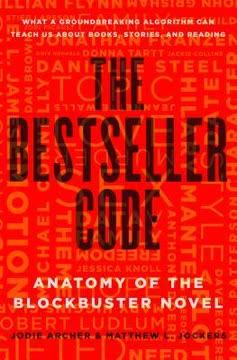
Book summary
by Jodie Archer
Premium summary · Opens in the app · 30 min read
Every year, tens of thousands of novels are published in the English language. A tiny fraction of them will find their way onto the New York Times bestseller list. The rest will disappear into the vast ocean of books that never find a substantial readership. For decades, the publishing industry has operated on a mixture of instinct, experience, and hope. Editors acquire books they believe in. Marketers craft campaigns they think will resonate. Authors write the stories they feel compelled to tel
**Author:** Jodie Archer
**Estimated Reading Time:** 45 minutes
**What You'll Learn:**
- Why bestsellers are not random accidents of marketing and luck - The hidden patterns that connect blockbuster novels across genres - How emotional arcs shape reader engagement - What stylistic choices separate bestselling authors from the rest - How character agency drives compelling fiction - Why the "girl" novel phenomenon reveals deeper cultural shifts - How algorithms can predict commercial success with surprising accuracy
**Who This Book Is For:**
Writers who want to understand the craft behind commercial success. Publishers and agents seeking a data-driven lens on acquisitions. Readers curious about why certain novels capture the cultural imagination. Anyone who has ever wondered whether literary success can be understood, measured, or predicted.
Every year, tens of thousands of novels are published in the English language. A tiny fraction of them will find their way onto the New York Times bestseller list. The rest will disappear into the vast ocean of books that never find a substantial readership. For decades, the publishing industry has operated on a mixture of instinct, experience, and hope. Editors acquire books they believe in. Marketers craft campaigns they think will resonate. Authors write the stories they feel compelled to tell. And yet, the hit rate remains staggeringly low. Less than one half of one percent of published novels become bestsellers. This failure rate has long been accepted as an unavoidable reality of the business. The conventional wisdom holds that literary success is fundamentally unknowable. A bestseller, the thinking goes, is a lightning strike. It is a perfect storm of timing, cultural mood, marketing muscle, and sheer luck. No one can predict it. No one can engineer it. The market is too chaotic, too subjective, too human to be understood through analysis. Jodie Archer and her research partner Matthew Jockers decided to test that assumption. They built a computer model, trained it on thousands of novels, and asked a simple question: can the difference between a bestseller and a flop be detected in the text itself? The answer surprised even them. Their model could identify bestselling novels with approximately 80 percent accuracy. It was not looking at marketing budgets or author photographs or celebrity endorsements. It was looking at words, sentences, themes, emotional arcs, and character behavior. And it was finding patterns. This book is the story of what they discovered. It is not a formula for writing a bestseller. The authors are explicit about that. No algorithm can replace the mysterious alchemy of creativity, voice, and vision that makes a novel worth reading. But what the data reveals is that bestselling novels share certain structural and stylistic characteristics that can be identified, studied, and…
Continue reading in the MinuteRead app
Get the complete 30-minute summary of The Bestseller Code
Get the complete summary in the appBestsellers are not random. They share measurable patterns that can be detected through computational analysis.
The bestseller-ometer can predict commercial success with approximately 80 percent accuracy.
Bestsellers focus on two or three dominant themes that occupy about 30 percent of the book's content.
The most successful themes are relatable and everyday: relationships, work, family, technology, crime.
Bestsellers follow regular, symmetrical patterns of emotional highs and lows.
Bestsellers use more contractions and informal language. They sound conversational.
"The Bestseller Code" is a strong fit if you want practical ideas around writing, books about books, crafts, especially themes like bestsellers are not random. they share measurable patterns that can be detected through computational analysis; the bestseller-ometer can predict commercial success with approximately 80 percent accuracy. The MinuteRead summary distills these concepts into a focused read, whether you're deciding whether to buy the book or applying its lessons at work.
Jodie Archer grew up loving books and writing, initially pursuing acting before studying English at Cambridge. She worked in publishing at Penguin and Macmillan before earning a PhD from Stanford, researching contemporary fiction and bestsellers. Archer later worked at Apple leading book research. Her personal experiences, including her mother's death and a divorce, temporarily halted her writing aspirations. Eventually, she co-authored The Bestseller Code based on her doctoral research. Now a f…
View all summaries by Jodie ArcherContinue Reading
Access the complete 30-minute summary and thousands more nonfiction books in the MinuteRead app.

Continue reading the complete summary in the MinuteRead app.