 MinuteRead
30 min
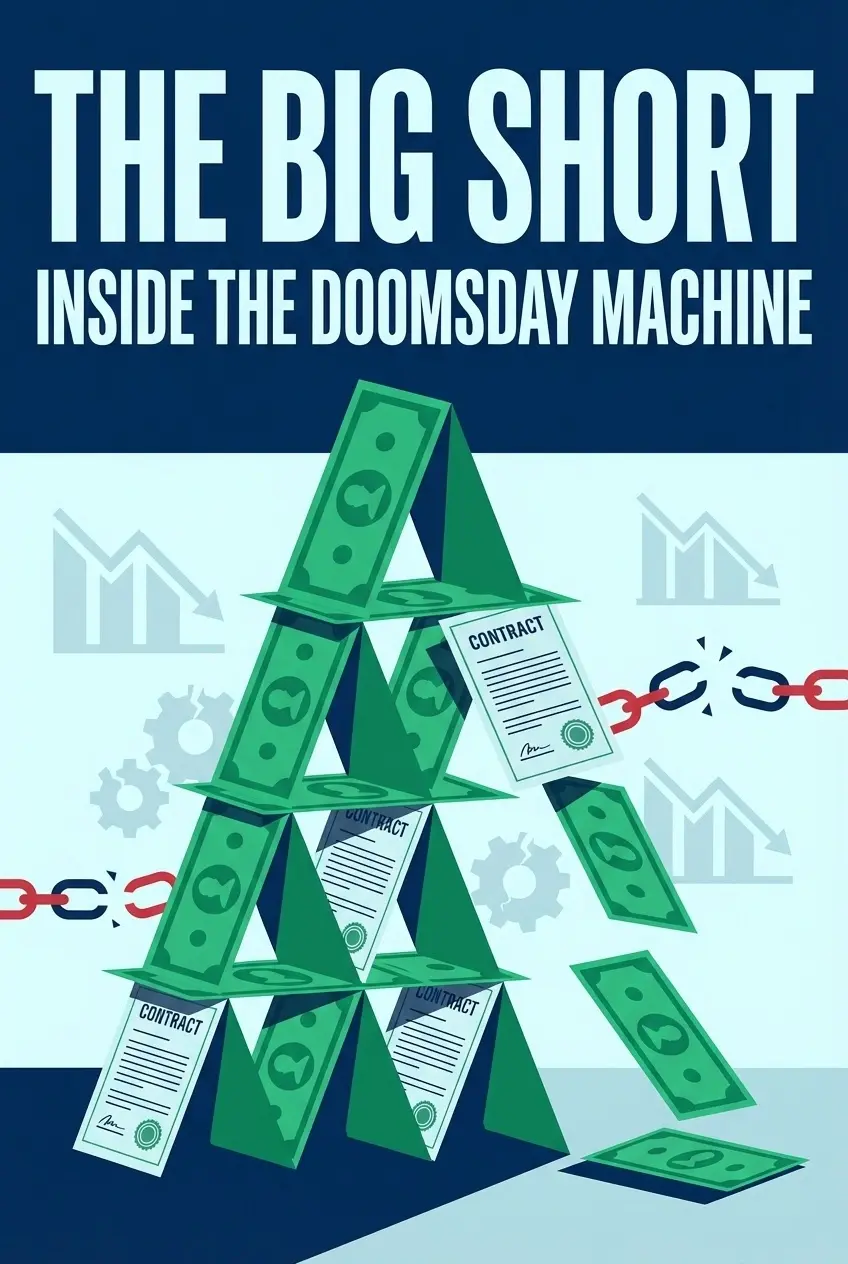
In the years leading up to 2008, the American financial system convinced itself of something remarkable: that risk had been mastered. The smartest people in the room, armed with complex mathematical models and decades of historical data, believed they had figured out how to make mortgage lending safe for everyone. Banks could lend money to people with no income, no jobs, and no assets, and somehow this was not only acceptable but profitable. The system worked because the models said it worked.
**Author:** Michael Lewis
**Estimated Reading Time:** 2 hours 15 minutes
**What You'll Learn:** How a small group of outsiders saw the greatest financial collapse in generations coming, why the entire system was built on a foundation of willful blindness, and what happens when complex financial instruments outpace human understanding.
**Who This Book Is For:** Anyone who wants to understand how the 2008 financial crisis actually happened, not through economic theory or political talking points, but through the stories of the people who saw it coming and bet against the system.
In the years leading up to 2008, the American financial system convinced itself of something remarkable: that risk had been mastered. The smartest people in the room, armed with complex mathematical models and decades of historical data, believed they had figured out how to make mortgage lending safe for everyone. Banks could lend money to people with no income, no jobs, and no assets, and somehow this was not only acceptable but profitable. The system worked because the models said it worked. Then the models were wrong. The Big Short tells the story of the people who looked at the same data everyone else was looking at and came to a different conclusion. They were not the establishment. They were outsiders, misfits, and skeptics. A one-eyed doctor with Asperger's syndrome who read mortgage prospectuses for fun. A foul-mouthed money manager who had already made a fortune betting against the subprime lending industry. A Deutsche Bank trader who saw the disaster coming and tried to warn anyone who would listen. Two guys in Berkeley, California, with thirty million dollars and no financial credentials, who decided to take on the entire global banking system. What makes their story remarkable is not just that they were right. It is that being right was so difficult. They had to fight their own investors, their own colleagues, and the entire weight of Wall Street's conventional wisdom. They had to watch their bets lose money month after month while the very people who had created the disaster collected enormous bonuses. They had to endure the surreal experience of knowing that the financial system was collapsing while everyone around them insisted everything was fine. The problem was not a lack of information. The information was there, buried in the fine print of mortgage bond prospectuses, hidden in the spreadsheets of loan-level data, visible to anyone who bothered to look. The problem was that almost no one wanted to look. The system was making too much money for too many people. The incentives all pointed in the wrong direction. The rating agencies were paid by the banks whose products they rated. The banks were paid to create loans…
Continue reading in the MinuteRead app
Get the complete 30-minute summary of The Big Short
Get the complete summary in the appThe subprime mortgage crisis was caused by a system that rewarded short-term behavior and punished skepticism.
The rating agencies gave AAA ratings to securities backed by subprime mortgages because they were paid by the banks that
Michael Burry saw the crisis coming because he read the actual mortgage bond prospectuses and analyzed the actual loans.
Steve Eisman saw the crisis as a moral outrage, not just a financial event.
Greg Lippmann tried to warn everyone, but the system was designed to ignore warnings.
Charlie Ledley and Jamie Mai proved that outsiders can see risks that insiders miss.
"The Big Short" is a strong fit if you want practical ideas around business, economics, finance, especially themes like the subprime mortgage crisis was caused by a system that rewarded short-term behavior and punished skepticism; the rating agencies gave aaa ratings to securities backed by subprime mortgages because they were paid by the banks that. The MinuteRead summary distills these concepts into a focused read, whether you're deciding whether to buy the book or applying its lessons at work.
Michael Monroe Lewis is an American author and financial journalist known for his nonfiction works on business, finance, and economics. Born in New Orleans, he graduated from Princeton and worked on Wall Street before writing his first book, Liar's Poker. Lewis has since authored several bestsellers, including Moneyball and The Big Short, which have been adapted into successful films. His writing style combines in-depth research with engaging storytelling, making complex financial topics accessi…
View all summaries by Michael LewisContinue Reading
Access the complete 30-minute summary and thousands more nonfiction books in the MinuteRead app.

Continue reading the complete summary in the MinuteRead app.






