MinuteRead
30 min
Book summary
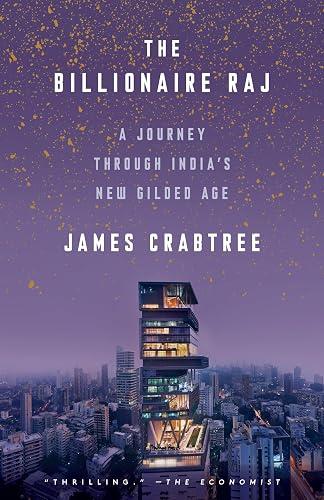
by James Crabtree
Premium summary · Opens in the app · 30 min read
India is a country of impossible contrasts. On a single street in Mumbai, you can walk past a gleaming luxury car showroom and, minutes later, step over a family sleeping on the pavement. You can see skyscrapers rising toward the clouds while, at their base, children play in open drains. This is not a new tension. India has always contained multitudes. But in the past three decades, something remarkable has happened. The gap between India's richest and its poorest has widened so dramatically tha
**Author:** James Crabtree
**Estimated Reading Time:** 45 minutes
**What You'll Learn:** How India's extraordinary economic transformation created one of the world's largest concentrations of billionaires, why this wealth boom sits alongside grinding poverty, and how the tangled relationship between business and politics shapes the world's largest democracy.
**Who This Book Is For:** Anyone seeking to understand modern India beyond the headlines. Whether you are an investor, a student of global economics, a policy professional, or simply curious about how nations develop, this book offers an essential window into one of the defining stories of our time.
India is a country of impossible contrasts. On a single street in Mumbai, you can walk past a gleaming luxury car showroom and, minutes later, step over a family sleeping on the pavement. You can see skyscrapers rising toward the clouds while, at their base, children play in open drains. This is not a new tension. India has always contained multitudes. But in the past three decades, something remarkable has happened. The gap between India's richest and its poorest has widened so dramatically that it now defines the country's politics, its economy, and its future. James Crabtree arrived in Mumbai in 2011 as the Financial Times bureau chief, expecting to cover a rising economic power. What he found was more complicated. India was indeed rising. Its economy was growing rapidly. Its cities were expanding. Its middle class was swelling. But alongside this progress, a new class of super-rich was emerging with a speed and scale that had no precedent in Indian history. These were not merely wealthy people. They were billionaires on a global scale, building homes that cost a billion dollars, buying private jets, and wielding political influence that rivaled that of elected officials. Crabtree calls this phenomenon the "Billionaire Raj." The term is deliberately provocative. It evokes the British Raj, the colonial era when a small foreign elite ruled over India's masses. But this time, the elite is homegrown. It is Indian. And its power is not enforced by colonial administrators but by the machinery of modern capitalism, politics, and media. The numbers tell a startling story. In the mid-1990s, India had just two billionaires. By the time Crabtree was writing, the country had more than one hundred, with a combined net worth approaching half a trillion dollars. Only the United States, China, and Russia had more. This explosion of wealth was not an accident. It was the direct result of India's economic liberalization, which began in 1991 when the government dismantled decades of socialist-era controls and opened the country to global markets. But the story of India's billionaires is not simply a story of entrepreneurial success. It is also a story…
Continue reading in the MinuteRead app
Get the complete 30-minute summary of The Billionaire Raj
Get the complete summary in the appIndia's billionaire boom is one of the fastest wealth accumulations in history, driven by economic liberalization and po
The top one percent of Indians own more than half of the national wealth, making India one of the most unequal countries
The season of scams exposed the deep entanglement of business and politics, costing the government tens of billions of d
India's economy is dominated by family-run conglomerates that have adapted to liberalization and thrived, often at the e
India's elections are among the most expensive in the world, with much of the money coming from undisclosed sources know
The Indian Premier League transformed cricket into a billion-dollar industry, changing the sport forever.
"The Billionaire Raj" is a strong fit if you want practical ideas around india, business, economics, especially themes like india's billionaire boom is one of the fastest wealth accumulations in history, driven by economic liberalization and po; the top one percent of indians own more than half of the national wealth, making india one of the most unequal countries. The MinuteRead summary distills these concepts into a focused read, whether you're deciding whether to buy the book or applying its lessons at work.
Motivated to help readers with "Today, James Crabtree wrote “The Billionaire Raj” to package those ideas for a fast, focused read. In “The Billionaire Raj”, James Crabtree focuses on "Today. Through “The Billionaire Raj”, James Crabtree distills the core ideas on india into lessons readers can absorb in a single short sitting. Readers turn to this work when they want James Crabtree's perspective on the subject without working through the entire original volume. The Billionaire Raj: A Journey Thr…
Continue Reading
Access the complete 30-minute summary and thousands more nonfiction books in the MinuteRead app.

Continue reading the complete summary in the MinuteRead app.