 MinuteRead
30 min
Book summary
Premium summary · Opens in the app · 30 min read
We live in a world that worships answers. From the time we are children, we are rewarded for knowing, for responding quickly, for having the right solution. School trains us to raise our hands when we can answer. Workplaces promote people who project certainty. Social media rewards confident declarations and punishes thoughtful hesitation. The message is clear: answers are valuable, questions are a sign of weakness.
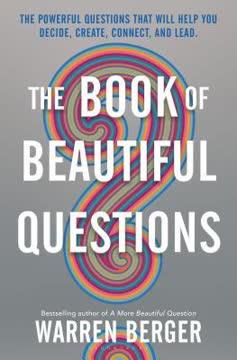
**Author:** Warren Berger **Estimated Reading Time:** 45 minutes
**What You'll Learn**
How to use questions as a practical tool for making wiser decisions, unlocking creative potential, building deeper relationships, and leading with greater impact. You will discover why questioning is a skill that can be developed, what prevents us from asking better questions, and how specific questions can transform the way you think and live.
**Who This Book Is For**
Anyone who wants to think more clearly, decide more confidently, connect more authentically, and lead more effectively. Whether you are an executive facing complex choices, a creative professional seeking fresh ideas, a parent wanting better conversations, or simply someone who senses that better questions lead to better lives, this book offers a practical path forward.
We live in a world that worships answers. From the time we are children, we are rewarded for knowing, for responding quickly, for having the right solution. School trains us to raise our hands when we can answer. Workplaces promote people who project certainty. Social media rewards confident declarations and punishes thoughtful hesitation. The message is clear: answers are valuable, questions are a sign of weakness. Yet this orientation is increasingly mismatched with reality. The pace of change has accelerated beyond anything previous generations faced. The problems we encounter are more complex, more interconnected, and more ambiguous. The answers that worked yesterday often fail today. The expertise we spent years building can become obsolete in months. In such a world, the ability to ask good questions is not a soft skill or a nice-to-have. It is a survival mechanism. Warren Berger has spent years studying the art and science of questioning. He has interviewed hundreds of innovators, leaders, scientists, and creative thinkers. What he discovered is both simple and profound: the people who make the greatest impact are not necessarily the ones with the most answers. They are the ones who ask the most beautiful questions. A beautiful question is one that challenges assumptions, opens new possibilities, and leads to meaningful change. It is a question that cannot be answered with a quick Google search. It requires reflection, exploration, and often a willingness to sit with uncertainty. Beautiful questions are ambitious yet actionable. They shift how we see a problem and what we believe is possible. Consider the story of Edwin Land, the inventor of instant photography. The idea for the Polaroid camera came not from a technical breakthrough but from a question asked by his three-year-old daughter. They were on vacation, and Land took a photograph. His daughter asked why she could not see the picture immediately. Land could have dismissed this as childish impatience. Instead, he treated it as a serious challenge. Why…
Continue reading in the MinuteRead app
Get the complete 30-minute summary of The Book of Beautiful Questions
Get the complete summary in the appQuestioning is a cognitive tool that organizes thinking around what we do not know.
Five enemies block questioning: fear, knowledge, bias, hubris, and time.
Beautiful questions are ambitious, actionable, and assumption-challenging.
Better decisions come from asking what would prove you wrong.
Creativity begins with problem-finding, which begins with questioning.
Strong relationships are built on open-ended questions and genuine listening.
"The Book of Beautiful Questions" is a strong fit if you want practical ideas around business, self help, leadership, especially themes like questioning is a cognitive tool that organizes thinking around what we do not know; five enemies block questioning: fear, knowledge, bias, hubris, and time. The MinuteRead summary distills these concepts into a focused read, whether you're deciding whether to buy the book or applying its lessons at work.
Warren Berger is an author and speaker specializing in innovation, creativity, and the power of questioning. His latest work is the 10th Anniversary edition of A MORE BEAUTIFUL QUESTION, published by Bloomsbury Worldwide. This updated version includes new chapters on how questioning can enhance leadership, clear thinking, and effective communication. Berger engages with fellow curious thinkers through his questioning website, where he explores the potential of inquiry to generate breakthrough id…
View all summaries by Warren BergerContinue Reading
Access the complete 30-minute summary and thousands more nonfiction books in the MinuteRead app.

Continue reading the complete summary in the MinuteRead app.






