 MinuteRead
30 min
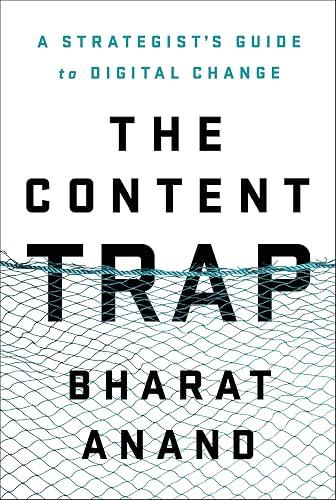
Book summary
by Bharat Anand
Premium summary · Opens in the app · 30 min read
In the summer of 2007, executives at the *New York Times* faced a decision that would shape the future of journalism. The internet was destroying the newspaper's business model. Print advertising revenue was falling. Readers were migrating online. The question was simple: should the *Times* charge for its digital content or keep it free?
**Author:** Bharat Anand
**Estimated Reading Time:** 45 minutes
**What You'll Learn:**
Why great content alone rarely wins in the digital age. How connections between users, products, and organizational choices create lasting competitive advantage. Why companies like Schibsted, Tencent, and the *New York Times* succeeded while others failed. How to apply connection thinking to your own career, business, and decisions.
**Who This Book Is For:**
Leaders navigating digital disruption. Entrepreneurs building platforms and ecosystems. Creators wondering why quality work isn't enough. Strategists seeking frameworks that explain why some digital businesses thrive while others collapse. Anyone who wants to understand the hidden architecture behind the world's most successful digital companies.
In the summer of 2007, executives at the *New York Times* faced a decision that would shape the future of journalism. The internet was destroying the newspaper's business model. Print advertising revenue was falling. Readers were migrating online. The question was simple: should the *Times* charge for its digital content or keep it free? The debate consumed the newsroom and the boardroom. On one side stood those who believed that quality journalism deserved payment. The *Times* produced some of the world's best reporting. Surely readers would pay for it. On the other side stood those who feared that paywalls would drive readers away, ceding the digital audience to competitors who offered content for free. The *Times* chose to keep its content free. It was a decision rooted in a powerful assumption: that in the digital age, content wants to be free, and the only path forward was to build the largest possible audience. The assumption seemed reasonable. It was also wrong. Across the Atlantic, a Norwegian media company faced the same crisis. Schibsted, a family-owned publisher, watched its newspaper revenues decline as readers moved online. But Schibsted made a different choice. Instead of focusing solely on protecting its content, the company invested in something else entirely: online classifieds. It built platforms where users connected with each other to buy and sell goods, find jobs, and rent apartments. These platforms had little to do with journalism. They had everything to do with connections. By 2015, Schibsted's online classifieds business was generating more than 80 percent of the company's profits. The company had become one of the most successful digital media transformations in the world. The *New York Times*, meanwhile, spent years struggling to find a sustainable digital model before eventually introducing a paywall in 2011. What explains the difference? Both companies had great content. Both faced the same technological disruption. Both had talented leaders. The answer lies in what Bharat Anand calls the Content Trap: the belief that content is the primary source of value, and that success in the digital age depends…
Continue reading in the MinuteRead app
Get the complete 30-minute summary of The Content Trap
Get the complete summary in the appFocus on connections, not just content. The Content Trap is the tendency to overlook connections in favor of content.
User connections create network effects. A product becomes more valuable as more people use it.
Preference connections drive adoption. Users' choices are influenced by the choices of others.
Product connections create ecosystems. Complementary products enhance each other's value.
Functional connections create strategic alignment. Aligned choices are difficult to imitate.
Say no. Focus enables excellence. Spreading resources too thin leads to mediocrity.
"The Content Trap" is a strong fit if you want practical ideas around business, technology, economics, especially themes like focus on connections, not just content. the content trap is the tendency to overlook connections in favor of content; user connections create network effects. a product becomes more valuable as more people use it. The MinuteRead summary distills these concepts into a focused read, whether you're deciding whether to buy the book or applying its lessons at work.
Motivated to help readers with "Connections can help businesses, Bharat Anand wrote “The Content Trap” to package those ideas for a fast, focused read. In “The Content Trap”, Bharat Anand focuses on "Connections can help businesses. Through “The Content Trap”, Bharat Anand distills the core ideas on business into lessons readers can absorb in a single short sitting. Readers turn to this work when they want Bharat Anand's perspective on the subject without working through the entire original volu…
Continue Reading
Access the complete 30-minute summary and thousands more nonfiction books in the MinuteRead app.

Continue reading the complete summary in the MinuteRead app.






