MinuteRead
30 min
Book summary
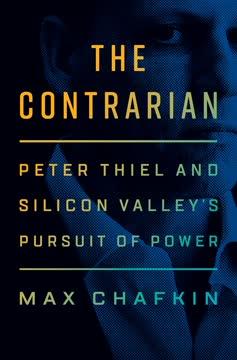
by Max Chafkin
Premium summary · Opens in the app · 30 min read
Peter Thiel has spent his entire life betting against the crowd. When everyone else was celebrating the democratic promise of the internet, he was building a digital currency designed to undermine nation-states. When Silicon Valley was preaching the gospel of college education, he was paying students to drop out. When the entire tech industry lined up behind Hillary Clinton in 2016, he stood on a stage at the Republican National Convention and declared that Donald Trump was the change America ne
**Author:** Max Chafkin
**Estimated Reading Time:** 45 minutes
**What You'll Learn:** How Peter Thiel built his fortune, his network, and his political influence by systematically betting against conventional wisdom. You will understand the origins of his contrarian mindset, the strategies behind PayPal and Palantir, the motivations for his war on Gawker, and the path that led him to become one of Donald Trump's most important supporters in Silicon Valley.
**Who This Book Is For:** Anyone who wants to understand the intersection of technology, wealth, and political power in modern America. If you have wondered how a libertarian German immigrant became the kingmaker of the far right, or how a single investor reshaped the culture of Silicon Valley, this book provides the definitive account.
Peter Thiel has spent his entire life betting against the crowd. When everyone else was celebrating the democratic promise of the internet, he was building a digital currency designed to undermine nation-states. When Silicon Valley was preaching the gospel of college education, he was paying students to drop out. When the entire tech industry lined up behind Hillary Clinton in 2016, he stood on a stage at the Republican National Convention and declared that Donald Trump was the change America needed. The conventional story about Thiel is that he is a genius investor with a knack for spotting opportunities others miss. He co-founded PayPal, made the first outside investment in Facebook, and built Palantir into one of the most valuable software companies in the world. His book Zero to One became a bible for aspiring entrepreneurs. His contrarian philosophy has been celebrated as the key to his success. But the real story is more complicated and more troubling. Max Chafkin spent years investigating Thiel, interviewing his friends, enemies, colleagues, and rivals. What emerges is a portrait of a man driven not just by intellectual conviction but by deep-seated resentment, a hunger for control, and a willingness to destroy anyone who stands in his way. Thiel grew up as an outsider. Born in Germany, raised partly in apartheid South Africa, he arrived in America as a child and never quite fit in. He was too smart, too intense, too different. The liberal culture of his adopted country seemed to mock him at every turn. Stanford, the elite university he had dreamed of attending, turned out to be a place where he felt alienated and disrespected. The experience left him with a permanent chip on his shoulder and a conviction that the establishment was not just wrong but actively hostile to people like him. That sense of victimization became the engine of his career. He built PayPal as a way to escape the control of governments and central banks.…
Continue reading in the MinuteRead app
Get the complete 30-minute summary of The Contrarian
Get the complete summary in the appPeter Thiel's contrarianism is rooted in childhood alienation and a deep-seated resentment of the liberal establishment.
The Stanford Review was the birthplace of the Thielverse, a network of loyalists who would populate his companies and sp
PayPal was founded on a libertarian vision of undermining government power, but building it required working with regula
The PayPal Mafia is one of the most powerful networks in business history, built on homogeneity, loyalty, and shared ide
Palantir represents a fundamental contradiction in Thiel's worldview: a libertarian who built a surveillance empire.
The Gawker war demonstrated that billionaires can use their wealth to destroy media companies, with chilling implication
"The Contrarian" is a strong fit if you want practical ideas around biography, business, politics, especially themes like peter thiel's contrarianism is rooted in childhood alienation and a deep-seated resentment of the liberal establishment; the stanford review was the birthplace of the thielverse, a network of loyalists who would populate his companies and sp. The MinuteRead summary distills these concepts into a focused read, whether you're deciding whether to buy the book or applying its lessons at work.
Max Chafkin is a technology journalist and editor at Bloomberg Businessweek. He has covered Silicon Valley and the tech industry for over a decade, writing extensively about startups, venture capital, and influential figures in the tech world. Chafkin's work has appeared in various publications, including Fast Company and Inc. Magazine. He is known for his in-depth reporting and analysis of the business and cultural impact of technology companies. The Contrarian is his first book, showcasing his…
View all summaries by Max ChafkinContinue Reading
Access the complete 30-minute summary and thousands more nonfiction books in the MinuteRead app.

Continue reading the complete summary in the MinuteRead app.