MinuteRead
30 min
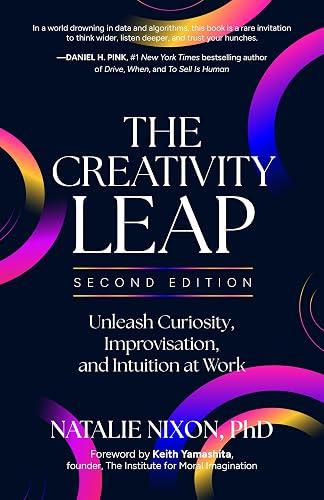
Book summary
by Natalie Nixon
Premium summary · Opens in the app · 30 min read
Most people have a story about the moment they decided they were not creative. Perhaps a teacher dismissed a drawing. Perhaps a parent steered them toward practical subjects. Perhaps a boss laughed at an unconventional idea. Whatever the specific memory, the conclusion was the same: creativity belongs to someone else. Artists. Musicians. Designers. The people with paint under their fingernails and strange haircuts. Not us.
**Author:** Natalie Nixon
**Estimated Reading Time:** 42 minutes
**What You'll Learn:**
- Why creativity is not a rare gift but a fundamental human capacity - How to develop creativity through inquiry, improvisation, and intuition - Why wonder and rigor must work together to produce meaningful innovation - How to build creative communities that amplify collective problem-solving - Practical ways to prepare yourself and your organization for an uncertain future
**Who This Book Is For:**
This book is for anyone who has ever said, "I'm just not creative." It is for managers who need their teams to innovate but do not know how to unlock that potential. It is for professionals navigating a world where automation is reshaping every industry. It is for leaders who sense that the old ways of working are no longer sufficient. And it is for individuals who want to reclaim a birthright they may have forgotten they possessed.
Most people have a story about the moment they decided they were not creative. Perhaps a teacher dismissed a drawing. Perhaps a parent steered them toward practical subjects. Perhaps a boss laughed at an unconventional idea. Whatever the specific memory, the conclusion was the same: creativity belongs to someone else. Artists. Musicians. Designers. The people with paint under their fingernails and strange haircuts. Not us. Natalie Nixon wrote The Creativity Leap to dismantle this belief. Her central claim is both simple and radical: to be human is to be hardwired to be creative. Creativity is not a rare genetic endowment. It is not a personality trait. It is a competency, like reading or arithmetic, that can be developed, practiced, and strengthened. The problem is that most of us have never been taught how. This matters because the world is not getting less complex. The pace of change continues to accelerate. Automation and artificial intelligence are transforming entire industries. Problems that once had clear answers now require navigating ambiguity. Organizations that cannot adapt will not survive. Individuals who cannot think creatively will find themselves displaced. The stakes are not abstract. They are deeply personal and urgently practical. Yet most organizations are structured to suppress creativity rather than cultivate it. Schools reward compliance over curiosity. Companies optimize for efficiency and punish experimentation. Leaders demand innovation while creating environments that make it impossible. The result is a widespread sense that creativity is something that happens elsewhere, in design studios and Silicon Valley garages, not in ordinary workplaces. Nixon's approach is different because she refuses to treat creativity as magic. She breaks it down into observable, learnable practices. Her 3iCreativity model identifies three core competencies: inquiry, improvisation, and intuition. These are not vague aspirations. They are specific skills that can be practiced…
Continue reading in the MinuteRead app
Get the complete 30-minute summary of The Creativity Leap
Get the complete summary in the appCreativity is a learnable competency, not an innate trait.
The 3iCreativity model: inquiry, improvisation, and intuition.
Creativity is the ability to toggle between wonder and rigor.
Inquiry is the root of wisdom and the precursor of empathy.
Improvisation requires deep preparation and the willingness to embrace mistakes.
Intuition is a data point to be combined with rigorous analysis.
"The Creativity Leap" is a strong fit if you want practical ideas around business, self help, design, especially themes like creativity is a learnable competency, not an innate trait; the 3icreativity model: inquiry, improvisation, and intuition. The MinuteRead summary distills these concepts into a focused read, whether you're deciding whether to buy the book or applying its lessons at work.
Motivated to help readers with "To be human is to be hardwired to be creative." Creativity is accessible to all, Natalie Nixon wrote “The Creativity Leap” to package those ideas for a fast, focused read. In “The Creativity Leap”, Natalie Nixon focuses on "To be human is to be hardwired to be creative." Creativity is accessible to all. Through “The Creativity Leap”, Natalie Nixon distills the core ideas on business into lessons readers can absorb in a single short sitting. Readers turn to this wo…
Continue Reading
Access the complete 30-minute summary and thousands more nonfiction books in the MinuteRead app.

Continue reading the complete summary in the MinuteRead app.