 MinuteRead
30 min
Book summary
Premium summary · Opens in the app · 30 min read
Every year, organizations launch ambitious change initiatives. New strategies are announced with fanfare. Training programs roll out across departments. Consultants arrive with frameworks and methodologies. Leaders speak passionately about transformation, innovation, and building learning organizations.
**Author:** Peter M. Senge
**Estimated Reading Time:** 45 minutes
**What You'll Learn:**
Why most organizational change efforts fail despite good intentions, how to recognize the invisible forces that block progress, and what leaders can do to sustain meaningful transformation over time.
**Who This Book Is For:**
Leaders, managers, change agents, and anyone who has ever tried to improve an organization and wondered why their efforts stalled, met resistance, or quietly faded away.
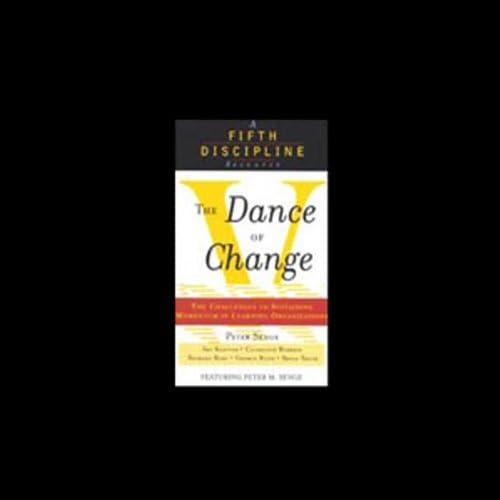
Every year, organizations launch ambitious change initiatives. New strategies are announced with fanfare. Training programs roll out across departments. Consultants arrive with frameworks and methodologies. Leaders speak passionately about transformation, innovation, and building learning organizations. And yet, most of these efforts fail. The failure is rarely dramatic. There is no single moment when everything collapses. Instead, the change simply loses momentum. Enthusiasm wanes. Attendance at meetings drops. People return to old habits. The new language lingers for a while, but the new behaviors never take root. Within a year or two, the initiative is remembered only as "that program we tried." Peter Senge wrote The Dance of Change to understand why this happens and what can be done about it. The book emerged from a simple observation. After the publication of The Fifth Discipline, Senge and his colleagues at MIT worked with hundreds of organizations attempting to build learning capabilities. They saw the same pattern repeatedly. Initial excitement gave way to frustration. Early wins were followed by setbacks. Leaders who had championed change became discouraged. Teams that had shown real progress slipped back into old patterns. The problem was not a lack of commitment. The people involved genuinely wanted change. The problem was not a lack of good ideas. The concepts were sound. The problem was something deeper, something structural, something that most change management approaches failed to address. Senge came to believe that organizational change follows the same dynamics as any living system. Growth processes push change forward. Limiting processes hold it back. These forces interact continuously, creating a dance of advance and retreat, progress and resistance. Most change efforts focus exclusively on the growth side. Leaders try to increase enthusiasm, build momentum, communicate vision, and celebrate wins. They treat resistance as an obstacle to overcome rather than a signal to understand. When limits appear, they push harder. And when pushing harder fails, they blame themselves, their colleagues, or the organization's culture. The Dance of Change offers a different approach. It argues that sustainable change requires understanding and working with the entire system of forces, both those that drive growth and those that constrain it. The limits are not enemies to be defeated. They are signals that something in the system needs attention. The book identifies ten…
Continue reading in the MinuteRead app
Get the complete 30-minute summary of The Dance of Change
Get the complete summary in the appEvery movement is being inhibited as it occurs. Growth and limits coexist and interact continuously.
Sustainable change requires three reinforcing processes: personal results, networks, and business results.
The ten challenges of change are predictable. Anticipate them and prepare strategies for addressing them.
Time scarcity is a structural problem. Create time flexibility by eliminating low-value activities.
Build internal coaching capacity. External consultants are not a substitute for ongoing support.
Establish relevance by connecting change to business priorities and individual concerns.
"The Dance of Change" is a strong fit if you want practical ideas around business, management, leadership, especially themes like every movement is being inhibited as it occurs. growth and limits coexist and interact continuously; sustainable change requires three reinforcing processes: personal results, networks, and business results. The MinuteRead summary distills these concepts into a focused read, whether you're deciding whether to buy the book or applying its lessons at work.
Motivated to help readers with "Every movement is being inhibited as it occurs." Growth and limits interplay, Peter M. Senge wrote “The Dance of Change” to package those ideas for a fast, focused read. In “The Dance of Change”, Peter M. Senge focuses on "Every movement is being inhibited as it occurs." Growth and limits interplay. Through “The Dance of Change”, Peter M. Senge distills the core ideas on business into lessons readers can absorb in a single short sitting. Readers turn to this work …
View all summaries by Peter M. SengeContinue Reading
Access the complete 30-minute summary and thousands more nonfiction books in the MinuteRead app.

Continue reading the complete summary in the MinuteRead app.






