MinuteRead
30 min
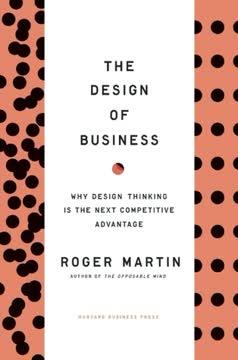
Book summary
Premium summary · Opens in the app · 30 min read
Every business leader faces a fundamental tension. On one side stands the demand for reliability: consistent results, predictable earnings, efficient operations, and minimized risk. On the other side stands the need for validity: producing something genuinely new, solving problems that have no proven solution, and creating value that did not exist before.
**Author:** Roger L. Martin
**Estimated Reading Time:** 45 minutes
**What You'll Learn:**
- Why the most successful companies balance two seemingly opposing modes of thinking - How knowledge moves through a predictable funnel from mystery to algorithm - What abductive reasoning is and why it powers breakthrough innovation - How leaders can build organizations that sustain innovation over decades - Practical ways to develop your own design thinking capabilities
**Who This Book Is For:**
This book is for leaders who sense that their organizations have become too rigid, too focused on efficiency at the expense of creativity. It is for entrepreneurs who want to understand how great businesses are actually built. It is for managers who feel trapped between the demand for predictable results and the need for fresh thinking. And it is for anyone curious about why some companies seem to innovate effortlessly while others struggle despite enormous resources.
Every business leader faces a fundamental tension. On one side stands the demand for reliability: consistent results, predictable earnings, efficient operations, and minimized risk. On the other side stands the need for validity: producing something genuinely new, solving problems that have no proven solution, and creating value that did not exist before. Most organizations resolve this tension by choosing reliability. They refine existing processes, optimize current products, and squeeze out variability. This approach works wonderfully until it does not. Eventually, every reliable formula runs its course. Markets shift. Technologies change. Competitors emerge. And the organization that optimized itself for consistency discovers it has lost the capacity to create anything new. Roger Martin wrote The Design of Business to address this exact problem. Drawing on his experience as Dean of the Rotman School of Management and his work with companies like Procter & Gamble, Research In Motion, and Cirque du Soleil, Martin argues that the most successful organizations do not choose between reliability and validity. They build the capacity to pursue both simultaneously. The book's central insight is that innovation is not a mysterious gift possessed by a creative few. It is a disciplined form of thinking that can be understood, taught, and embedded in organizations. Martin calls this form of thinking design thinking, and he shows how it enables companies to move knowledge through a predictable progression from mystery to heuristic to algorithm. What makes Martin's argument distinctive is his insistence that design thinking is not opposed to analytical thinking. The best organizations use both. Analytical thinking refines what is already known. Design thinking generates what could be known. The firms that master this balance gain what Martin calls a nearly inexhaustible, long-term business advantage. This matters because the business world has become obsessed with analysis. Spreadsheets, data dashboards, and…
Continue reading in the MinuteRead app
Get the complete 30-minute summary of The Design of Business
Get the complete summary in the appKnowledge moves through three stages: mystery, heuristic, and algorithm.
Value is created at the mystery stage and extracted at the algorithm stage.
Most organizations have a built-in bias toward reliability that undermines innovation.
The best organizations balance reliability and validity simultaneously.
Abductive reasoning is the logic of what might be and the foundation of design thinking.
Design thinking requires changes in organizational structures, processes, and cultures.
"The Design of Business" is a strong fit if you want practical ideas around business, design, management, especially themes like knowledge moves through three stages: mystery, heuristic, and algorithm; value is created at the mystery stage and extracted at the algorithm stage. The MinuteRead summary distills these concepts into a focused read, whether you're deciding whether to buy the book or applying its lessons at work.
Roger Martin is a prominent business thinker and academic. He served as Dean of the Rotman School of Management from 1998 to 2013 and is now the Institute Director of the Martin Prosperity Institute. Martin has authored numerous books and articles on business strategy, design thinking, and corporate responsibility. He is a regular contributor to prestigious publications like Harvard Business Review and Financial Times. Martin's work has earned him recognition as an influential global business th…
View all summaries by Roger L. MartinContinue Reading
Access the complete 30-minute summary and thousands more nonfiction books in the MinuteRead app.

Continue reading the complete summary in the MinuteRead app.