 MinuteRead
30 min
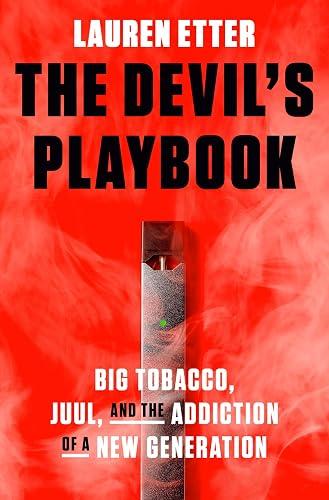
Book summary
by Lauren Etter
Premium summary · Opens in the app · 30 min read
Every generation believes it has discovered something new. The thrill of invention carries with it a kind of innocence, a conviction that this time things will be different. This time, the technology will be better. This time, the creators will be more responsible. This time, the outcome will be different.
**Author:** Lauren Etter
**Estimated Reading Time:** 45 minutes
**What You'll Learn:** How a Stanford design project became Juul, the company that hooked a new generation on nicotine, and how Big Tobacco's decades-old playbook of deception found new life in Silicon Valley.
**Who This Book Is For:** Anyone who wants to understand how innovation can go terribly wrong, how corporate interests shape public health, and why the fight against nicotine addiction remains one of America's most enduring public policy failures.
Every generation believes it has discovered something new. The thrill of invention carries with it a kind of innocence, a conviction that this time things will be different. This time, the technology will be better. This time, the creators will be more responsible. This time, the outcome will be different. The story of Juul Labs begins with this exact conviction. Two Stanford graduate students, James Monsees and Adam Bowen, looked at the cigarette and saw a design problem waiting to be solved. They believed they could engineer a better solution, one that would eliminate the deadly smoke while preserving the experience smokers craved. They saw themselves as disruptors in the classic Silicon Valley mold, outsiders who would challenge a stagnant industry and improve public health in the process. What they failed to see was that they were stepping onto a battlefield that had been contested for more than half a century. The tobacco industry had spent decades perfecting a playbook of denial, deception, and delay. It had fought scientists, manipulated regulators, and targeted young people with ruthless precision. The industry had been forced to sign the largest civil settlement in American history, the Master Settlement Agreement of 1998, which required tobacco companies to pay billions of dollars annually and restricted their ability to market to children. Yet even after this historic defeat, the fundamental dynamics of nicotine addiction remained unchanged. Lauren Etter's investigation reveals how the past and present collided in the story of Juul. The company's founders studied the tobacco industry's archives, learning from decades of failed attempts to create a safer cigarette. They believed they could succeed where others had failed. They had better technology, better design, and the full backing of Silicon Valley's innovation ecosystem. What they lacked was an understanding of the forces they were unleashing. The problem this book addresses is not simply about one company or one product. It is about the recurring pattern that emerges when addictive products meet profit motives. It is about how easily good intentions can be corrupted by market incentives. It is about how quickly innovation can outpace regulation, leaving public health officials scrambling to catch up. And it is about how the lessons of the past are so easily…
Continue reading in the MinuteRead app
Get the complete 30-minute summary of The Devil's Playbook
Get the complete summary in the appBig Tobacco perfected a playbook of denial, deflection, and delay that allowed it to sell lethal products for decades wh
The founders of Juul studied the tobacco industry's history and believed they could succeed where others had failed.
Nicotine is highly addictive but not the primary cause of smoking-related diseases. The harm comes from combustion.
Juul's product was uniquely appealing to young people, regardless of the founders' intentions.
The youth vaping epidemic undid decades of progress in reducing youth nicotine use.
The Altria-Juul deal was a disaster that destroyed Juul's credibility and cost Altria billions.
"The Devil's Playbook" is a strong fit if you want practical ideas around business, health, history, especially themes like big tobacco perfected a playbook of denial, deflection, and delay that allowed it to sell lethal products for decades wh; the founders of juul studied the tobacco industry's history and believed they could succeed where others had failed. The MinuteRead summary distills these concepts into a focused read, whether you're deciding whether to buy the book or applying its lessons at work.
Motivated to help readers with defendants have marketed and sold their lethal products with zeal, Lauren Etter wrote “The Devil's Playbook” to package those ideas for a fast, focused read. In “The Devil's Playbook”, Lauren Etter focuses on defendants have marketed and sold their lethal products with zeal. Through “The Devil's Playbook”, Lauren Etter distills the core ideas on business into lessons readers can absorb in a single short sitting. Readers turn to this work when they want Lauren Etter…
Continue Reading
Access the complete 30-minute summary and thousands more nonfiction books in the MinuteRead app.

Continue reading the complete summary in the MinuteRead app.






