 MinuteRead
30 min
Book summary
Premium summary · Opens in the app · 30 min read
Every few decades, the fundamental rules of business change. The industrial revolution replaced craft production with factories and scale. The rise of mass media created modern marketing and brands. The internet and mobile computing have now triggered another shift, one that is still unfolding around us.
**Author:** David L. Rogers
**Estimated Reading Time:** 42 minutes
**What You'll Learn:**
- Why digital transformation fails when treated as a technology project - How to rethink customers, competition, data, innovation, and value for the digital age - How to build platforms that benefit from network effects - How to run experiments that reduce risk and accelerate learning - How to adapt your business model before disruption forces your hand - How to lead organizational change that sticks
**Who This Book Is For:**
This book is for leaders, managers, entrepreneurs, and strategists who sense that the old rules of business no longer apply but are not sure what should replace them. It is for anyone who has watched a once-dominant company collapse under the weight of digital disruption and wondered how it could have been avoided. If you are responsible for guiding an organization through change, or if you simply want to understand why some companies thrive in the digital age while others disappear, this book will give you a clear framework for thinking and acting differently.
Every few decades, the fundamental rules of business change. The industrial revolution replaced craft production with factories and scale. The rise of mass media created modern marketing and brands. The internet and mobile computing have now triggered another shift, one that is still unfolding around us. The evidence of this shift is everywhere. Kodak invented the digital camera but still went bankrupt. Blockbuster had the chance to buy Netflix for fifty million dollars and passed. Borders outsourced its online bookstore to Amazon, then watched Amazon eat its business. Taxi companies dismissed Uber as an illegal fringe player until it was too late. These are not stories of companies that failed to adopt technology. Kodak was a technology company. Blockbuster had a website. Borders sold books online. The problem was never technology. The problem was thinking. David L. Rogers argues that digital transformation is fundamentally a strategic challenge, not a technological one. The companies that fail are not the ones that ignored digital tools. They are the ones that applied digital tools to old ways of thinking. They used websites to distribute the same products, data to optimize the same processes, and social media to broadcast the same messages. They digitized their businesses without transforming their assumptions. The core problem is that most leaders learned strategy in a world that no longer exists. They learned that industries have stable boundaries. They learned that customers are passive recipients of marketing messages. They learned that data is a tool for measuring past performance. They learned that innovation is expensive and risky. They learned that value is created through a linear chain of production and distribution. None…
Continue reading in the MinuteRead app
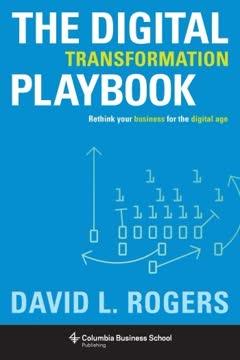
Get the complete 30-minute summary of The Digital Transformation Playbook
Get the complete summary in the appDigital transformation is about strategy, not technology.
Customers are networks, not isolated individuals.
Platforms beat products when network effects are strong.
Data is a strategic asset that creates value through insights, targeting, personalization, and context.
Experiment fast, fail smart, and learn continuously.
Adapt your value proposition before the market forces you to.
"The Digital Transformation Playbook" is a strong fit if you want practical ideas around business, technology, management, especially themes like digital transformation is about strategy, not technology; customers are networks, not isolated individuals. The MinuteRead summary distills these concepts into a focused read, whether you're deciding whether to buy the book or applying its lessons at work.
David L. Rogers is a faculty member at Columbia Business School, where he teaches digital strategy and marketing. He is a globally recognized expert on digital transformation, known for his insights on how organizations can navigate the digital age. Rogers has authored several books on digital strategy and innovation, including "The Network Is Your Customer" and "The Digital Transformation Playbook." He frequently speaks at conferences worldwide and has advised numerous global companies on digit…
View all summaries by David L. RogersContinue Reading
Access the complete 30-minute summary and thousands more nonfiction books in the MinuteRead app.

Continue reading the complete summary in the MinuteRead app.






