MinuteRead
30 min
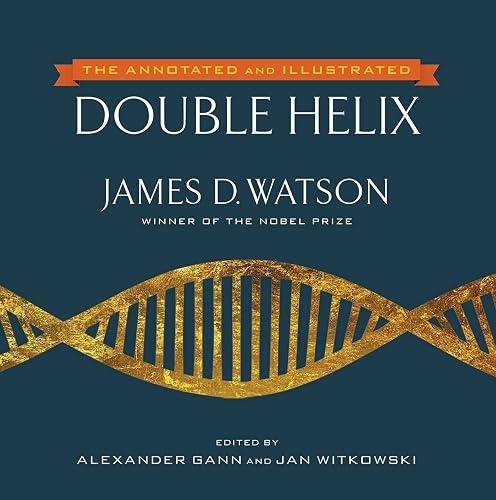
The Double Helix tells the story of the discovery of DNA by explaining the rivalries of the prideful scientific community and other roadblocks that James Watson had on the way to making the breakthrough of a lifetime.
The Double Helix tells the story of the discovery of DNA by explaining the rivalries of the prideful scientific community and other roadblocks that James Watson had on the way to making the breakthrough of a lifetime.
We know that DNA is a molecule made up of two strands. We call it the double helix. It contains all of our genetic information. But back in the 1950s, no one cared much about DNA or understood its purpose.
Because DNA appeared relatively simple, researchers didn’t think it could do something as important as holding genetic information. Chemists and physicists were interested in it but didn’t consider its link to genetics.
X-Ray crystallography was the only way to see DNA at the time. A Professor of Indiana University, Prof. Salvador Luria studied viruses. He needed to use the technique, so he sent Watson, then a PhD student, to Europe to learn it for him.
Watson was fascinated when he learned that DNA was likely a regular, simple shape. He transferred to work under the founding father of X-Ray crystallography, Sir Lawrence Bragg, to learn more.
It was there at Cambridge University where he met 34-year-old physicist Francis Crick. He was immediately drawn to Crick due to his intelligence. Not to mention that he shared the same belief about the importance of DNA. So the two quickly started working together to figure out what exactly the molecule did.
But they soon found out they weren’t the only ones interested in DNA. Maurice Wilkins, the scientist whose conference speech inspired Watson to look at DNA in the first place, was hard at work looking at the molecule too. Wilkins was new at X-ray crystallography. He had the help of his assistant Rosalind Franklin, who was good at it. Franklin considered Wilkins more of a colleague than a boss. She also had her own interest in looking at DNA, which resulted in their strained relationship. Linus Pauling of the California Institute of Technology was a famous chemist. Crick and Watson believed he was looking to win a Nobel Prize, too. And he was interested in studying DNA. He even asked Wilkins for a copy of his DNA photograph. Facing these two established scientists, Watson and Crick lost hope they would discover DNA’s structure first, but they didn’t give up. They began to use what they knew from the competing scientists. They used Pauling’s technique of building a large 3D model, something the English community frowned upon. Crick had also watched Franklin make measurements with her X-rays and used this information to deduce it had a helical structure. But when Watson and Crick showed their model to Franklin and Wilkins, they criticized them for getting the…
Continue reading in the MinuteRead app
Get the complete 5-minute summary of The Double Helix
Get the complete summary in the appChemists James Watson and Francis Crick’s DNA research in the 50s was the foundation for our current understanding of genetics.
Things got tough as the pair competed with others that were also studying DNA.
Watson and Crick persevered through difficulties, and their breakthroughs in genetics won them a Nobel Prize.
"The Double Helix" is a strong fit if you want practical ideas around biography, education, health, especially themes like chemists james watson and francis crick’s dna research in the 50s was the foundation for our current understanding of genetics; things got tough as the pair competed with others that were also studying dna. The MinuteRead summary distills these concepts into a focused read, whether you're deciding whether to buy the book or applying its lessons at work.
Motivated to help readers with the Double Helix tells the story of the discovery of DNA by explaining the rivalries of the prideful, James D. Watson Ph.D. wrote “The Double Helix” to package those ideas for a fast, focused read. In “The Double Helix”, James D. Watson Ph.D. focuses on the Double Helix tells the story of the discovery of DNA by explaining the rivalries of the prideful. Through “The Double Helix”, James D. Watson Ph.D. distills the core ideas on biography into lessons readers can a…
View all summaries by James D. WatsonContinue Reading
Access the complete 5-minute summary and thousands more nonfiction books in the MinuteRead app.

Continue reading the complete summary in the MinuteRead app.