MinuteRead
30 min
Book summary
by David R. Caruso
Premium summary · Opens in the app · 30 min read
Most managers have been taught a lie. The lie is that emotions have no place at work. That feelings are distractions from clear thinking. That the best decisions are made with cold logic and a stiff upper lip. That professionalism means leaving your emotions at the door.
By David R. Caruso
**Estimated Reading Time:** 45 minutes
**What You'll Learn**
Why emotions are not obstacles to good management but essential tools for it. How to identify emotions accurately in yourself and others. How to use emotions to think more clearly and solve problems more effectively. How to understand the causes and patterns of emotions. How to manage emotions without suppressing them. How to apply these skills to build stronger teams, communicate with impact, and lead through change.
**Who This Book Is For**
Managers who feel they must choose between being rational and being human. Leaders who want to make better decisions without ignoring the emotional realities of their teams. Professionals who suspect that emotional awareness is not softness but a competitive advantage. Anyone who has ever wondered why the smartest person in the room is not always the most effective leader.
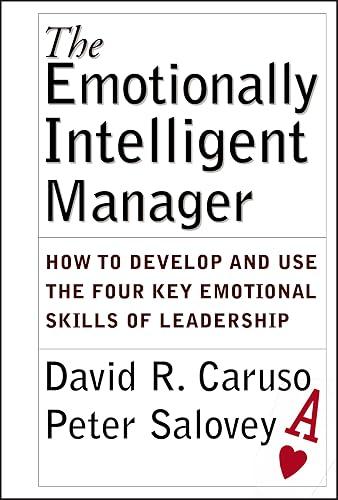
Most managers have been taught a lie. The lie is that emotions have no place at work. That feelings are distractions from clear thinking. That the best decisions are made with cold logic and a stiff upper lip. That professionalism means leaving your emotions at the door. This lie has produced a strange paradox. Walk into any organization and you will find people who are highly trained in technical skills, strategic analysis, and financial modeling. Yet these same people often struggle to read a room, misunderstand their colleagues, make decisions that ignore obvious emotional consequences, and wonder why their teams are disengaged. The truth is that emotions never left the workplace. They were always there, operating beneath the surface, influencing decisions, shaping relationships, and driving behavior. The only question was whether managers would acknowledge them or pretend they did not exist. David Caruso wrote *The Emotionally Intelligent Manager* to address this disconnect. His argument is simple but profound: emotions are data. They are signals about what matters, what is changing, and what requires attention. A manager who ignores emotions is like a pilot who ignores the instrument panel. A manager who understands emotions gains access to a richer, more accurate picture of reality. Caruso is not a motivational speaker or a self-help guru. He is a research psychologist who spent years studying how emotions actually work. Along with his colleagues, he developed the Mayer-Salovey-Caruso Emotional Intelligence Test, a scientifically validated measure of emotional ability. His approach is grounded in evidence, not anecdote. The book's central claim is that emotional intelligence is not a personality trait you either have or lack. It is a set of four skills that can be learned, practiced, and improved. These skills are: identifying emotions, using emotions to facilitate thinking, understanding emotions, and managing emotions. Each skill builds on the previous one, and…
Continue reading in the MinuteRead app
Get the complete 30-minute summary of The Emotionally Intelligent Manager
Get the complete summary in the appEmotions are data, not noise. They carry information about what matters and what requires attention.
Emotional intelligence consists of four skills: identifying emotions, using emotions, understanding emotions, and managi
Identifying emotions accurately in yourself and others is the foundation of emotional intelligence.
Different moods enhance different types of thinking. Match your mood to your task.
Emotions have causes and patterns. Understanding these patterns enables better predictions.
Managing emotions means staying open to feelings while integrating them with rational thought. It does not mean suppress
"The Emotionally Intelligent Manager" is a strong fit if you want practical ideas around business, psychology, leadership, especially themes like emotions are data, not noise. they carry information about what matters and what requires attention; emotional intelligence consists of four skills: identifying emotions, using emotions, understanding emotions, and managi. The MinuteRead summary distills these concepts into a focused read, whether you're deciding whether to buy the book or applying its lessons at work.
Motivated to help readers with 1) Emotions are valuable data, David R. Caruso wrote “The Emotionally Intelligent Manager” to package those ideas for a fast, focused read. In “The Emotionally Intelligent Manager”, David R. Caruso focuses on 1) Emotions are valuable data. Through “The Emotionally Intelligent Manager”, David R. Caruso distills the core ideas on business into lessons readers can absorb in a single short sitting. Readers turn to this work when they want David R. Caruso's perspective …
Continue Reading
Access the complete 30-minute summary and thousands more nonfiction books in the MinuteRead app.

Continue reading the complete summary in the MinuteRead app.