 MinuteRead
30 min
Book summary
by Jacob Morgan
Premium summary · Opens in the app · 30 min read
There is a strange moment in the life of almost every organization, a moment when someone in a corner office looks at a spreadsheet and realizes that the old machinery of work no longer turns the way it used to. The offices are full, or at least the desks are assigned. The salaries are competitive. The annual engagement survey has been administered, analyzed, and filed away. And yet something is missing. People are present but not alive. They do their jobs but do not bring themselves to their jo
**Author:** Jacob Morgan
**Estimated Reading Time:** 18 minutes
**What This Story Explores:** The shifting relationship between people and the organizations where they spend their working lives, the hidden architecture of culture and space and technology that shapes how work feels, and the question of whether companies can genuinely care about the humans inside them.
**Who This Book Is For:** Leaders trying to understand why their engagement surveys keep coming back mediocre, employees who suspect the modern workplace could be more than a place they merely endure, and anyone curious about why some organizations hum with energy while others quietly drain the life from their people.
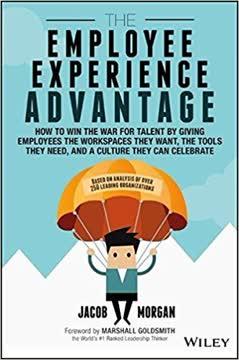
There is a strange moment in the life of almost every organization, a moment when someone in a corner office looks at a spreadsheet and realizes that the old machinery of work no longer turns the way it used to. The offices are full, or at least the desks are assigned. The salaries are competitive. The annual engagement survey has been administered, analyzed, and filed away. And yet something is missing. People are present but not alive. They do their jobs but do not bring themselves to their jobs. They stay, but they are already halfway out the door. Jacob Morgan's *The Employee Experience Advantage* begins with a simple observation that turns out to be quietly radical: for most of the twentieth century, organizations were designed around utility. Employees were resources, inputs into a production function. The workplace was a place you had to be, not a place you wanted to be. The implicit bargain was straightforward. Show up, do what you are told, and you will be compensated. Meaning, fulfillment, growth, belonging: these were nice ideas, but they were not the company's problem. Morgan argues that this bargain has broken down, and it has broken down because the nature of work itself has changed. In an industrial economy, the difference between a good employee and a great employee was measurable in units of output. In a knowledge economy, the difference is harder to quantify but vastly more consequential. The best employees are not just more productive. They are more creative, more collaborative, more resilient, more likely to stay, and more likely to pull others up with them. And the best employees have choices. They can work anywhere. They know it. The organizations that win the competition for talent are not necessarily the ones that pay the most. They are the ones that create an experience worth having. The book is built around a research project Morgan conducted with hundreds of organizations, and the central finding is both intuitive and striking. Companies that invest deliberately in employee experience outperform their peers on nearly every meaningful…
Continue reading in the MinuteRead app
Get the complete 30-minute summary of The Employee Experience Advantage
Get the complete summary in the appThere is a strange moment in the life of almost every organization, a moment when someone in a corner office looks at a spreadsheet and realizes that the old machinery of work no longer turns the way it used to. The offices are full, or at
"The Employee Experience Advantage" will resonate with readers drawn to business, historical romance, leadership. There is a strange moment in the life of almost every organization, a moment when someone in a corner office looks at a spreadsheet and realizes that the old machinery of work no l… Our summary captures the core argument so you can learn the essentials before committing to the full book.
Jacob Morgan is a futurist, author, and speaker specializing in leadership, employee experience, and the future of work. After a brief corporate career, he founded The Future of Work University and authored four best-selling books. Jacob Morgan speaks at conferences worldwide, including TED Academy, and provides advisory services to organizations. His work has been endorsed by CEOs of major companies like Unilever and Cisco. Morgan hosts The Future of Work Podcast and creates educational content…
View all summaries by Jacob MorganContinue Reading
Access the complete 30-minute summary and thousands more nonfiction books in the MinuteRead app.

Continue reading the complete summary in the MinuteRead app.






