 MinuteRead
30 min
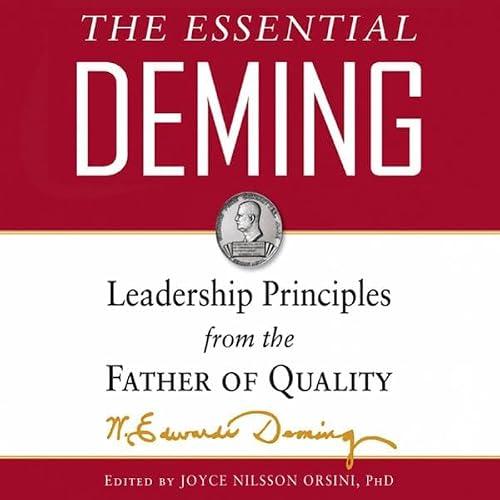
Book summary
Premium summary · Opens in the app · 30 min read
In 1950, W. Edwards Deming stood before a group of Japanese industrialists and told them something that sounded absurd. He said that if they followed his methods, they could capture the world market for manufactured goods within five years. At the time, Japan was rebuilding from the ashes of war. Its products were considered cheap, poorly made, and inferior. The idea that Japanese manufacturers could dominate global markets seemed like fantasy.
**Estimated Reading Time:** 48 minutes
**What You'll Learn:**
How quality is determined by leadership, not labor. Why most performance management systems actively destroy the results they claim to pursue. What statistical thinking really means for decision-making. How cooperation outperforms competition inside organizations. Why the customer belongs at the center of every production system. And how to begin transforming your organization from the top down.
**Who This Book Is For:**
Leaders who suspect their current management methods are producing mediocrity. Managers frustrated by systems that reward short-term thinking. Professionals who want to understand why some organizations consistently outperform others. Anyone who has ever wondered why quality initiatives fail despite good intentions.
In 1950, W. Edwards Deming stood before a group of Japanese industrialists and told them something that sounded absurd. He said that if they followed his methods, they could capture the world market for manufactured goods within five years. At the time, Japan was rebuilding from the ashes of war. Its products were considered cheap, poorly made, and inferior. The idea that Japanese manufacturers could dominate global markets seemed like fantasy. Yet within two decades, Japanese companies were setting the standard for quality in automobiles, electronics, and precision manufacturing. American companies that had once dominated these industries found themselves scrambling to understand what had happened. The answer, as many eventually discovered, was that Deming had given Japanese leaders a fundamentally different way of thinking about management. Deming was not a typical business consultant. He was a statistician and physicist who had worked with Walter Shewhart at Bell Laboratories, where the foundations of statistical process control were developed. His approach to management grew out of a deep understanding of variation, systems, and human behavior. He believed that most organizations were being managed badly, not because their leaders were incompetent, but because they were operating from flawed assumptions about how work actually gets done. The problem Deming identified was simple and profound. Most managers believed that quality problems were caused by workers who did not care enough, try hard enough, or possess enough skill. The solution, therefore, was to inspect more carefully, motivate more aggressively, and hold individuals accountable for results. Deming argued that this entire framework was wrong. He demonstrated, through decades of consulting work and statistical analysis, that the overwhelming majority of quality problems are built into the system itself. The system includes the processes, procedures, equipment, materials, and management decisions that determine how work is performed. When a system is poorly designed, no amount of individual effort can overcome its defects. Workers operating within a flawed system are simply doing their best within constraints they cannot control. This insight leads to an uncomfortable conclusion. If most problems are systemic,…
Continue reading in the MinuteRead app
Get the complete 30-minute summary of The Essential Demming (PB)
Get the complete summary in the appQuality is determined by the system, and the system is the responsibility of management.
Most variation in performance is due to common causes, not individual differences. Do not blame people for systemic prob
Information is not knowledge. Knowledge requires theory, prediction, and testing.
Merit ratings and management by objectives are counterproductive. They create fear, destroy teamwork, and encourage shor
Cooperation produces better results than competition, both within organizations and between organizations.
The customer is the most important part of the production line. Define quality from the customer's perspective.
"The Essential Demming (PB)" is a strong fit if you want practical ideas around business, management, leadership, especially themes like quality is determined by the system, and the system is the responsibility of management; most variation in performance is due to common causes, not individual differences. do not blame people for systemic prob. The MinuteRead summary distills these concepts into a focused read, whether you're deciding whether to buy the book or applying its lessons at work.
Motivated to help readers with the quality of the output of a company can not be better than the quality directed at the top, W. Edwards Deming wrote “The Essential Demming (PB)” to package those ideas for a fast, focused read. In “The Essential Demming (PB)”, W. Edwards Deming focuses on the quality of the output of a company can not be better than the quality directed at the top. Through “The Essential Demming (PB)”, W. Edwards Deming distills the core ideas on business into lessons readers ca…
View all summaries by W. Edwards DemingContinue Reading
Access the complete 30-minute summary and thousands more nonfiction books in the MinuteRead app.

Continue reading the complete summary in the MinuteRead app.






