MinuteRead
5 min
Book summary
by John Kounios
Premium summary · Opens in the app · 5 min read
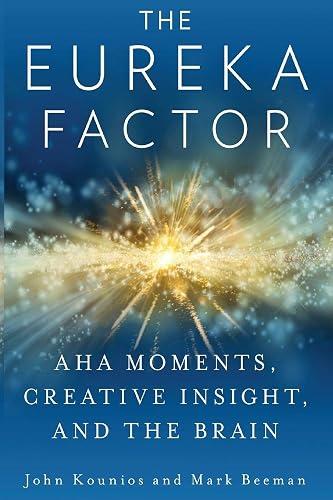
The Eureka Factor lays out the history of so-called “aha moments” and explains what happens in your brain as you have them, where they come from and how you can train yourself to have more flashes of genius.
The Eureka Factor lays out the history of so-called “aha moments” and explains what happens in your brain as you have them, where they come from and how you can train yourself to have more flashes of genius.
I’m sure you’ve uttered these six words before: “I could have thought of that!” Happens to me all the time. I look at some invention and say: “Wow, that’s actually quite obvious, why didn’t I think of that?” Even worse are the occasions where I did think of the idea, but didn’t implement it, but doing the work is a whole other topic.
If you have wonderful friends like me, who try to keep you grounded on earth all the time, they’ll kindly remind you: “Well, but you didn’t.” – and they’re right.
Most of the time when we point out how obvious something is in hindsight, it’s really just a mechanism for us to feel better about ourselves. In reality, any good idea only becomes obvious after someone else has told you about it.
Take Christopher Columbus, for example. After he had discovered the new world across the Atlantic and returned to Spain, many nobles claimed that it had been no great feat. In fact, if only they’d had a fleet, many of them claimed they’d have done it themselves. Instead of arguing, Columbus ordered a bunch of boiled eggs, giving the nobles one each and asked them if they could make their egg stand upright, without any tools or help. They all tried for a while, but eventually gave up.
Columbus took his egg, tapped its bottom on the table, so that it slightly broke, and set it upright on the dented end. The nobles were shocked and Columbus cunningly asked them: “If there was such a simple solution, why didn’t any of you think of it?”
He’d clearly made his point.
Whenever you live with someone, please, please don’t rush them when they’re in the shower. Those few extra minutes of quiet might lead them to brilliant insights. But why is that? Why do we always seem to come up with great stuff in the shower? It’s because your mind is entirely free to focus on important problems. In the shower, all distractions are under control. The white noise of the water takes away distracting sounds and the feel of the water keeps your entire sense of touch busy without new stimuli. It is right then and there that all the concepts, thoughts and ideas you’ve had boiling in your subconscious come bubbling to the surface, combined in new ways and voilà: an entirely new perspective on a familiar problem leads to a breakthrough insight! The only precondition to…
Continue reading in the MinuteRead app
Get the complete 5-minute summary of The Eureka Factor
Get the complete summary in the appEvery seemingly straightforward idea is only obvious after someone else has told you about it.
You can only have your best insights when you keep your distractions under control – like in the shower.
A good exercise to evoke more eureka moments is to practice distant-future thinking.
"The Eureka Factor" is a strong fit if you want practical ideas around creativity, entrepreneurship, future, especially themes like every seemingly straightforward idea is only obvious after someone else has told you about it; you can only have your best insights when you keep your distractions under control – like in the shower. The MinuteRead summary distills these concepts into a focused read, whether you're deciding whether to buy the book or applying its lessons at work.
John Kounios, PhD, is a professor of psychology and director of Drexel University’s doctoral program in Applied Cognitive and Brain Sciences. He has published cognitive neuroscience research on insight, creativity, problem solving, memory, and Alzheimer’s disease. His research has been funded by the National Institutes of Health and the National Science Foundation. He is a Fellow of the Association for Psychological Science and the Psychonomic Society and serves on National Science Foundation ad…
View all summaries by John KouniosContinue Reading
Access the complete 5-minute summary and thousands more nonfiction books in the MinuteRead app.

Continue reading the complete summary in the MinuteRead app.