 MinuteRead
30 min
Book summary
by Azeem Azhar
Premium summary · Opens in the app · 30 min read
Something strange is happening to the world. The pace of change feels different. Not just faster, but qualitatively different. Technologies that seemed like science fiction a decade ago are now part of daily life. A single company can go from startup to global power in a few years. A virus can shut down the global economy in weeks. A teenager with a smartphone can reach billions of people in an afternoon.
**Author:** Azeem Azhar **Estimated Reading Time:** 45 minutes
Why technology is transforming society faster than ever before, how this creates a dangerous gap between innovation and our institutions, and what individuals, businesses, and governments can do to thrive in this new era.
Anyone trying to understand why the world feels increasingly unstable, why a handful of companies dominate the economy, why work is changing so dramatically, and how to position themselves for the future that is already arriving.
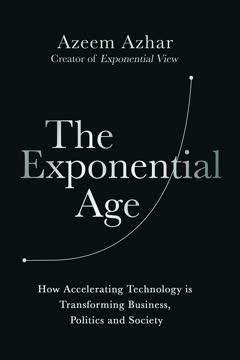
Something strange is happening to the world. The pace of change feels different. Not just faster, but qualitatively different. Technologies that seemed like science fiction a decade ago are now part of daily life. A single company can go from startup to global power in a few years. A virus can shut down the global economy in weeks. A teenager with a smartphone can reach billions of people in an afternoon. Azeem Azhar argues that we are living through a phase transition. The metaphor comes from physics. When water is heated, its temperature rises gradually, degree by degree. Then, at a certain point, something dramatic happens. The water stops behaving like water and becomes steam. The change is not incremental. It is a transformation of state. Azhar believes that human society is undergoing a similar phase transition right now. For centuries, technological progress moved at a pace that allowed institutions, laws, social norms, and individual habits to adapt. The printing press took decades to spread across Europe. The railroad took years to build. The telephone took a generation to reach most homes. There was time to adjust. That time is gone. The technologies driving the current era improve exponentially. Computing power doubles roughly every eighteen months. The cost of sequencing a human genome has fallen from billions of dollars to under a thousand dollars in two decades. Solar energy costs have dropped by more than ninety percent in a decade. These are not linear improvements. They are curves that bend upward with astonishing speed. Azhar calls this period the Exponential Age. His central argument is simple but profound. Technology now advances faster than our ability to understand it, regulate it, and adapt to it. This creates what he calls the exponential gap, a growing chasm between the pace of technological change and the pace of institutional change. That gap explains much of what feels broken in the modern world. Why do markets feel rigged in favor of a few giant companies? Because network effects allow digital platforms to grow at exponential rates while antitrust laws were written for a slower era. Why does work feel precarious? Because automation and algorithmic management are transforming employment faster than labor laws and education systems can…
Continue reading in the MinuteRead app
Get the complete 30-minute summary of The Exponential Age
Get the complete summary in the appWe are living through a phase transition driven by exponential technologies.
Technology advances exponentially while institutions advance incrementally, creating the exponential gap.
Computing, energy, biology, and manufacturing are the four foundational technologies of the Exponential Age.
Network effects create winner-take-all markets dominated by superstar companies.
The future of work is defined by a growing chasm between high-quality and insecure work.
The world is spiky, with opportunity concentrated in a small number of urban hubs.
"The Exponential Age" is a strong fit if you want practical ideas around business, technology, science, especially themes like we are living through a phase transition driven by exponential technologies; technology advances exponentially while institutions advance incrementally, creating the exponential gap. The MinuteRead summary distills these concepts into a focused read, whether you're deciding whether to buy the book or applying its lessons at work.
Azeem Azhar is a technology entrepreneur, investor, and writer known for his work on the intersection of technology and society. He is the founder of Exponential View, a newsletter and podcast discussing the impact of technology on business and society. Azhar has a background in journalism, having worked for The Economist and The Guardian. He has also held leadership positions in various technology companies and serves as an advisor to startups and venture capital firms. His expertise in emergin…
View all summaries by Azeem AzharContinue Reading
Access the complete 30-minute summary and thousands more nonfiction books in the MinuteRead app.

Continue reading the complete summary in the MinuteRead app.






