MinuteRead
30 min
Book summary
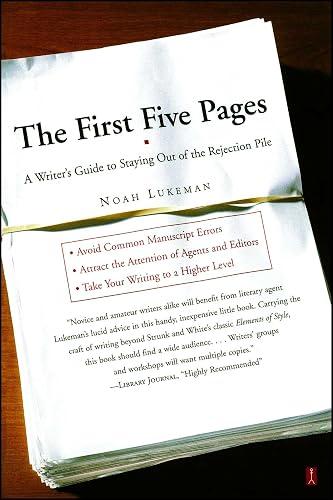
by Noah Lukeman
Premium summary · Opens in the app · 30 min read
Every year, hundreds of thousands of manuscripts arrive at literary agencies and publishing houses. They come in padded envelopes and cardboard boxes, from first-time novelists and seasoned authors alike. Each one represents months or years of work, countless revisions, late nights, early mornings, and the fragile hope that someone on the other side will recognize the value of what has been created.
**Author:** Noah Lukeman **Estimated Reading Time:** 48 minutes
**What You'll Learn:** Why agents and editors reject 99 percent of manuscripts within the first five pages, the specific technical and stylistic flaws that trigger instant dismissal, and how to transform your opening pages into a compelling invitation that demands to be read.
**Who This Book Is For:** Fiction writers at any stage who want to understand how publishing professionals actually evaluate manuscripts, and who are ready to move beyond vague advice about "good writing" into the concrete craft of avoiding bad writing.
Every year, hundreds of thousands of manuscripts arrive at literary agencies and publishing houses. They come in padded envelopes and cardboard boxes, from first-time novelists and seasoned authors alike. Each one represents months or years of work, countless revisions, late nights, early mornings, and the fragile hope that someone on the other side will recognize the value of what has been created. Most of them are rejected. The rejection letters are polite, vague, and unhelpful. They speak of "not being right for our list" or "not connecting with the material." They rarely mention the real reasons. They almost never mention that the decision was made before the reader finished the fifth page. Noah Lukeman has spent years on the receiving end of this process. As a literary agent, he has read thousands of manuscripts, and he has observed something that most writers never learn: the evaluation process is not what they imagine it to be. Writers picture an editor settling into a comfortable chair with a cup of coffee, reading carefully, giving the work a fair chance, and making a considered judgment after fifty or a hundred pages. The reality is far less generous. Agents and editors are drowning in submissions. They read quickly, often late at night or on trains, looking for reasons to set a manuscript aside so they can move to the next one. They are not searching for reasons to say yes. They are searching for reasons to say no. And they find them, consistently, within the first five pages. This book exists because that truth, once understood, changes everything about how a writer approaches revision. It shifts the focus from abstract questions of artistic merit to concrete questions of craft. It asks not "Is this good writing?" but "What specifically makes writing bad, and how do I avoid it?" The problem Lukeman addresses is not that writers lack talent. The problem is that most writers have never been taught to see their own work the way a professional reader sees it. They cannot hear the awkward rhythm of a sentence. They cannot feel the drag of unnecessary modifiers. They cannot sense when dialogue rings…
Continue reading in the MinuteRead app
Get the complete 30-minute summary of The First Five Pages
Get the complete summary in the appAgents and editors make their decisions within the first five pages, and the flaws that trigger rejection are identifiab
Focus on avoiding bad writing rather than chasing great writing. The path to good writing runs through the elimination o
Presentation matters. Use standard formatting, and let your writing be the thing that stands out.
Cut unnecessary modifiers. Strong nouns and verbs make most adjectives and adverbs unnecessary.
Read your work aloud. The ear catches what the eye misses.
Dialogue must sound like something a real person would say, while serving a dramatic purpose.
"The First Five Pages" is a strong fit if you want practical ideas around writing, reference, self help, especially themes like agents and editors make their decisions within the first five pages, and the flaws that trigger rejection are identifiab; focus on avoiding bad writing rather than chasing great writing. the path to good writing runs through the elimination o. The MinuteRead summary distills these concepts into a focused read, whether you're deciding whether to buy the book or applying its lessons at work.
Motivated to help readers with but they've secretly made up their mind after page 5, Noah Lukeman wrote “The First Five Pages” to package those ideas for a fast, focused read. In “The First Five Pages”, Noah Lukeman focuses on but they've secretly made up their mind after page 5. Through “The First Five Pages”, Noah Lukeman distills the core ideas on writing into lessons readers can absorb in a single short sitting. Readers turn to this work when they want Noah Lukeman's perspective on the subje…
Continue Reading
Access the complete 30-minute summary and thousands more nonfiction books in the MinuteRead app.

Continue reading the complete summary in the MinuteRead app.