MinuteRead
30 min
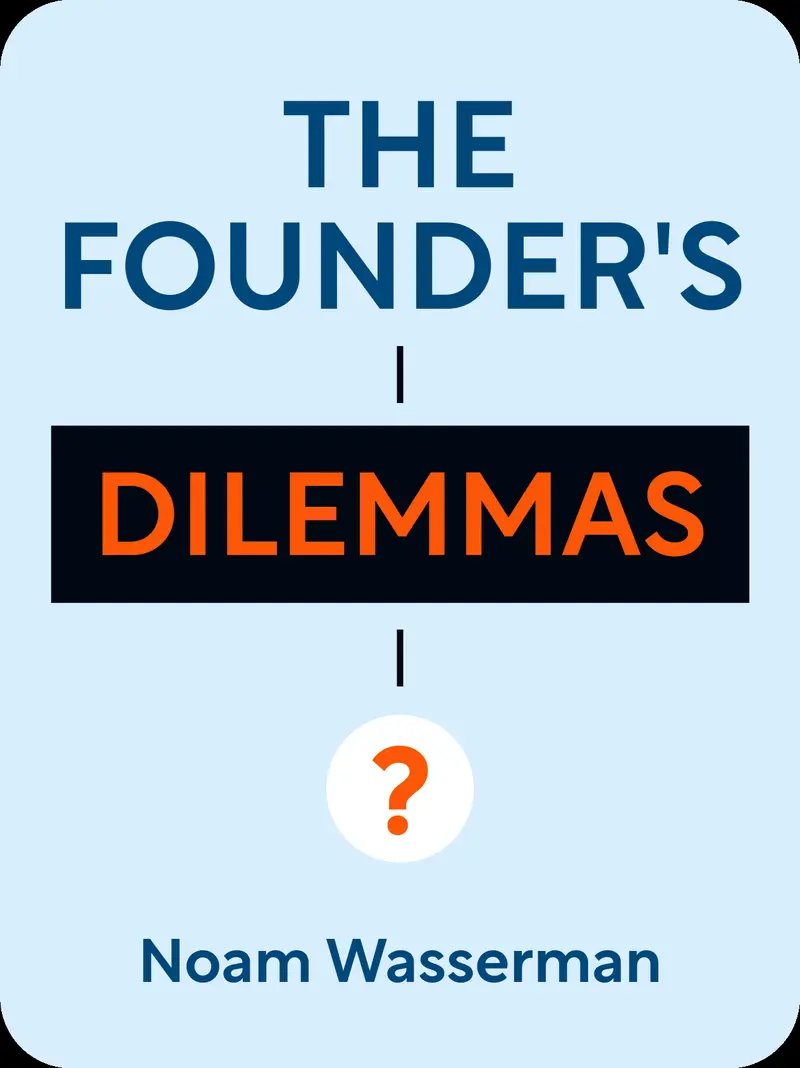
Book summary
Premium summary · Opens in the app · 30 min read
Every year, millions of people dream of starting a company. They imagine the freedom of being their own boss, the thrill of building something from nothing, and the potential for life-changing wealth. They read stories about legendary founders who transformed industries and became household names. They see the success stories and think: that could be me.
**Author:** Noam Wasserman
**Estimated Reading Time:** 45 minutes
**What You'll Learn:**
- Why most startup failures stem from decisions made in the earliest days - How to navigate the three Rs: relationships, roles, and rewards - The fundamental tension between wealth and control that shapes every founder's journey - When to bring in cofounders, investors, and professional managers - How to anticipate and prevent the most common founder breakdowns
**Who This Book Is For:**
Aspiring founders weighing whether to take the leap. Early-stage entrepreneurs making critical decisions about teams, equity, and funding. Investors seeking to understand founder psychology. Anyone fascinated by the human dynamics behind startup success and failure.
Every year, millions of people dream of starting a company. They imagine the freedom of being their own boss, the thrill of building something from nothing, and the potential for life-changing wealth. They read stories about legendary founders who transformed industries and became household names. They see the success stories and think: that could be me. What they rarely see is the carnage behind those stories. For every celebrated startup that succeeds, thousands collapse. But here is the uncomfortable truth that Noam Wasserman uncovered through years of rigorous research: most startups do not fail because of bad products, fierce competition, or market downturns. They fail because of decisions made by the founders themselves. The wounds are self-inflicted. Wasserman spent over a decade studying thousands of startups, collecting detailed data on their founding teams, their decisions, and their outcomes. What he found was striking in its consistency. The same patterns appeared again and again. Founders who started with close friends and ended up in bitter legal battles. Equity splits that seemed fair at the beginning but became sources of resentment as contributions diverged. Investors who brought much-needed capital but also brought pressure that tore companies apart. Founders who built successful companies but lost control of them, and founders who kept control but watched their companies stagnate. The problem is not that founders are foolish or incompetent. The problem is that they are navigating extraordinarily complex decisions with almost no guidance. Most first-time founders have never built a company before. They are making irreversible choices about relationships, equity, and control while operating on intuition, emotion, and incomplete information. And the stakes could not be higher. Consider the simple question of whether to start alone or with cofounders. It seems like a straightforward choice, but it carries enormous consequences. Solo founders maintain complete control and avoid the risk of cofounder conflict, but they also limit their resources, skills, and emotional support. Cofounders bring complementary abilities and shared burdens, but they also introduce the risk of disagreement, misaligned incentives, and messy breakups. Wasserman's research shows…
Continue reading in the MinuteRead app
Get the complete 30-minute summary of The Founder's Dilemmas
Get the complete summary in the app**Most startup failures are self-inflicted.** The decisions founders make in the earliest days have outsized and often i
**Assess your three forms of capital before starting.** Human capital, social capital, and financial capital determine y
**The three Rs matter.** Relationships, roles, and rewards are the foundation of the founding team. Approach them delibe
**Avoid equal equity splits.** They rarely reflect equal contributions over time and often lead to resentment and confli
**Cofounders increase your odds of success.** Teams with cofounders are significantly more likely to succeed than solo v
**Understand the wealth-control trade-off.** Every major decision involves a choice between maximizing financial value a
"The Founder's Dilemmas" is a strong fit if you want practical ideas around business, entrepreneurship, startup, especially themes like **most startup failures are self-inflicted.** the decisions founders make in the earliest days have outsized and often i; **assess your three forms of capital before starting.** human capital, social capital, and financial capital determine y. The MinuteRead summary distills these concepts into a focused read, whether you're deciding whether to buy the book or applying its lessons at work.
Noam Wasserman is a professor and researcher known for his work on entrepreneurship and organizational behavior. He has extensively studied startup founders and their decision-making processes, collecting data on thousands of companies. Wasserman's research focuses on the challenges entrepreneurs face in building and scaling their businesses. He is particularly interested in the tradeoffs between maintaining control and maximizing wealth creation. Wasserman's work has been published in academic …
View all summaries by Noam WassermanContinue Reading
Access the complete 30-minute summary and thousands more nonfiction books in the MinuteRead app.

Continue reading the complete summary in the MinuteRead app.