 MinuteRead
30 min
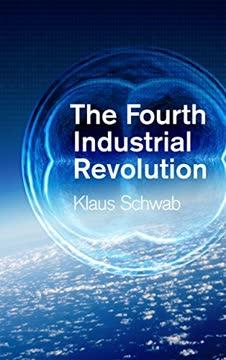
Book summary
by Klaus Schwab
Premium summary · Opens in the app · 30 min read
We are standing at the edge of a transformation unlike anything humanity has experienced before. The changes unfolding around us are not simply an extension of the digital revolution that brought us personal computers, the internet, and smartphones. They represent something far more profound: a fundamental shift in the way we live, work, and relate to one another.
**Author:** Klaus Schwab
**Estimated Reading Time:** 45 minutes
**What You'll Learn:**
- Why this revolution is fundamentally different from the three that came before it - How converging technologies are reshaping economies, businesses, and governments - What the future of work will look like as automation and AI transform industries - How individual identity, community, and human relationships are being redefined - What principles should guide us as we shape a future that serves humanity
**Who This Book Is For:**
This book is for anyone who senses that something profound is shifting beneath the surface of daily life. It is for business leaders trying to navigate disruption, policymakers struggling to regulate technologies that evolve faster than laws, professionals wondering whether their skills will remain relevant, and citizens concerned about inequality, privacy, and the future of democratic governance. If you have ever felt that technology is changing faster than our ability to understand it, this book provides the framework you need.
We are standing at the edge of a transformation unlike anything humanity has experienced before. The changes unfolding around us are not simply an extension of the digital revolution that brought us personal computers, the internet, and smartphones. They represent something far more profound: a fundamental shift in the way we live, work, and relate to one another. Klaus Schwab, the founder of the World Economic Forum, has spent decades observing how technological change reshapes economies and societies. From his unique vantage point, he has watched three industrial revolutions unfold and now argues that a fourth is underway. What makes this moment different is not any single technology but the convergence of many technologies, each advancing at an exponential pace, each amplifying the others in ways that are difficult to predict. The first industrial revolution used water and steam power to mechanize production. The second used electric power to create mass production. The third used electronics and information technology to automate production. Now a fourth revolution is building on the third, but it is fundamentally different in character. It is characterized by a fusion of technologies that is blurring the lines between the physical, digital, and biological spheres. Consider what is already happening. Artificial intelligence systems are diagnosing diseases with accuracy that rivals human physicians. Autonomous vehicles are navigating city streets. Gene editing tools are allowing scientists to rewrite the code of life itself. 3D printers are manufacturing everything from prosthetic limbs to entire houses. Blockchain technology is creating new forms of trust and exchange that bypass traditional institutions. None of these technologies is developing in isolation. They are converging, combining, and creating possibilities that were unimaginable just a decade ago. The problem is that our institutions, our mental models,…
Continue reading in the MinuteRead app
Get the complete 30-minute summary of The Fourth Industrial Revolution
Get the complete summary in the appThe fourth industrial revolution is characterized by the fusion of physical, digital, and biological technologies.
This revolution is different from previous ones because of its velocity, scope, and systems impact.
The technologies driving the revolution are converging and amplifying one another in ways that are difficult to predict.
The future of work is about transformation, not just destruction. Skills that complement technology will be most valuabl
Businesses must shift from product-centric to customer-centric models and embrace platform dynamics.
Governments must develop agile regulatory approaches and engage in multistakeholder collaboration.
"The Fourth Industrial Revolution" is a strong fit if you want practical ideas around business, economics, technology, especially themes like the fourth industrial revolution is characterized by the fusion of physical, digital, and biological technologies; this revolution is different from previous ones because of its velocity, scope, and systems impact. The MinuteRead summary distills these concepts into a focused read, whether you're deciding whether to buy the book or applying its lessons at work.
Klaus Martin Schwab is a German engineer, economist, and founder of the World Economic Forum. Born in 1938, he established the WEF in 1971 and continues to serve as its executive chairman. Schwab has played a significant role in shaping global economic discussions through the annual Davos meetings, which bring together world leaders, business executives, and intellectuals. He has authored several books on economic and technological topics, including "The Fourth Industrial Revolution." Schwab's w…
View all summaries by Klaus SchwabContinue Reading
Access the complete 30-minute summary and thousands more nonfiction books in the MinuteRead app.

Continue reading the complete summary in the MinuteRead app.






