MinuteRead
30 min
Book summary
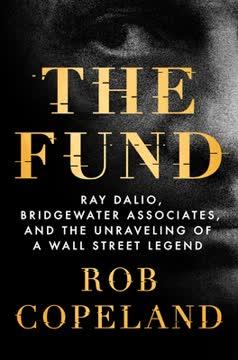
by Rob Copeland
Premium summary · Opens in the app · 30 min read
Ray Dalio built Bridgewater Associates from a two-bedroom apartment into the largest hedge fund in history, managing over $160 billion at its peak. Along the way, he became one of the most celebrated business thinkers of his generation. His book *Principles* sold millions of copies. His TED Talk has been viewed millions of times. World leaders sought his counsel. He positioned himself as a humble seeker of truth, a man who had discovered universal laws for success and was generous enough to shar
**Author:** Rob Copeland
**Estimated Reading Time:** 45 minutes
**What You'll Learn:**
The real story behind Bridgewater Associates, the world's largest hedge fund, and its founder Ray Dalio. You will discover how a culture built on radical transparency and algorithmic decision-making actually operated behind closed doors, why the public image and private reality diverged so dramatically, and what happens when a leader's principles become instruments of control rather than liberation.
**Who This Book Is For:**
Anyone who has encountered Ray Dalio's bestselling book *Principles* and wondered whether the reality matched the rhetoric. Investors, managers, and students of organizational culture will find this a revealing case study in how charismatic leadership, genuine insight, and systematic cruelty can coexist within a single institution. Readers interested in Wall Street, workplace psychology, or the gap between public persona and private behavior will find this investigation both gripping and sobering.
Ray Dalio built Bridgewater Associates from a two-bedroom apartment into the largest hedge fund in history, managing over $160 billion at its peak. Along the way, he became one of the most celebrated business thinkers of his generation. His book *Principles* sold millions of copies. His TED Talk has been viewed millions of times. World leaders sought his counsel. He positioned himself as a humble seeker of truth, a man who had discovered universal laws for success and was generous enough to share them. But inside Bridgewater, a different story unfolded. Employees described an environment of constant surveillance, public humiliation, and psychological distress. Meetings were recorded and stored in a "Transparency Library" for anyone to review. Colleagues rated each other in real time on dozens of personality attributes using an app called the Dot Collector. Mistakes became public spectacles, with "trials" and "diagnoses" that could stretch for months. One executive described the experience as working for "an abusive father." Rob Copeland, an investigative journalist with deep sources inside the firm, spent years piecing together what actually happened behind Bridgewater's carefully managed public image. What he found was not a simple story of a bad boss or a toxic workplace. It was something more complex and more troubling: a brilliant man who genuinely believed he had discovered universal truths about human behavior, and who built a system to enforce those truths that ultimately consumed the people it was meant to improve. The problem this book addresses is not just about one hedge fund or one billionaire. It is about a fundamental question that affects anyone who has ever worked in an organization: What happens when a leader's vision becomes so totalizing that it leaves no room for dissent, privacy, or basic human dignity? Dalio's Principles promised that radical honesty would lead to better decisions and personal growth.…
Continue reading in the MinuteRead app
Get the complete 30-minute summary of The Fund
Get the complete summary in the appRay Dalio built Bridgewater on relationships and access, not just investment insight.
The Principles were presented as universal truth but were really one man's preferences.
Radical transparency at Bridgewater meant surveillance of employees, not openness from leadership.
The machine metaphor dehumanized employees and justified their mistreatment.
The automation projects failed because the Principles were not actually systematic.
Dalio's public image was carefully managed and diverged significantly from private reality.
"The Fund" is a strong fit if you want practical ideas around business, finance, biography, especially themes like ray dalio built bridgewater on relationships and access, not just investment insight; the principles were presented as universal truth but were really one man's preferences. The MinuteRead summary distills these concepts into a focused read, whether you're deciding whether to buy the book or applying its lessons at work.
Rob Copeland is an investigative journalist known for his work on Wall Street and finance. He gained recognition for his reporting on Bridgewater Associates and its founder, Ray Dalio. Copeland's thorough research and ability to secure confidential sources allowed him to provide an in-depth look into the secretive hedge fund. His writing style is described as engaging and page-turning, making complex financial topics accessible to readers. Copeland's work on The Fund has been praised for its acc…
View all summaries by Rob CopelandContinue Reading
Access the complete 30-minute summary and thousands more nonfiction books in the MinuteRead app.

Continue reading the complete summary in the MinuteRead app.