MinuteRead
30 min
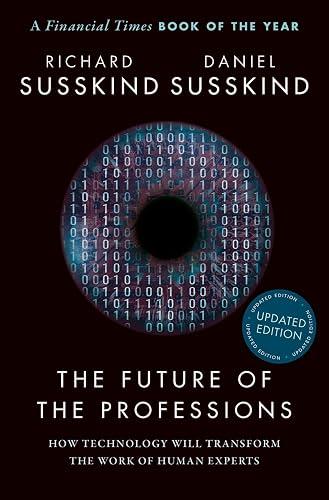
Book summary
Premium summary · Opens in the app · 30 min read
Imagine you need legal advice. You call a lawyer, schedule an appointment, travel to an office, explain your situation, and wait days or weeks for an answer that arrives in language you barely understand, attached to a bill that makes you wince. Now imagine you need medical advice. You book an appointment, sit in a waiting room, describe your symptoms, and receive a diagnosis in minutes, followed by a prescription you cannot fully decipher. These experiences, repeated millions of times daily acr
**Author:** Richard Susskind
**Estimated Reading Time:** 45 minutes
**What You'll Learn:**
- Why the centuries-old bargain between society and professionals is breaking down - How technology is fundamentally transforming the way expertise is delivered - What new models of professional work are emerging across medicine, law, education, and beyond - Which roles will thrive in the coming era and which will fade - How to prepare yourself and your organization for the coming transformation
**Who This Book Is For:**
This book is for professionals who sense that their field is changing faster than their training prepared them for. It is for leaders who must make decisions about technology, talent, and strategy in professional organizations. It is for students weighing whether traditional professional paths still make sense. And it is for anyone who has ever wondered why expert advice costs so much, takes so long, and often feels less accessible than it should.
Imagine you need legal advice. You call a lawyer, schedule an appointment, travel to an office, explain your situation, and wait days or weeks for an answer that arrives in language you barely understand, attached to a bill that makes you wince. Now imagine you need medical advice. You book an appointment, sit in a waiting room, describe your symptoms, and receive a diagnosis in minutes, followed by a prescription you cannot fully decipher. These experiences, repeated millions of times daily across every profession, share a common structure: the expert holds the knowledge, and you must go through them to get it. This arrangement has existed for centuries. We call it the professions. Lawyers, doctors, accountants, teachers, architects, consultants, and clergy all operate under a shared understanding with society. They receive exclusive rights to practice, self-regulation, and elevated status. In return, they promise to apply their expertise, experience, and judgment to deliver services that are affordable, accessible, up-to-date, reassuring, and reliable. Society trusts them. They deliver. Everyone benefits. But what happens when that promise breaks down? Consider the evidence. Professional services have become staggeringly expensive. In many countries, legal representation is beyond the reach of ordinary citizens. Medical care bankrupts families. Education burdens students with decades of debt. Meanwhile, the quality of service has not improved proportionally. Professionals still rely on methods developed in a print-based industrial society, even as the world around them has transformed. They hoard knowledge behind opaque language and institutional barriers. They discourage self-help and self-reliance, insisting that only they can solve problems that increasingly seem solvable through other means. This is not a criticism of individual professionals. Most are diligent, ethical, and genuinely committed to their clients and patients. The problem is structural. The grand bargain that created the professions was designed for…
Continue reading in the MinuteRead app
Get the complete 30-minute summary of The Future of the Professions
Get the complete summary in the appThe professions exist because society grants them privileges in exchange for promised benefits. That bargain is breaking
Technology is not just a tool for improving professional work. It is a catalyst for fundamental transformation.
Expertise is shifting from something that resides in individuals to something that can be embedded in systems.
Common patterns of change include routinization, disintermediation, and new labor models.
Professional work evolves from craft to standardization to systemization to externalization.
Knowledge is non-rivalrous and non-excludable, which makes the scarcity of professional expertise artificial.
"The Future of the Professions" is a strong fit if you want practical ideas around business, technology, economics, especially themes like the professions exist because society grants them privileges in exchange for promised benefits. that bargain is breaking; technology is not just a tool for improving professional work. it is a catalyst for fundamental transformation. The MinuteRead summary distills these concepts into a focused read, whether you're deciding whether to buy the book or applying its lessons at work.
Motivated to help readers with in acknowledgement of and in return for their expertise, Richard Susskind wrote “The Future of the Professions” to package those ideas for a fast, focused read. In “The Future of the Professions”, Richard Susskind focuses on in acknowledgement of and in return for their expertise. Through “The Future of the Professions”, Richard Susskind distills the core ideas on business into lessons readers can absorb in a single short sitting. Readers turn to this work when the…
View all summaries by Richard SusskindContinue Reading
Access the complete 30-minute summary and thousands more nonfiction books in the MinuteRead app.

Continue reading the complete summary in the MinuteRead app.