 MinuteRead
30 min
Book summary
Premium summary · Opens in the app · 30 min read
There is a war happening all around you, and you are losing it. Every day, thousands of messages compete for your attention. Brands, employers, media outlets, apps, and platforms all want the same scarce resource: your focus. Most of them fail. The average person sees thousands of commercial messages daily and remembers almost none of them. The average employee is disengaged, doing just enough to avoid getting fired. The average customer abandons products within weeks of first use.
**Author:** Gabe Zichermann **Estimated Reading Time:** 45 minutes
Why game mechanics have become one of the most powerful forces in modern business, how leading organizations use them to transform customer engagement and employee performance, and the specific frameworks you can apply to build experiences people genuinely want to participate in.
Business leaders seeking competitive advantage, product managers designing customer experiences, HR professionals tackling engagement challenges, entrepreneurs building loyalty programs, and anyone curious about why games captivate billions of people and how that power can be harnessed for serious purposes.
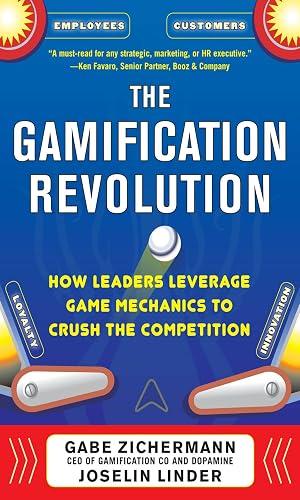
There is a war happening all around you, and you are losing it. Every day, thousands of messages compete for your attention. Brands, employers, media outlets, apps, and platforms all want the same scarce resource: your focus. Most of them fail. The average person sees thousands of commercial messages daily and remembers almost none of them. The average employee is disengaged, doing just enough to avoid getting fired. The average customer abandons products within weeks of first use. This is not a failure of effort. Companies spend billions on advertising, loyalty programs, and employee engagement initiatives. The problem is that most of these efforts are built on outdated assumptions about how human motivation works. They assume that people respond to information, that rational arguments drive behavior, and that occasional rewards create lasting loyalty. None of these assumptions hold up in a world of infinite distraction. Meanwhile, something remarkable has been happening in a corner of culture that most business leaders ignored for decades. Video games grew from a niche hobby into the largest entertainment industry on earth. More importantly, they solved the engagement problem. Games make people voluntarily spend hours mastering difficult skills, overcoming repeated failures, and collaborating with strangers. Players pay for the privilege of being challenged. They form deep communities around shared objectives. They return day after day, not because they have to, but because they want to. Gabe Zichermann saw this contrast clearly. While companies struggled to hold anyone's attention for five minutes, game designers were holding it for hundreds of hours. While employee training programs put people to sleep, games taught complex systems and strategies without a single lecture. While loyalty programs offered points that nobody cared about, games created reward structures that felt meaningful and earned. The insight at the heart of this book is simple but profound: the techniques that make games engaging can be applied to almost anything. Not by turning everything into a game, but by understanding the underlying mechanics that drive human motivation and designing experiences around them. Gamification is the process of engaging audiences by leveraging the best of loyalty programs, game design, and behavioral economics. It is not about making…
Continue reading in the MinuteRead app
Get the complete 30-minute summary of The Gamification Revolution
Get the complete summary in the appGamification applies game mechanics to non-game contexts to drive engagement and solve problems.
The three Fs are feedback, friends, and fun. Build all three into every gamified experience.
Engagement is a cycle. Design engagement loops that create habits over time.
Attention is scarce. Deliberate effort is required to maintain engagement.
The core grind is the repeatable action at the heart of engagement. Build systems around it.
Employee disengagement is costly. Gamification addresses the root causes.
"The Gamification Revolution" is a strong fit if you want practical ideas around business, management, leadership, especially themes like gamification applies game mechanics to non-game contexts to drive engagement and solve problems; the three fs are feedback, friends, and fun. build all three into every gamified experience. The MinuteRead summary distills these concepts into a focused read, whether you're deciding whether to buy the book or applying its lessons at work.
Motivated to help readers with "Gamification is the process of engaging audiences by leveraging the best of loyalty programs, Gabe Zichermann wrote “The Gamification Revolution” to package those ideas for a fast, focused read. In “The Gamification Revolution”, Gabe Zichermann focuses on "Gamification is the process of engaging audiences by leveraging the best of loyalty programs. Through “The Gamification Revolution”, Gabe Zichermann distills the core ideas on business into lessons readers can abs…
View all summaries by Gabe ZichermannContinue Reading
Access the complete 30-minute summary and thousands more nonfiction books in the MinuteRead app.

Continue reading the complete summary in the MinuteRead app.






