MinuteRead
5 min
Book summary
by Eric Weiner
Premium summary · Opens in the app · 5 min read
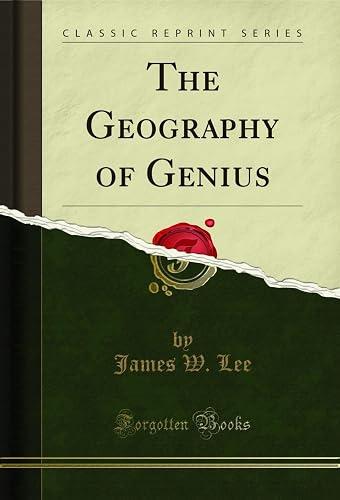
The Geography Of Genius explains how genius is not an inherited trait bound to individual, but rather happens at the intersection of time and place, by talking you on a tour through some of the historically most creative cities in the world.
The Geography Of Genius explains how genius is not an inherited trait bound to individual, but rather happens at the intersection of time and place, by talking you on a tour through some of the historically most creative cities in the world.
It’s always sad to see when what was once of true greatness has fallen and is nothing but a mere remnant of its glorious past. Athens sure is one of those places. Greece has been in horrendous debt for years now, unemployment is sky high and they just can’t get a foot in the door anywhere.
2,000 years ago, Athens was the frontier of human progress. Statesmen, playwrights, philosophers like Socrates, some of the greatest minds of all time were Athenians.
There are a couple reasons for this:
Athenians were proud citizens. Because they loved Athens so much, they would always compete to see who could contribute to their local society the most. Rich locals invested into arts and entertainment, making sure culture would advance, giving creativity a huge backdrop. They weren’t afraid to adopt foreign ideas, like Egyptian architecture, the Phoenician alphabet or Babylonian number system. People walked everywhere. 10,000 steps a day isn’t just good for your health, it also boosts your cognitive ability and creativity.
Not solely, but largely responsible for creation and innovation, these four things made Athens the true grandmother of genius. Let’s hope it’ll get back up soon! As it turns out, these traits are commonalities among other creative hubs too.
For example, hardly any city produced more iconic art than Florence during the Renaissance. Michelangelo, Donatello, Da Vinci, these grandmasters of innovation and art all called it their home. Patronage played a big role here, with rich entrepreneur families, like the Medici, financing and commissioning lots of paintings, sculptures and architectural ventures. However, even they pale in comparison with the powerful patronage of the Catholic church – which had more money than ever before, thanks to a clever “invention” of their own: purgatory. The church told everyone they’d spend a certain time after death in a place of excruciating pain and suffering, depending on how much they sinned in life. Conveniently, by buying expensive indulgences from the church (think of it as a letter of apology in advance – a line of credit for sinning, if you will), you could reduce that time. Suddenly, the church’s treasure chambers were flooded with gold, a lot of which went right back into building monuments for the church, such as the Duomo. Competition and collaboration were also prevalent among Florentine inventors and artists. Also, just like Athens, they adopted many foreign ideas, most of which entered the city through commerce, such as the Arabic…
Continue reading in the MinuteRead app
Get the complete 5-minute summary of The Geography Of Genius
Get the complete summary in the appAncient Athens is the grandmother of genius.
Because the church “invented” purgatory, it could finance a lot of innovation in Renaissance Florence.
Two things that make San Francisco a modern hub of innovation are weak ties and successful failures.
"The Geography Of Genius" is a strong fit if you want practical ideas around creativity, culture, entrepreneurship, especially themes like ancient athens is the grandmother of genius; because the church “invented” purgatory, it could finance a lot of innovation in renaissance florence. The MinuteRead summary distills these concepts into a focused read, whether you're deciding whether to buy the book or applying its lessons at work.
Eric Weiner is author of the New York Times bestsellers The Geography of Bliss and The Geography of Genius, as well as the critically acclaimed Man Seeks God and, his latest book, The Socrates Express: In Search of Life Lessons from Dead Philosophers. A former foreign correspondent for NPR, he has reported from more than three dozen countries. His work has appeared in the New Republic, The Atlantic, National Geographic, The Wall Street Journal, and the anthology "Best American Travel Writing." H…
View all summaries by Eric WeinerContinue Reading
Access the complete 5-minute summary and thousands more nonfiction books in the MinuteRead app.

Continue reading the complete summary in the MinuteRead app.