 MinuteRead
30 min
Book summary
by Duff McDonald
Premium summary · Opens in the app · 30 min read
Every year, roughly ten thousand people apply to Harvard Business School. About nine hundred get in. Those who graduate join a network of more than eighty thousand living alumni, a group that has produced CEOs of Fortune 500 companies, founders of billion-dollar startups, cabinet secretaries, and even a president of the United States. The school's name alone carries weight. Put "Harvard MBA" on a resume and doors open that would otherwise remain closed.
**Author:** Duff McDonald
**Estimated Reading Time:** 45 minutes
**What You'll Learn:** How Harvard Business School became the most influential institution in American capitalism, what it actually teaches, and why its methods have shaped both the triumphs and failures of modern business.
**Who This Book Is For:** Anyone who wants to understand how American business really works, why corporate leaders think the way they do, and whether the Harvard Business School model of management has helped or harmed the world.
Every year, roughly ten thousand people apply to Harvard Business School. About nine hundred get in. Those who graduate join a network of more than eighty thousand living alumni, a group that has produced CEOs of Fortune 500 companies, founders of billion-dollar startups, cabinet secretaries, and even a president of the United States. The school's name alone carries weight. Put "Harvard MBA" on a resume and doors open that would otherwise remain closed. But what does that credential actually mean? What do students learn inside those red brick buildings along the Charles River? And what has the school's influence done to American business and society? Duff McDonald set out to answer these questions, and what he found is far more complicated than the glossy brochures suggest. Harvard Business School did not simply train managers. It created a new class of professional executives, armed with a shared vocabulary, a common set of analytical tools, and an unshakeable belief in their own authority. The school taught generations of leaders to see the world through spreadsheets and frameworks, to prioritize shareholder value above all else, and to trust that the techniques learned in a Boston classroom could be applied anywhere, from Detroit assembly lines to the jungles of Vietnam. The story of Harvard Business School is the story of American capitalism itself. The school rose alongside the great corporations of the twentieth century, supplied the managers who ran them, and developed the theories that justified their strategies. When American business thrived, HBS took credit. When American business stumbled, HBS often escaped blame. This matters because the school's influence extends far beyond its campus. HBS graduates run companies that employ millions of people. They advise governments, manage pension funds, and sit on boards that shape entire industries. The decisions they make affect workers, consumers, communities, and the environment. Understanding how they think is essential to understanding the modern economy. McDonald's investigation is not a simple takedown. He acknowledges the school's genuine achievements: the case method that transformed business education, the research that advanced management practice, the alumni who built great companies and created real value. But he also documents the failures: the narrow focus on shareholder returns, the tolerance for ethically questionable behavior, the resistance…
Continue reading in the MinuteRead app
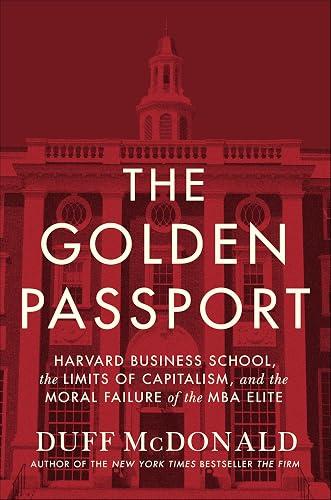
Get the complete 30-minute summary of The Golden Passport
Get the complete summary in the appHarvard Business School created the culture of American capitalism, not just responded to it.
The case method teaches decision-making under uncertainty but can create the illusion of mastery.
Scientific management transformed industry but ignored the human element.
World War II introduced management science to business, changing how corporations were run.
HBS graduates rose to dominate American business, with one in eight holding top titles by 1975.
Theodore Levitt's "Marketing Myopia" shifted business focus from products to customer needs.
"The Golden Passport" is a strong fit if you want practical ideas around business, history, education, especially themes like harvard business school created the culture of american capitalism, not just responded to it; the case method teaches decision-making under uncertainty but can create the illusion of mastery. The MinuteRead summary distills these concepts into a focused read, whether you're deciding whether to buy the book or applying its lessons at work.
Motivated to help readers with "Harvard Business School deserves recognition for a number of firsts." Groundbreaking approach, Duff McDonald wrote “The Golden Passport” to package those ideas for a fast, focused read. In “The Golden Passport”, Duff McDonald focuses on "Harvard Business School deserves recognition for a number of firsts." Groundbreaking approach. Through “The Golden Passport”, Duff McDonald distills the core ideas on business into lessons readers can absorb in a single short sitt…
Continue Reading
Access the complete 30-minute summary and thousands more nonfiction books in the MinuteRead app.

Continue reading the complete summary in the MinuteRead app.






