MinuteRead
30 min
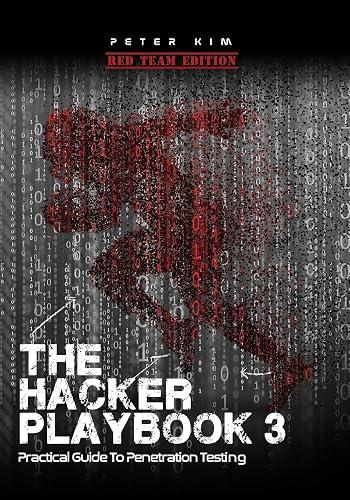
Book summary
by Peter Kim
Premium summary · Opens in the app · 30 min read
Every year, organizations spend billions of dollars on security tools. They deploy firewalls, endpoint detection systems, security information and event management platforms, and countless other technologies designed to keep attackers out. And every year, sophisticated attackers still find their way in.
**Author:** Peter Kim
**Estimated Reading Time:** 45 minutes
**What You'll Learn:** How professional red teams emulate real-world adversaries to test and improve organizational security. You will understand the complete attack lifecycle, from reconnaissance through exploitation to post-exploitation, and learn the specific tools, techniques, and mental models that separate elite red teams from traditional penetration testers.
**Who This Book Is For:** Security professionals who want to move beyond basic penetration testing, blue team defenders who need to understand how attackers actually operate, and anyone responsible for building or improving a security program that must withstand sophisticated threats.
Every year, organizations spend billions of dollars on security tools. They deploy firewalls, endpoint detection systems, security information and event management platforms, and countless other technologies designed to keep attackers out. And every year, sophisticated attackers still find their way in. The reason is simple. Most organizations do not actually know how well their security works until it fails. They purchase tools based on vendor promises, configure them based on best-practice guides, and hope that the combination will be enough. But hope is not a strategy, and configuration guides do not reflect the creativity of a determined adversary. This is where red teaming enters the picture. Traditional penetration testing has been a staple of security programs for decades. An organization hires a team to test a specific application or network segment, the testers find vulnerabilities, and a report gets written. This approach has value, but it has a fundamental limitation. Penetration tests are usually scoped, time-boxed, and designed to find as many vulnerabilities as possible within a defined window. They answer the question: what could an attacker find if they looked at this specific system for a week? Red teaming answers a different question entirely. A red team asks: what would happen if a determined, skilled, and patient adversary decided to target our organization specifically? What would they do first? How would they get in? Once inside, how would they move toward our most sensitive data? And critically, would our security team even notice? The difference is profound. A penetration test might find that a web application has a cross-site scripting vulnerability. A red team engagement might use that vulnerability to steal credentials, pivot into the internal network, escalate privileges to domain administrator, and exfiltrate sensitive data over the course of several weeks. The penetration test tells you about a weakness. The red team tells you whether your entire security program can detect and respond to an actual attack. Peter Kim wrote The Hacker Playbook 3 to bridge the gap between traditional security testing and the reality of modern adversarial operations. The book is not a collection of theoretical concepts. It is a practical…
Continue reading in the MinuteRead app
Get the complete 30-minute summary of The Hacker Playbook 3
Get the complete summary in the appRed teaming emulates real adversaries to test detection and response, not just find vulnerabilities.
Reconnaissance is continuous and often reveals the easiest way into an organization.
Web applications are a prime target, and new vulnerability classes require constant learning.
Lateral movement and privilege escalation turn a minor incident into a full compromise.
Bloodhound reveals hidden attack paths in Active Directory.
Social engineering and physical attacks bypass technical controls by targeting humans.
"The Hacker Playbook 3" is a strong fit if you want practical ideas around hackers, technology, computer science, especially themes like red teaming emulates real adversaries to test detection and response, not just find vulnerabilities; reconnaissance is continuous and often reveals the easiest way into an organization. The MinuteRead summary distills these concepts into a focused read, whether you're deciding whether to buy the book or applying its lessons at work.
Motivated to help readers with the Red Team’s mission is to emulate the tactics, Peter Kim wrote “The Hacker Playbook 3” to package those ideas for a fast, focused read. In “The Hacker Playbook 3”, Peter Kim focuses on the Red Team’s mission is to emulate the tactics. Through “The Hacker Playbook 3”, Peter Kim distills the core ideas on hackers into lessons readers can absorb in a single short sitting. Readers turn to this work when they want Peter Kim's perspective on the subject without workin…
Continue Reading
Access the complete 30-minute summary and thousands more nonfiction books in the MinuteRead app.

Continue reading the complete summary in the MinuteRead app.