 MinuteRead
30 min
Book summary
by Philip M. Rosenzweig
Premium summary · Opens in the app · 30 min read
Every year, a new crop of business books promises to reveal the secrets of high performance. They point to companies like ABB, Cisco, Enron, or Nokia and explain exactly what made them great. The formula seems clear. Follow these steps, adopt these habits, embrace these values, and your company can achieve lasting success too.
By Philip M. Rosenzweig
**Estimated Reading Time:** 45 minutes
**What You'll Learn:**
* Why most popular business books are built on flawed logic * How cognitive biases distort our understanding of company performance * What actually drives business success, and what remains unknowable * How to think more critically about management advice
**Who This Book Is For:**
Managers who have read the bestsellers and still feel something is missing. Analysts who suspect the formulas are too neat. Anyone who has watched a celebrated company collapse and wondered how the experts got it so wrong.
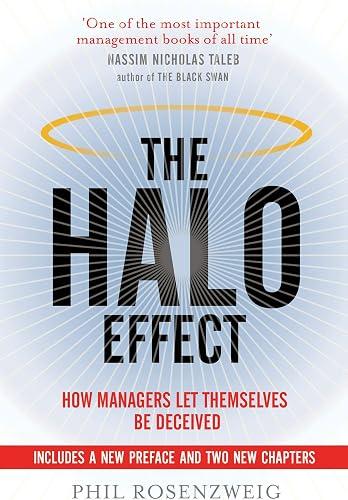
Every year, a new crop of business books promises to reveal the secrets of high performance. They point to companies like ABB, Cisco, Enron, or Nokia and explain exactly what made them great. The formula seems clear. Follow these steps, adopt these habits, embrace these values, and your company can achieve lasting success too. Then the story changes. ABB nearly collapsed under a mountain of debt. Cisco's stock plummeted. Enron became synonymous with fraud. Nokia lost its dominance in mobile phones. The same business press that celebrated these companies as visionary later described them as arrogant, complacent, and strategically confused. The very qualities that supposedly explained their success were suddenly the causes of their downfall. This pattern should trouble anyone who takes business advice seriously. If the experts can't tell the difference between a great company and a house of cards, what value does their analysis hold? If the traits they identify as drivers of success can flip so quickly into drivers of failure, were those traits ever really the cause of anything? Philip Rosenzweig, a professor of strategy at IMD in Lausanne, Switzerland, spent years examining the research behind the most influential business books of our time. What he found was unsettling. The vast majority of this work, he argues, is built on a foundation of logical errors, cognitive biases, and methodological flaws. The problem isn't just that the advice is sometimes wrong. The problem is that the entire approach to studying business performance is often fundamentally unsound. The central culprit is what psychologists call the Halo Effect. When a company performs well financially, we tend to see everything about it in a positive light. Its leadership seems visionary. Its culture seems strong. Its strategy seems brilliant. Its people seem talented. When performance declines, the same attributes get reinterpreted. The visionary leader is now stubborn. The strong culture is now insular. The brilliant strategy was actually reckless. This bias would be manageable if it only affected casual observers. But Rosenzweig shows that it contaminates even the most rigorous-sounding research. When business professors and consultants gather data about company culture, leadership, or strategy, they often collect…
Continue reading in the MinuteRead app
Get the complete 30-minute summary of The Halo Effect
Get the complete summary in the appThe Halo Effect distorts our perceptions of companies. We attribute positive qualities to successful firms and negative
Most popular business books are built on flawed logic. They confuse correlation with causation, study only successful co
Rigorous research doesn't guarantee valid conclusions. A study can be sophisticated in execution while being fundamental
Lasting success is extraordinarily rare. Most companies that perform well eventually decline. Don't assume your success
Company performance is relative, not absolute. You need to improve faster than competitors, not just improve.
Business doesn't follow immutable laws. What works in one context may fail in another. Treat best practices as hypothese
"The Halo Effect" is a strong fit if you want practical ideas around business, psychology, economics, especially themes like the halo effect distorts our perceptions of companies. we attribute positive qualities to successful firms and negative; most popular business books are built on flawed logic. they confuse correlation with causation, study only successful co. The MinuteRead summary distills these concepts into a focused read, whether you're deciding whether to buy the book or applying its lessons at work.
Motivated to help readers with many things we commonly believe lead to company performance — corporate culture, Philip M. Rosenzweig wrote “The Halo Effect” to package those ideas for a fast, focused read. In “The Halo Effect”, Philip M. Rosenzweig focuses on many things we commonly believe lead to company performance — corporate culture. Through “The Halo Effect”, Philip M. Rosenzweig distills the core ideas on business into lessons readers can absorb in a single short sitting. Readers turn to …
Continue Reading
Access the complete 30-minute summary and thousands more nonfiction books in the MinuteRead app.

Continue reading the complete summary in the MinuteRead app.






