MinuteRead
5 min
Book summary
Premium summary · Opens in the app · 5 min read
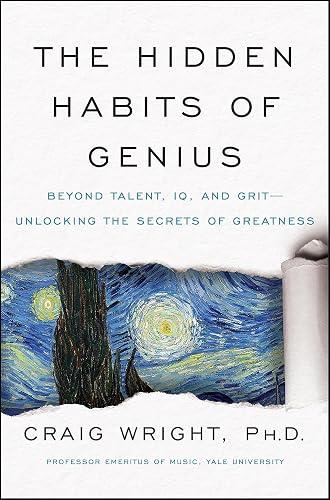
The Hidden Habits of Genius looks at how geniuses separate themselves from the rest by having in common a distinctive set of characteristics and habits that form a unique way of thinking and cultivating brilliance.
The Hidden Habits of Genius looks at how geniuses separate themselves from the rest by having in common a distinctive set of characteristics and habits that form a unique way of thinking and cultivating brilliance.
We are born curious. Children learn from their surroundings by touching, smelling, and looking at everything. It is our best and most effective tool for discovering new things. However, some people are born with a deeper sense of curiosity that allows them to learn constantly.
Leonardo da Vinci was a curious person, always interested in learning almost everything. Moreover, he had a restless mind that pushed him to find out something new every day. This helped him accomplish the great achievements that made him famous.
We can also cultivate curiosity. Even though we may not be geniuses or strive to become one, we can all try to be more receptive and open to experiencing and learning new things. Again, retake the example of Da Vinci. When he was in Milan, he had set more than five tasks for the day to discover the city better.
Whether traveling, reading, or finding yourself in a new situation, work more curious and participative. It is a great first step in your journey to becoming more knowledgeable and accumulating new and innovative perspectives.
It’s no secret that focused work and determination help you get things done faster and better. But there is a certain thing that geniuses do, in contrast with the rest of the world. They don’t get distracted. Instead, they give their full attention to the work and often neglect themselves to save time.
Sticking to Leonardo Da Vinci’s story, we can further observe how a strong sense of curiosity alone was not enough to make him a genius. He had a formidable ability to concentrate for a long period of time. He took his time to analyze and observe all possible outcomes of his work before getting started.
The outstanding power to focus for an extended period and anticipate the results is a common trait of brilliant minds. For some, the place and time of the day don’t really make a difference, as they are completely absorbed by their work, leaving no space for acknowledging their surroundings.
The perfect example for this type of person would be Einstein, who used to take care of his baby with one hand and write equations with the other. However, not all geniuses can phase out and multitask like that. It is common for some of them to lock themselves in a quiet place to concentrate and work.
Continue reading in the MinuteRead app
Get the complete 5-minute summary of The Hidden Habits of Genius
Get the complete summary in the appBeing thirsty for knowledge allows you to grasp a wider perspective and create masterpieces.
Geniuses are completely focused on their work and prioritize it.
Breaking the rules can foster innovation and an original way of working.
"The Hidden Habits of Genius" is a strong fit if you want practical ideas around creativity, education, history, especially themes like being thirsty for knowledge allows you to grasp a wider perspective and create masterpieces; geniuses are completely focused on their work and prioritize it. The MinuteRead summary distills these concepts into a focused read, whether you're deciding whether to buy the book or applying its lessons at work.
Craig Wright's most recent book, The Hidden Habits of Genius, to appear in October 2020, is the outgrowth of his popular Yale University course, "Exploring the Nature of Genius." It represents a multi-decade study of geniuses throughout history (Einstein, Curie, Mozart, Bezos, Jobs, Picasso, Ben Franklin, and Lady Gaga among them) as well as personal observations gleaned from watching geniuses in action, at Harvard, Yale, and elsewhere. Each chapter identifies one or more enablers of genius and …
View all summaries by Craig M. WrightContinue Reading
Access the complete 5-minute summary and thousands more nonfiction books in the MinuteRead app.

Continue reading the complete summary in the MinuteRead app.