 MinuteRead
30 min
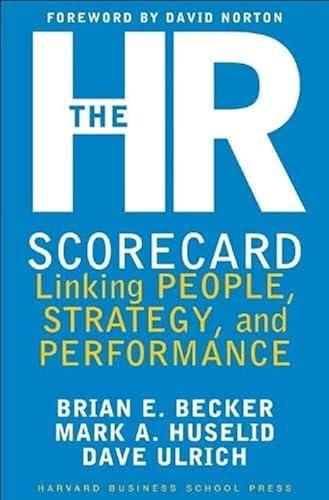
Book summary
by Dave Ulrich
Premium summary · Opens in the app · 30 min read
Every organization claims that people are its most important asset. The phrase appears in annual reports, mission statements, and executive speeches with such regularity that it has become almost meaningless. Yet behind the platitude lies a profound truth that most companies fail to act upon. In an economy where knowledge, creativity, and relationships determine competitive advantage, human capital has become the primary source of sustainable differentiation. Physical assets can be purchased. Te
**Author:** Dave Ulrich
**Estimated Reading Time:** 42 minutes
**What You'll Learn:**
- Why human resources must evolve from an administrative function into a strategic driver of business value - How to measure HR's contribution to business outcomes with the same rigor used for financial performance - The seven-step process for building an HR Scorecard that links people practices to strategy - How to quantify the return on investment of HR initiatives - The competencies HR professionals need to become genuine business partners - How to implement lasting change through effective change management
**Who This Book Is For:**
This book is for HR professionals who want to earn a seat at the strategic table. It is for business leaders who suspect their organization's human capital is underleveraged but lack the tools to prove it. It is for anyone who has ever wondered whether HR truly adds value or merely manages paperwork. If you are responsible for people, performance, or organizational results, this book will change how you think about the relationship between human resources and business success.
Every organization claims that people are its most important asset. The phrase appears in annual reports, mission statements, and executive speeches with such regularity that it has become almost meaningless. Yet behind the platitude lies a profound truth that most companies fail to act upon. In an economy where knowledge, creativity, and relationships determine competitive advantage, human capital has become the primary source of sustainable differentiation. Physical assets can be purchased. Technology can be replicated. Capital can be raised. But a workforce that is deeply skilled, strategically aligned, and genuinely engaged is extraordinarily difficult for competitors to imitate. The problem is not that executives fail to recognize this truth. The problem is that they have no reliable way to measure it. Financial statements track revenue, costs, and profitability with precision. Operations dashboards monitor quality, cycle time, and productivity in real time. But when it comes to human resources, most organizations still rely on vague metrics like headcount, turnover rates, and training hours delivered. These numbers tell you what happened. They do not tell you whether the organization is building the capabilities it needs to win. This measurement gap has profound consequences. When HR cannot demonstrate its contribution in terms that business leaders understand, it gets treated as a cost center rather than a value creator. Budgets get cut. Strategic initiatives get sidelined. Talented HR professionals become frustrated and leave. Meanwhile, the organization drifts without a clear understanding of how its people practices connect to its competitive strategy. The result is a self-reinforcing cycle: HR is not taken seriously because it cannot prove its value, and it cannot prove its value because it is not…
Continue reading in the MinuteRead app
Get the complete 30-minute summary of The HR Scorecard
Get the complete summary in the appHR creates value by producing the employee behaviors that drive business strategy.
Human capital is the primary source of sustainable competitive advantage.
The HR Scorecard balances cost control with value creation, emphasizing value creation.
Strategy maps show how HR practices connect to business outcomes.
Leading indicators predict future performance; lagging indicators confirm past performance.
HR professionals need financial literacy to quantify their impact.
"The HR Scorecard" is a strong fit if you want practical ideas around business, management, leadership, especially themes like hr creates value by producing the employee behaviors that drive business strategy; human capital is the primary source of sustainable competitive advantage. The MinuteRead summary distills these concepts into a focused read, whether you're deciding whether to buy the book or applying its lessons at work.
Motivated to help readers with to realize this potential, Dave Ulrich wrote “The HR Scorecard” to package those ideas for a fast, focused read. In “The HR Scorecard”, Dave Ulrich focuses on to realize this potential. Through “The HR Scorecard”, Dave Ulrich distills the core ideas on business into lessons readers can absorb in a single short sitting. Readers turn to this work when they want Dave Ulrich's perspective on the subject without working through the entire original volume. Dave Ulrich ha…
View all summaries by Dave UlrichContinue Reading
Access the complete 30-minute summary and thousands more nonfiction books in the MinuteRead app.

Continue reading the complete summary in the MinuteRead app.






