 MinuteRead
30 min
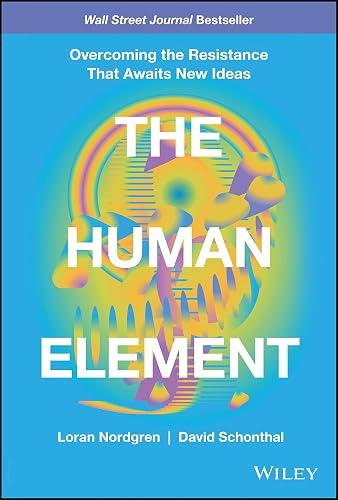
Book summary
by David Schonthal
Premium summary · Opens in the app · 30 min read
Every year, thousands of promising ideas die quiet deaths. New products launch with fanfare and disappear within months. Innovative services that could save time, money, and effort never gain traction. Well-designed programs intended to improve health, education, and well-being fail to attract the very people they were created to help.
**Author:** David Schonthal
**Estimated Reading Time:** 45 minutes
**What You'll Learn:**
- Why great ideas fail despite having obvious advantages - The four hidden forces that work against every new idea - How to spot resistance before it kills your innovation - Practical strategies for overcoming each type of friction - How to help people persuade themselves instead of pushing harder
**Who This Book Is For:**
This book is for anyone who has ever tried to introduce a new idea, product, service, or behavior and watched it fail despite its obvious merits. Entrepreneurs, managers, designers, marketers, educators, and change-makers of all kinds will find a new lens for understanding why people resist change and what to do about it.
Every year, thousands of promising ideas die quiet deaths. New products launch with fanfare and disappear within months. Innovative services that could save time, money, and effort never gain traction. Well-designed programs intended to improve health, education, and well-being fail to attract the very people they were created to help. The conventional explanation for these failures is simple: the idea wasn't good enough, the marketing wasn't compelling enough, or the value proposition wasn't clear enough. The solution, according to this logic, is to add more fuel. Make the product better. Add more features. Increase the benefits. Amplify the messaging. Push harder. David Schonthal argues that this explanation is fundamentally incomplete. The problem is not always a lack of fuel. Often, the problem is the presence of friction. Think about a rocket launch. To reach orbit, a rocket needs enormous thrust. But thrust alone is not enough. The rocket must also be designed to minimize aerodynamic drag. A rocket with a rough surface, protruding parts, or poor aerodynamic design will burn more fuel, fly less efficiently, and may never reach its destination, no matter how powerful its engines. The same principle applies to innovation. Most innovators focus exclusively on adding thrust: more features, more benefits, more persuasive messaging. They neglect the aerodynamic drag: the psychological forces that create resistance to change. The result is wasted effort, frustrated teams, and ideas that never achieve liftoff. Schonthal identifies four primary frictions that work against every new idea. Inertia is the powerful pull of the status quo, the human preference for what is familiar and known. Effort is the energy required to make a change happen, both physical and mental. Emotion is the unintended negative feelings that an innovation can trigger, such as anxiety, fear, or embarrassment. Reactance is the impulse to resist being changed, the human desire to protect autonomy and freedom. These four frictions operate quietly, often below the surface of conscious awareness. They don't announce themselves in focus groups or customer surveys.…
Continue reading in the MinuteRead app
Get the complete 30-minute summary of The Human Element
Get the complete summary in the app**Friction matters as much as fuel.** Adding benefits is not enough. You must also remove barriers.
**There are four frictions.** Inertia, effort, emotion, and reactance work against every new idea.
**Inertia is the pull of the familiar.** People stick with what they know, not because it is better, but because it is f
**Effort is the cost of change.** The easier the path, the more likely people are to follow it.
**Emotion is the hidden barrier.** Negative feelings can inhibit adoption, even when benefits are clear.
**Reactance is the resistance to being changed.** The harder you push, the harder people push back.
"The Human Element" is a strong fit if you want practical ideas around business, psychology, leadership, especially themes like **friction matters as much as fuel.** adding benefits is not enough. you must also remove barriers; **there are four frictions.** inertia, effort, emotion, and reactance work against every new idea. The MinuteRead summary distills these concepts into a focused read, whether you're deciding whether to buy the book or applying its lessons at work.
Motivated to help readers with to create change we must first understand the forces operating against change, David Schonthal wrote “The Human Element” to package those ideas for a fast, focused read. In “The Human Element”, David Schonthal focuses on to create change we must first understand the forces operating against change. Through “The Human Element”, David Schonthal distills the core ideas on business into lessons readers can absorb in a single short sitting. Readers turn to this work whe…
Continue Reading
Access the complete 30-minute summary and thousands more nonfiction books in the MinuteRead app.

Continue reading the complete summary in the MinuteRead app.






